 Teacher's Community
  Support


Higher Education Hybrid Classroom Gets Transformative Upgrade with ViewSonic dvLED Displays and More
- Oct 1, 2026
SOLUTION BRIEF
Higher Education Hybrid Classroom Gets Transformative Upgrade with ViewSonic dvLED Displays and More
CHALLENGE
A recognized leader in STEM higher education, this large state university is likewise dedicated to being at the forefront of classroom technology. To make efficient use of technology resources, the university offers instructors a variety of classroom configurations to meet their edtech needs. At the top of these options are classrooms equipped to deliver instruction simultaneously to in-person and remote students. Live-monitored by university IT staff to prevent tech-related disruption, these rooms play an important role in extending the reach of instruction.
One such classroom was due for a major technology update. The existing setup relied on two ceiling-mounted projectors casting content onto dual wall screens. It was time to upgrade to technology that would support the range of modern learning options and instructional modalities: a video wall that would deliver bright, consistently sharp visuals for every student.
The solution also needed to deliver content to in-person and distance learners at the same time, while creating an environment that connected those audiences and gave the instructor intuitive control.
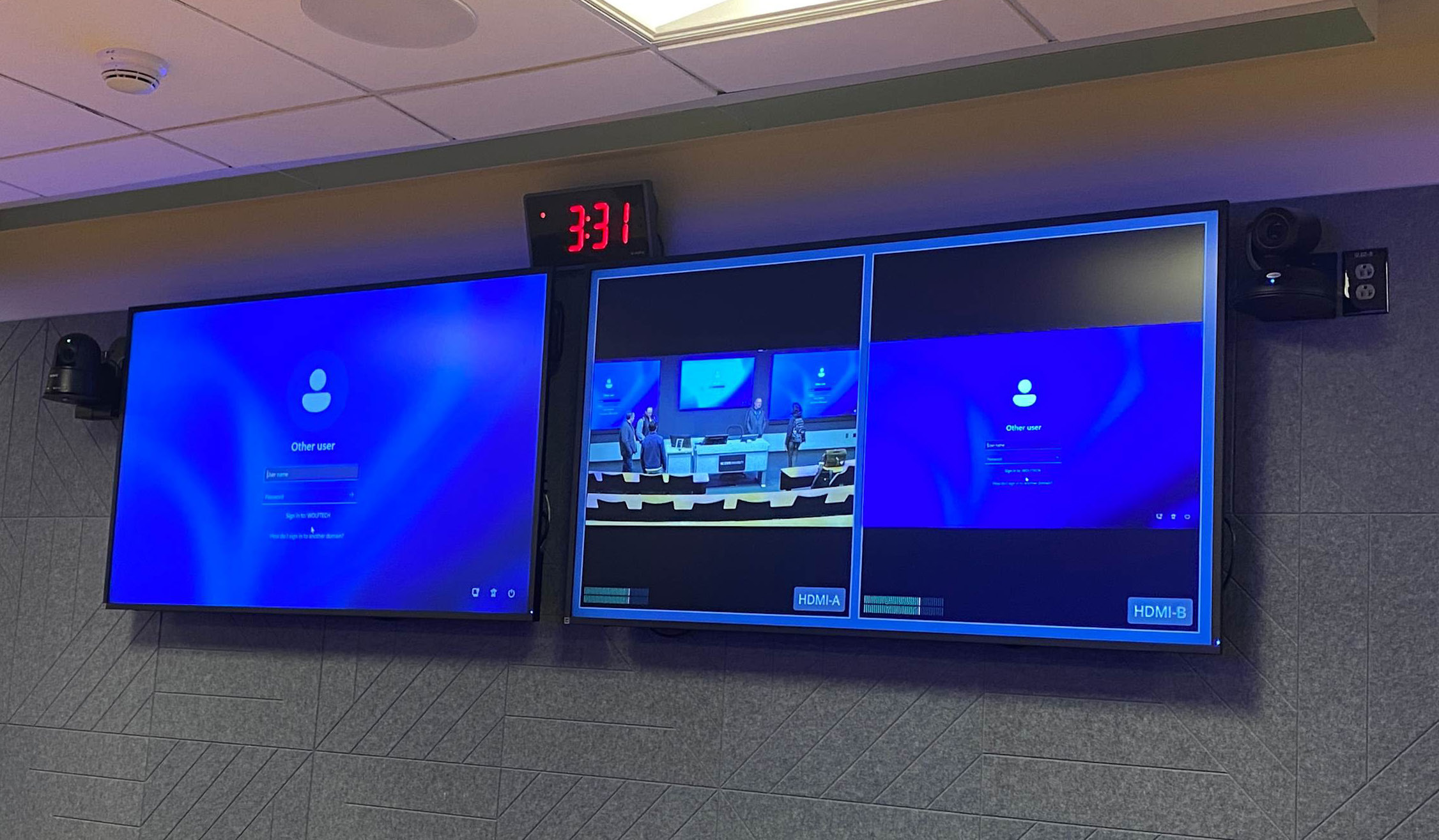
Several types of displays would be needed to support these goals: large, vibrant front-of-room displays for on-site learners, displays to bring Zoom participants into the room, confidence displays for the instructor at the back of the room and a touch display at the instructor podium. All of it maintained and monitored in real time by university IT staff.
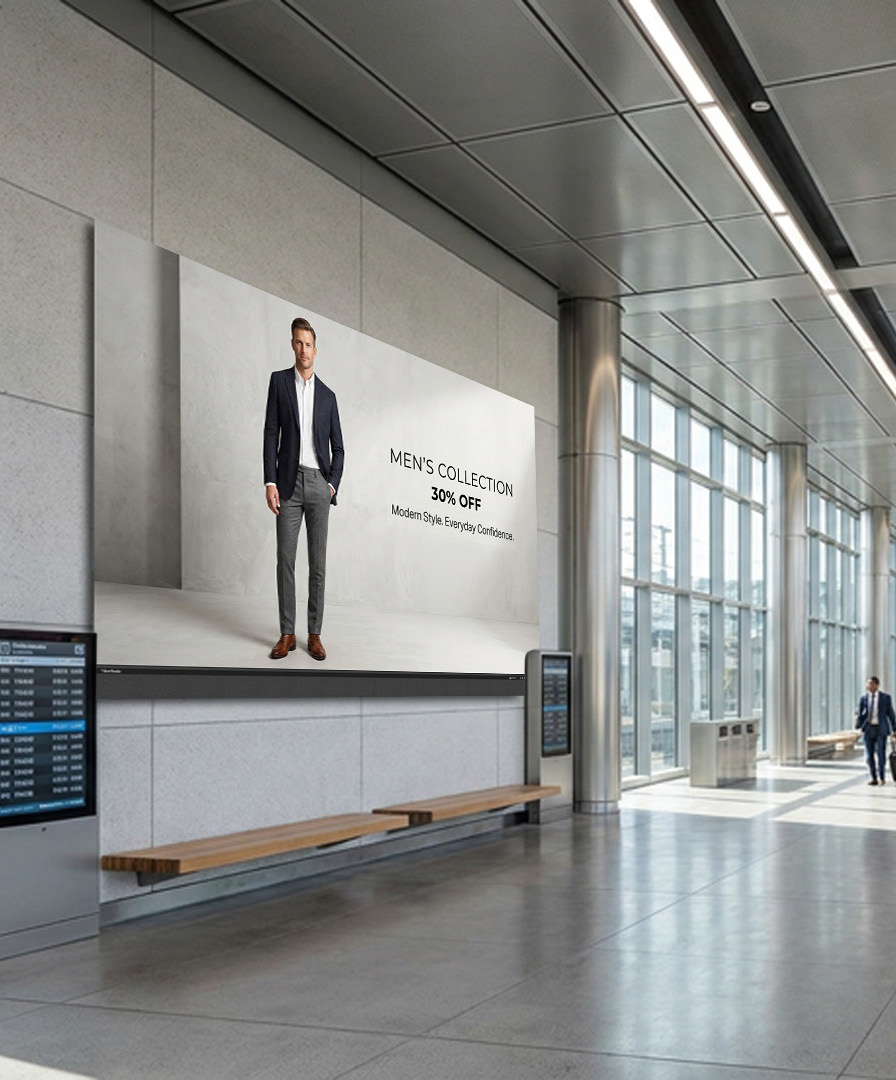
The brightness and consistency of the ViewSonic dvLED displays give classroom and remote students a clearer view of content in all lighting conditions, and deliver strong recorded images, a critical component of serving asynchronous distance learners.
SOLUTION
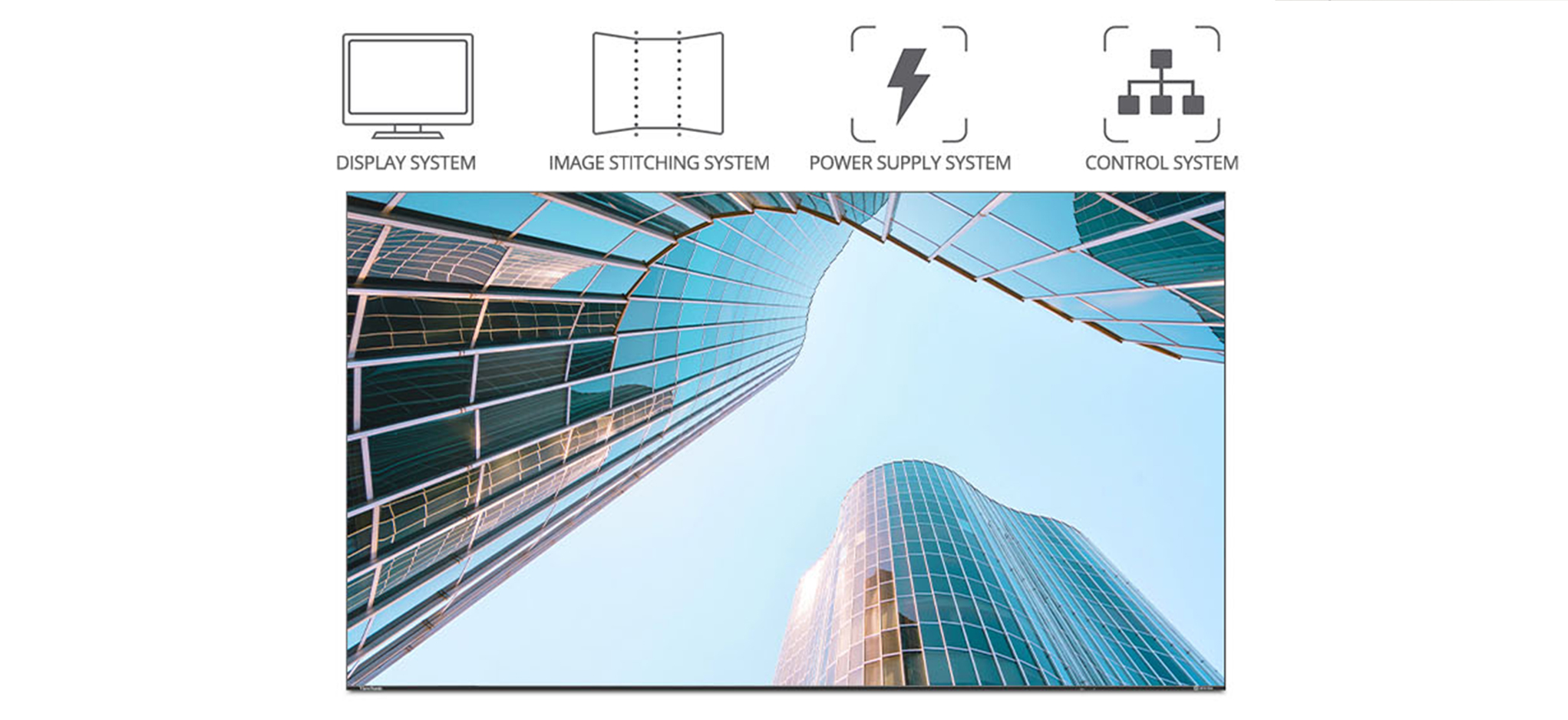
The IT group worked with longtime reseller partner ClarkPowell, which recommended ViewSonic for the display component of the installation. The IT team reviewed the recommendation and agreed it was the right fit, commenting in particular on the durability of ViewSonic dvLED with Glue-on-Board (GOB) construction and the ability to replace individual panels, which would streamline maintenance.
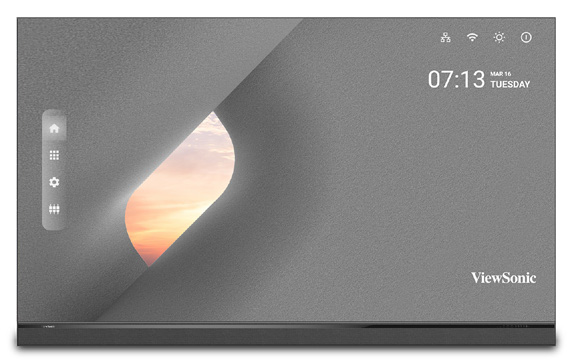
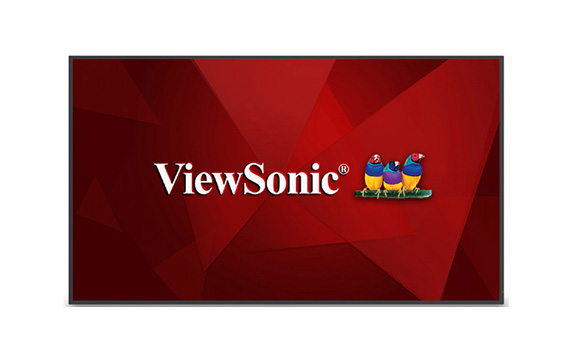
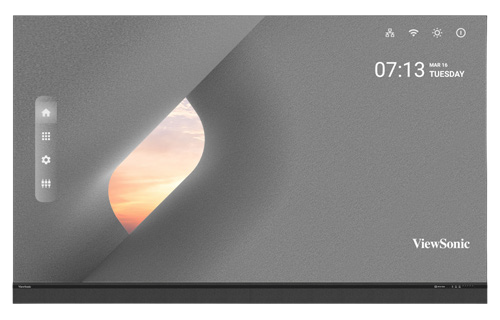
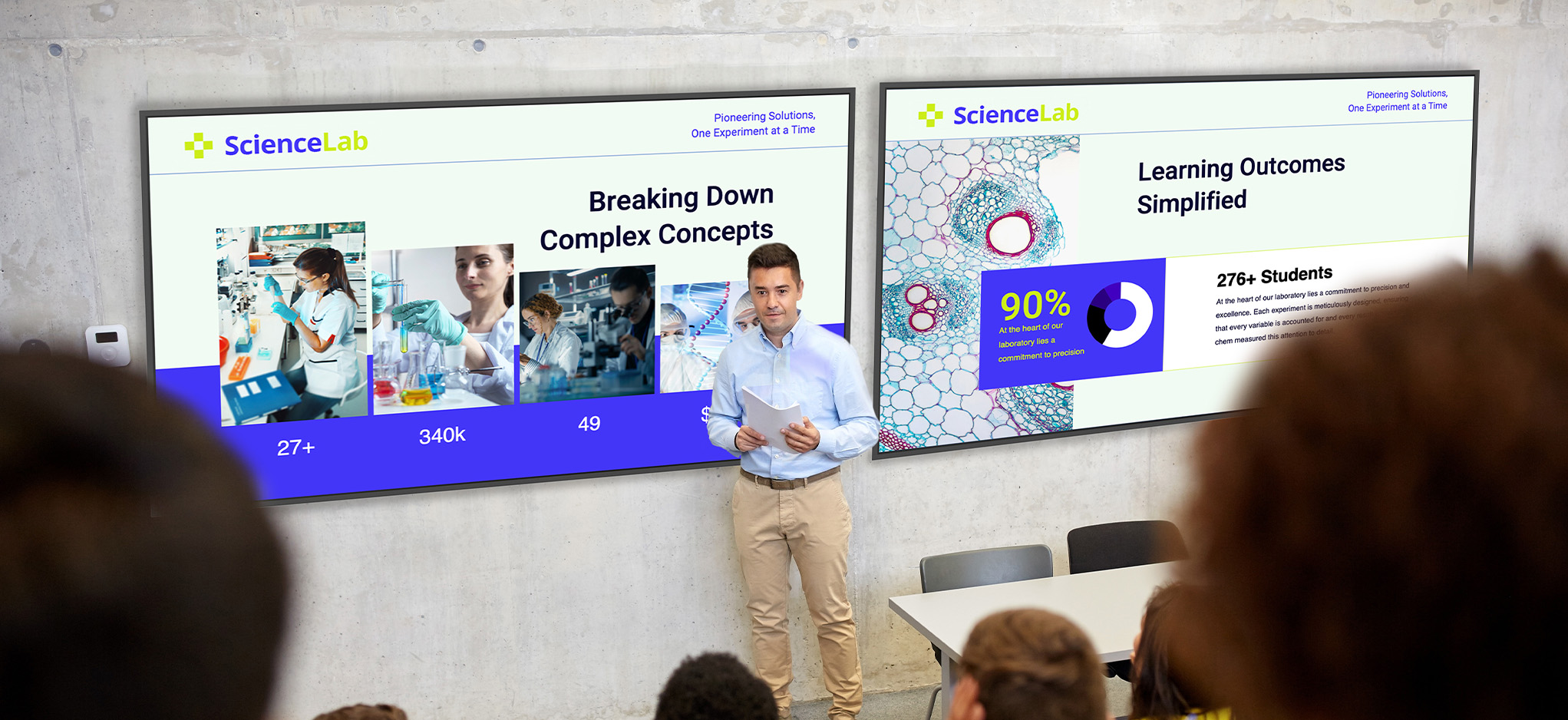
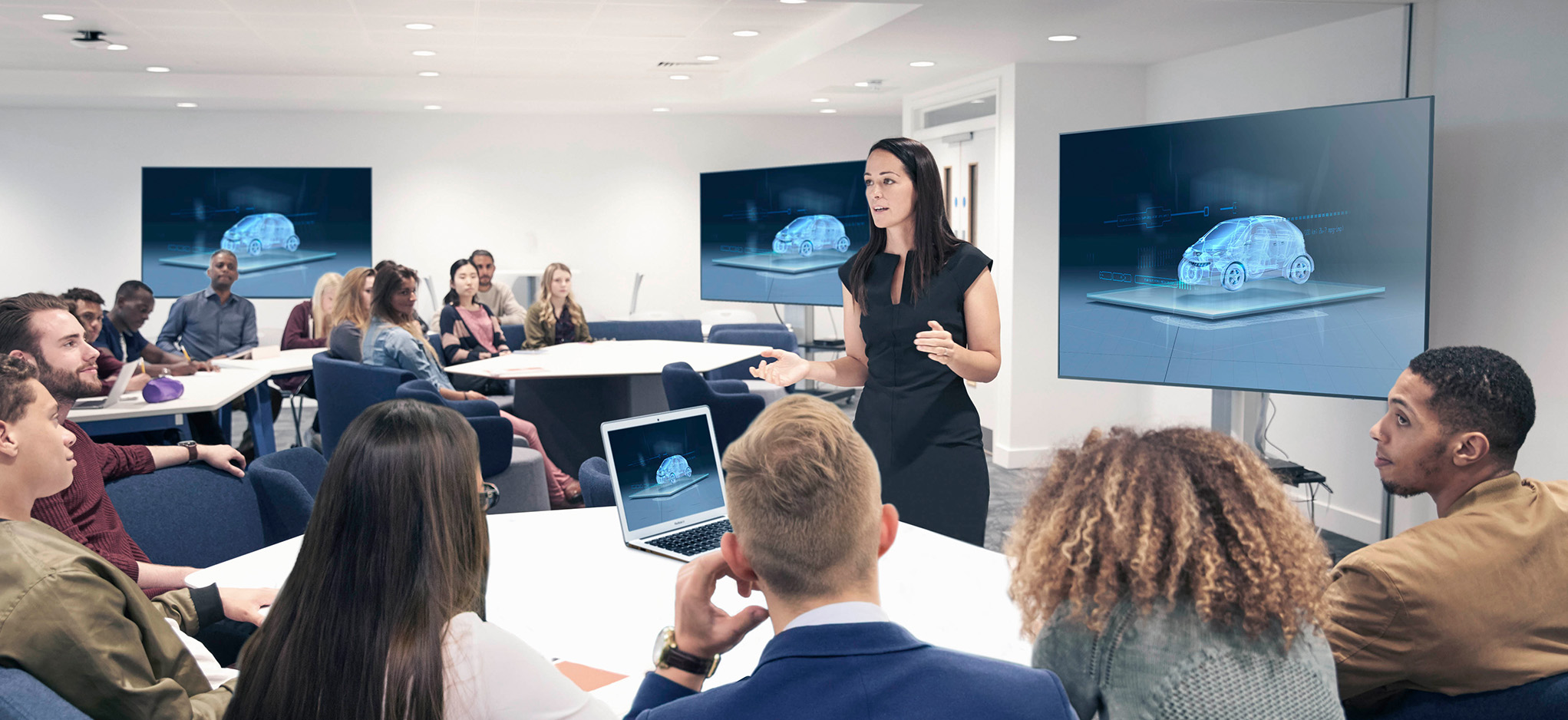
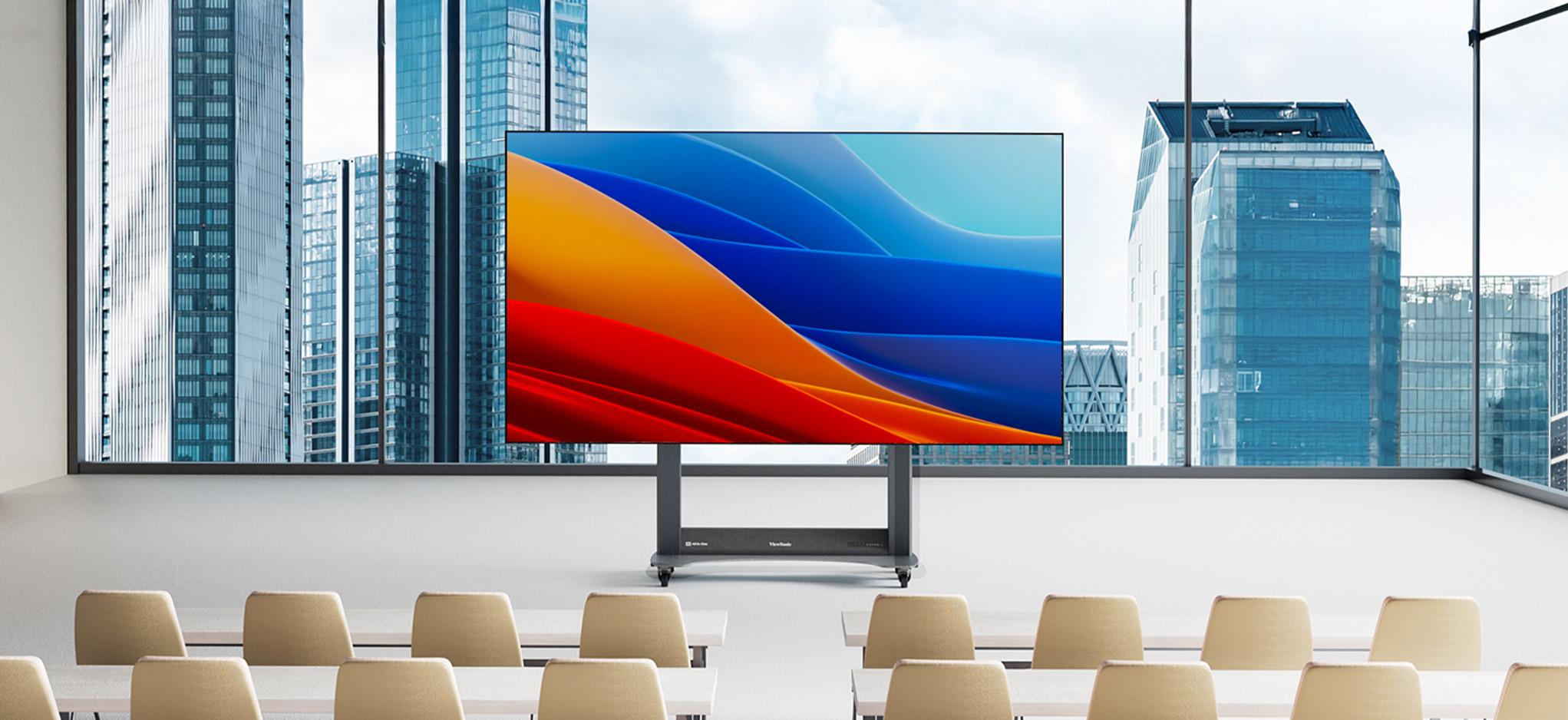
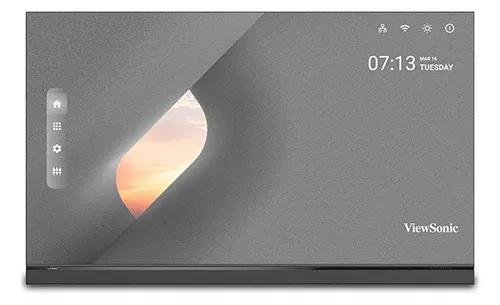
The final front-of-room solution included two 136-inch ViewSonic All-in-One Direct View LED Video Walls (Model LDM136-151) to present class content. These were mounted on either side of a ViewSonic 98-inch Commercial Grade 4K Display (Model CDE9830) to integrate Zoom participants. Two ViewSonic 65-inch Commercial Displays (Model CDE6530) were mounted to the back wall for instructor visibility, one mirroring the instructional content and one showing Zoom participants.
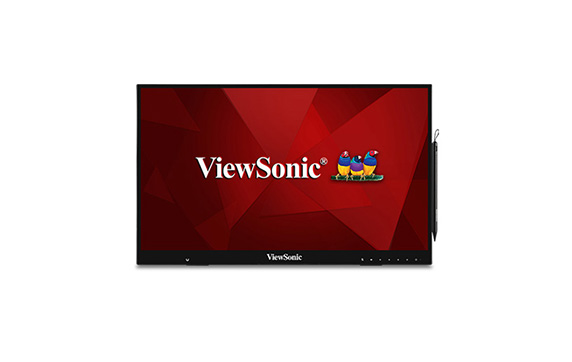
The instructor podium was equipped with a ViewSonic 24-inch Touch Display (Model ID2456), which lets faculty deliver content and connect with students through integrated ViewSonic software.
To ensure seamless operation, the ClarkPowell team integrated the ViewSonic displays into the classroom’s existing Crestron matrix switcher.
RESULTS
The upgraded classroom is now a modern digital learning environment and a model for future classroom refreshes. The integrated technology blends in-person and remote experiences, delivering benefits to faculty, students and the IT team.
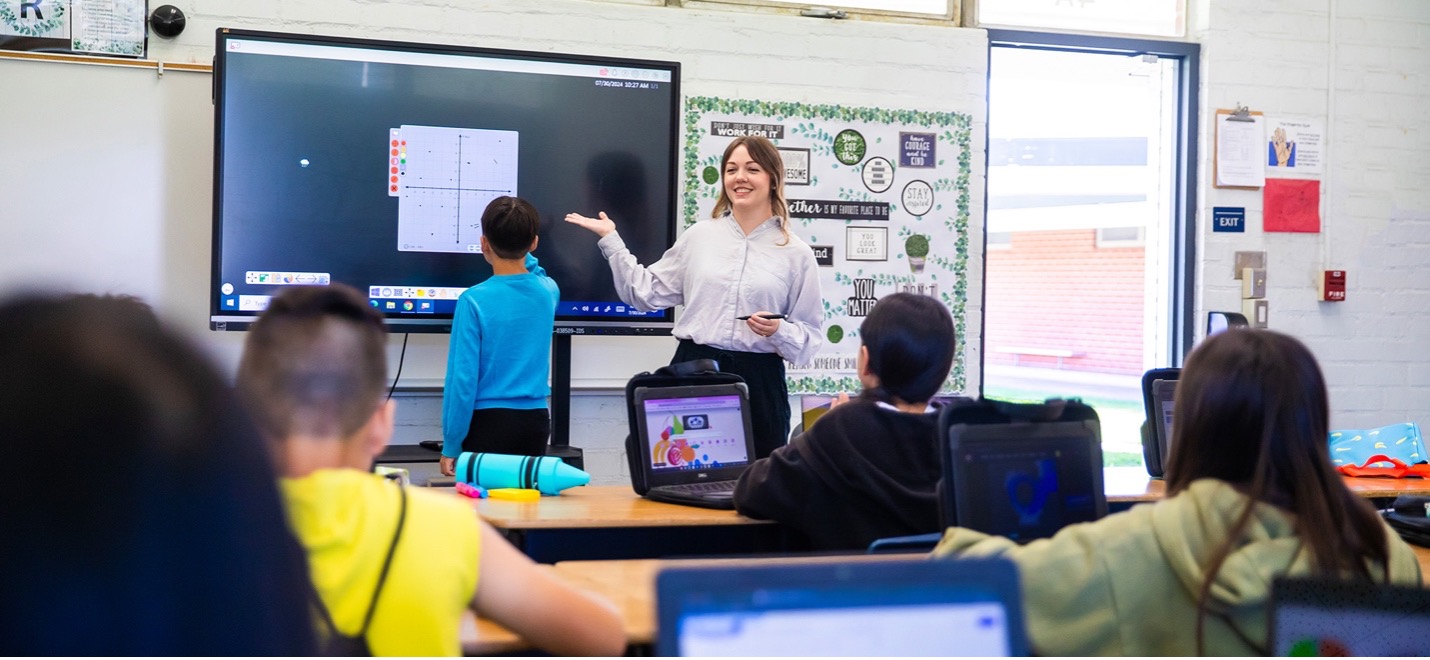
Instructors appreciate no longer having to contend with projector lights shining in their eyes, and being able to keep their focus on students while marking up content at the podium. The confidence monitors at the back of the room let presenters confirm that their content looks right on the front screens, while also giving them an interface with students joining on Zoom.
The brightness and consistency of the ViewSonic dvLED displays give classroom and remote students a clearer view of content in all lighting conditions, and deliver strong recorded images, a critical component of serving asynchronous distance learners. The IT team benefits from lower and easier maintenance. Together that means more streamlined instruction with greater efficiency and reduced cost.
Along with the internal response, the IT team has hosted colleagues from other universities interested in the ViewSonic solution, who commented on how good the new displays look. A visiting IT specialist also mentioned that a classroom at their own university had a dvLED wall without a Glue-on-Board surface treatment, which led to damage and repair costs when students bumped into it.
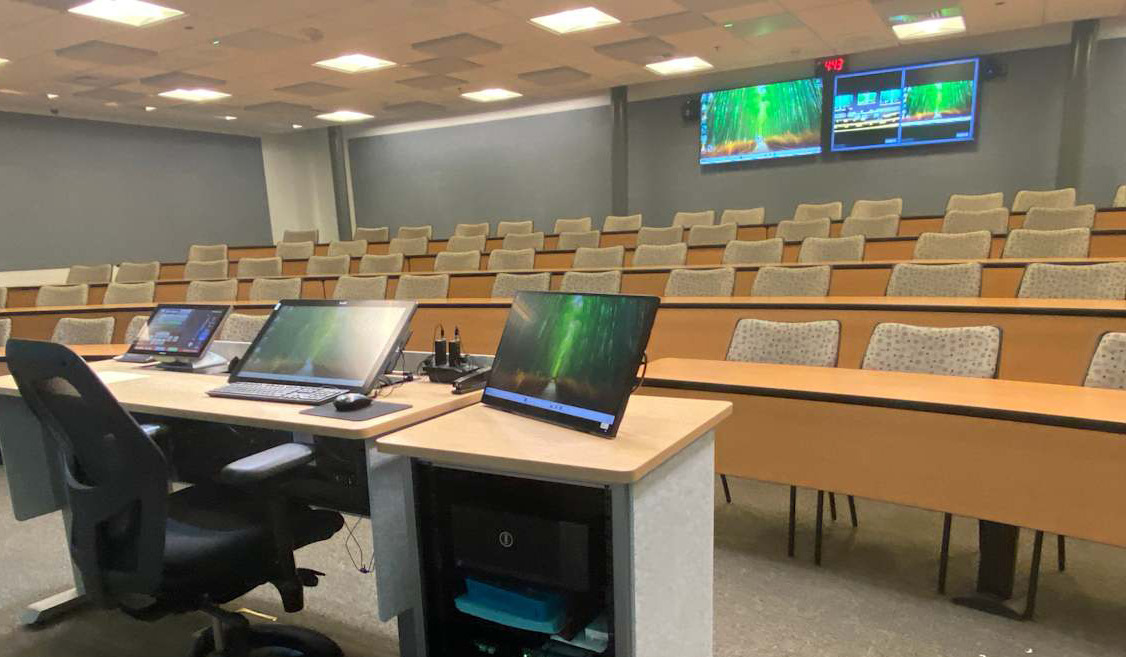
The university’s stated objective for its top-tier technology classrooms is to empower faculty to deliver modern, high-impact instruction to a range of students without the burden of technical barriers. In these spaces, the technology lets faculty focus on teaching rather than troubleshooting. This upgrade achieved that, with durable ViewSonic dvLED walls, commercial displays and a podium touch display as the foundational visual technology.
Frequently Asked Questions
What Made the Old Projector Setup a Problem for Hybrid Instruction?
Two ceiling-mounted projectors cast onto dual wall screens, which created three issues at once. Projector light shone into the instructor’s eyes at the front of the room, image brightness and consistency varied with ambient lighting, and the setup was never designed to serve remote students alongside the in-person class.
Why Choose dvLED Instead of Replacing the Projectors?
Direct View LED holds brightness and consistency in a fully lit room, which matters when the same content has to read clearly for students in the room and on a recording. It also removes the consumables and alignment work a projector requires. For a room that runs most of the day and is monitored in real time by IT, that changes the maintenance profile as much as the image quality.
What Does Glue-on-Board Construction Change for Facilities Teams?
Glue-on-Board encapsulates the LEDs and electronics in a thin resin layer, so the display surface tolerates contact rather than losing pixels to it. In a classroom where students walk past the wall every day, that is the difference between a durable install and a recurring repair line. Tiles are also individually replaceable, so a damaged section is a panel swap rather than a full-unit service call.
How Do Confidence Monitors Help an Instructor Teaching to Two Audiences?
An instructor facing the class cannot see the front-of-room displays. Rear-wall confidence monitors let them verify that content is displaying correctly without turning around, and a second monitor keeps remote participants visible. That is what makes it possible to teach to both audiences without treating one as an afterthought.
Can ViewSonic Displays Integrate With an Existing Crestron System?
Yes. In this installation the integrator brought the ViewSonic displays into the classroom’s existing Crestron matrix switcher, so control stayed on the system the campus already runs. ViewSonic also offers integration with Q-SYS, Extron and AMX platforms.
Is This Configuration Repeatable for Other Classrooms?
That was one of the stated goals. The university treats this room as a model for future refreshes, and the configuration scales down for smaller rooms by reducing the number of front-of-room displays while keeping the same podium and confidence monitor pattern.
Ready to Modernize Your Hybrid Classrooms?
Talk to a ViewSonic representative or an authorized partner about a hybrid classroom configuration for your campus, including dvLED sizing, confidence monitor placement and control system integration.
*Performance, security, compliance, and sustainability outcomes may vary depending on system configuration, usage environment, and agency requirements.





Login and Registration Form