If you’re evaluating Direct View LED (dvLED) for a boardroom, lobby or large meeting space,
the comparison that sorted this market two years ago no longer does.
All-in-one architecture used to be the dividing line. As of 2026 most major vendors ship at
least one all-in-one model, so answering yes to that question no longer tells you much. What
separates vendors now is what’s inside the quote and who owns the outcome when the
display goes up.
This guide covers what dvLED is, how to pick a pixel pitch, what a complete quote includes,
and the five questions your RFP should answer before it goes out.
What is an All-in-One dvLED display?
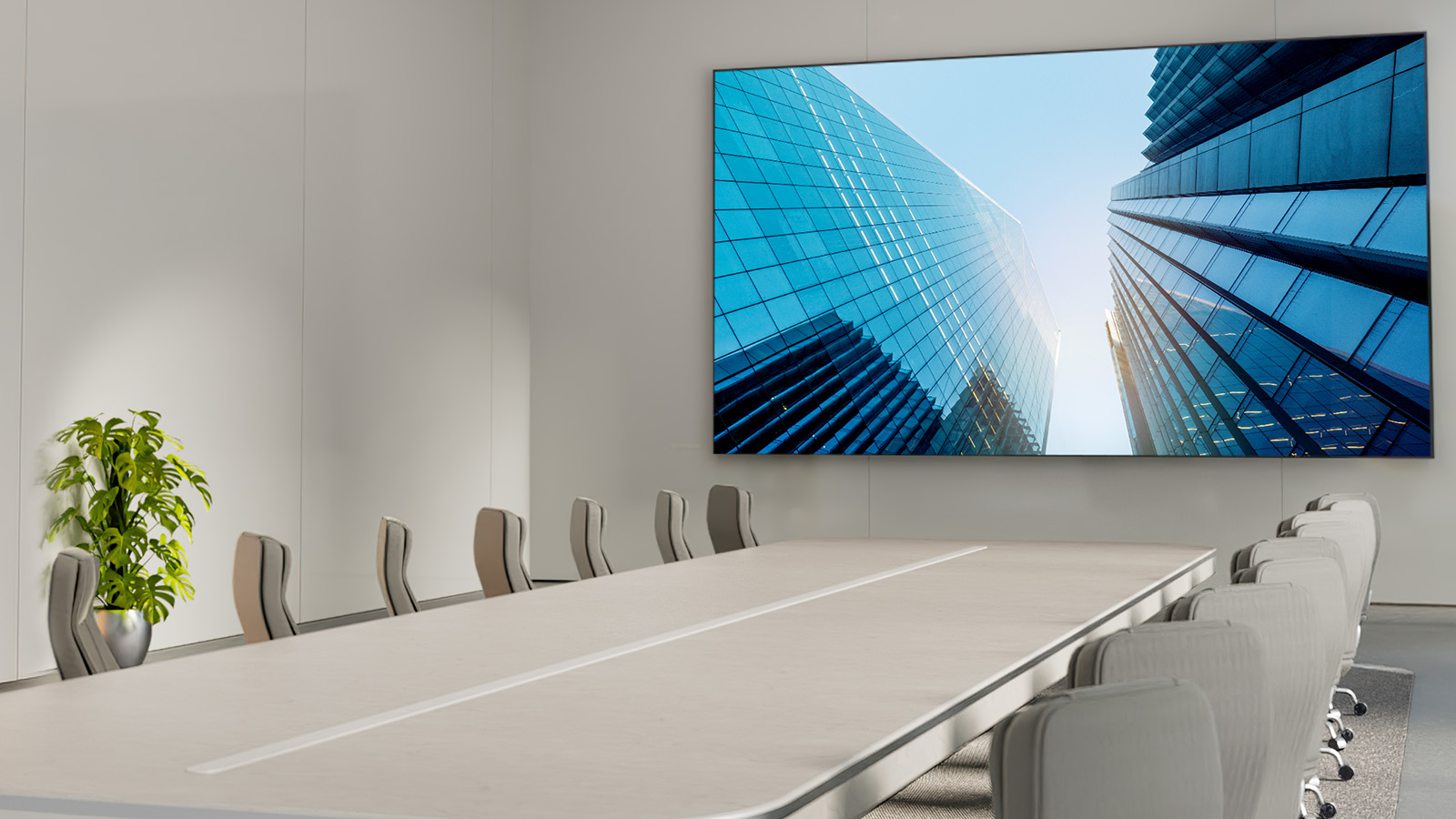
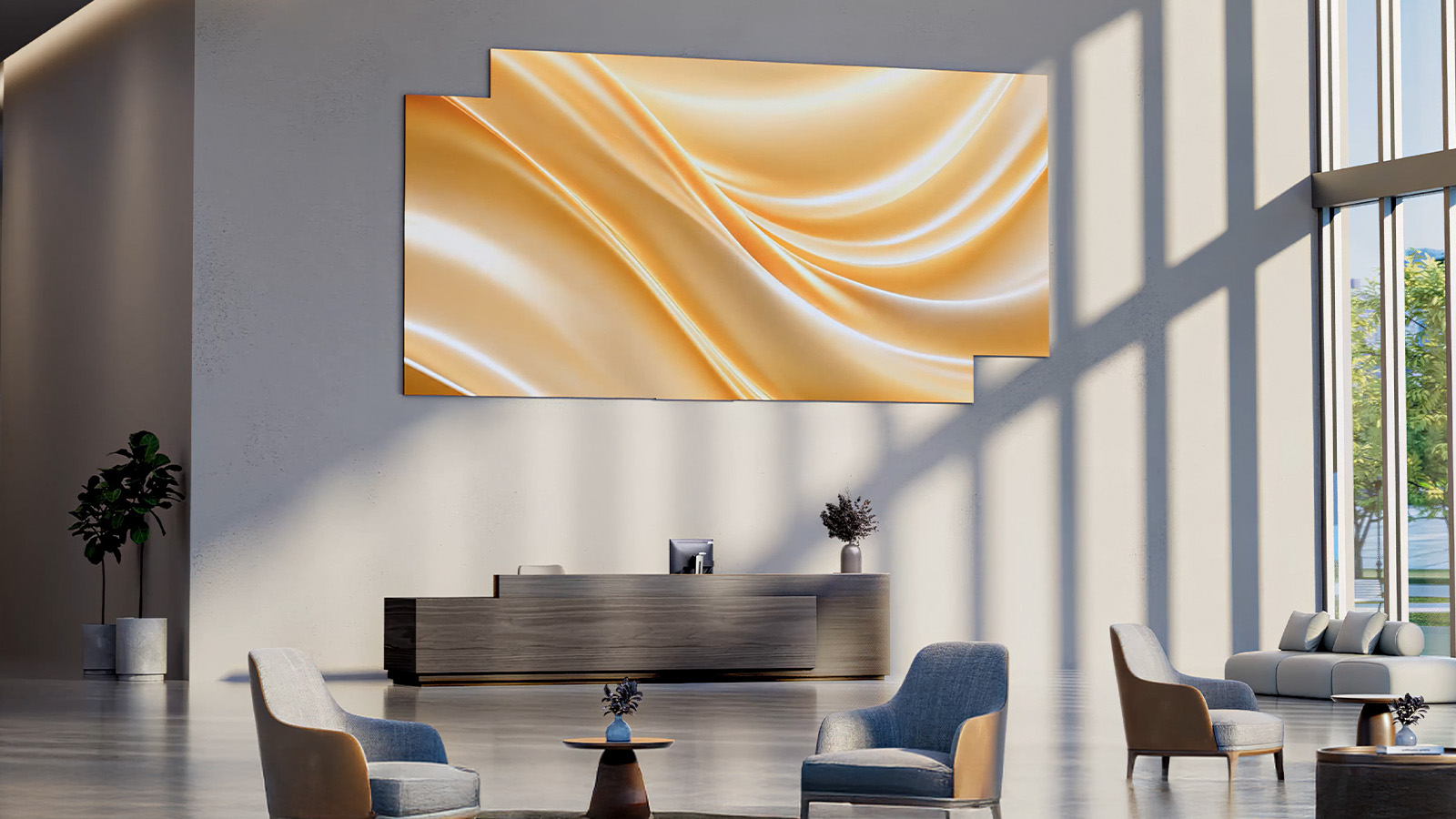
A dvLED display is a video wall built from an array of LED cabinets and tiles, where each
individual LED is a pixel and the viewer looks directly at the LEDs rather than at a backlit
panel. No bezels, and it scales to sizes and shapes a single flat panel can’t reach.
A traditional dvLED uses separate components for image processing and power. It allows
deep customization, and it requires design expertise, specialized software for installation,
and coordination between parts sourced separately.
An All-in-One (AiO) dvLED integrates the image stitching processor, power and mounting
into the product. It’s easier to specify because everything is already included and
compatible, simpler to install, and typically a lower price point. That’s why it became the
default for boardrooms, classrooms and lobbies.
If every vendor has all-in-one now, what separates them?
Two things: how much of the line is actually all-in-one, and what the vendor takes
responsibility for after the PO.
Coverage. All-in-one flagships tend to arrive in one or two fixed sizes. That’s fine until
your wall isn’t one of them, at which point you’re back in a component design cycle. The
ViewSonic® All-in-One dvLED portfolio runs all-in-one at 108”, 136”, 163”, 217” and 231”,
plus made-to-order, configurable sizing.
Ownership. Integrated hardware says nothing about who validates the design, who
supervises the install, who answers in month 14, or what any of that costs. That’s where
quotes actually diverge, and no spec sheet will tell you.
Worth being direct about the rest of the field. Samsung, Planar and Absen still route
significant parts of their lineups through component-based design. LG now offers
all-in-one configurations, so with LG the comparison isn’t architecture, it’s the
deployment model behind it.
What pixel pitch do I need for a boardroom or lobby?
Use the 10x rule. Pixel pitch in millimeters, multiplied by 10, gives the approximate
optimized viewing distance in feet.
A 1.5mm pitch looks right from about 15 feet. A 1.8mm pitch from about 18 feet.
Closer than that and you start to resolve individual LEDs, which is why a boardroom
where people sit within a few feet of the wall needs a finer pitch than a lobby viewed
from across the room.
| Pixel pitch |
Optimized viewing distance |
Rooms at that distance |
| 0.7 mm |
~7 ft |
Boardroom, briefing center, control room |
| 0.9 mm |
~9 ft |
Small to mid conference room |
| 1.2 mm |
~12 ft |
Conference room, mid lobby |
| 1.5 mm |
~15 ft |
Large meeting space, lobby |
| 1.8 mm |
~18 ft |
Large lobby, auditorium |
| 2.5 mm |
~25 ft |
Atrium, large venue |
Measure your closest seat before you choose, and have a Solutions Engineer confirm
it against the room.
What does dvLED cost beyond the sticker price?
The quoted number is often not the full number. Integration, calibration, drawings, shipping
and on-site support can each arrive as separate line items after the initial quote, particularly
when cabinets, power and processing come from different sources.
ViewSonic uses all-inclusive pricing. Drawings, shipping and on-site installation supervision
are in the quote rather than added later. That targets the biggest hidden cost in a dvLED
project: change orders that surface mid-installation.
When you compare quotes, compare what’s included. A lower sticker price can finish higher
once integration and support are added back in. For budget-sensitive refreshes, the cost-effective LDE Series is the entry point, with the tradeoffs noted in the tracks section below.
What should be included in your dvLED quote?
A dvLED display is a multi-year investment in your most visible space, so the support model
carries as much weight as the hardware. A complete quote covers four things:
- Pre-sales design validation. Size, pixel pitch, power and layout confirmed before
purchase, not after.
- On-site installation supervision, ideally at no extra cost, which reduces risk
for whichever integrator handles the physical install.
- Aligned technical support that carries from design through deployment to ongoing
use, rather than handing off once the display ships.
- Serviceability in writing. How tiles get replaced, whether spares are included,
and the rated LED life.
Every ViewSonic dvLED project includes U.S.-based Solutions Engineers and on-site
installation supervision at no extra cost, with aligned U.S.-based technical support from
design onward. Every model uses front-serviceable, hot-swappable tiles, ships with 5%
calibrated spare tiles, and is rated for roughly 100,000 hours of LED life.
Protection is standard rather than an upgrade: Glue-on-Board or Chip-on-Board
construction across the portfolio, with IK- and IP-rated models.
Does dvLED integrate with Q-SYS, Crestron and Extron?
ViewSonic dvLED integrates into the Q-SYS Ecosystem through a Q-SYS Library Verified
plugin, and is compatible with Crestron, Extron and AMX, with OpenAPI available for custom
control. Power, volume and input switching run from the control system your AV team
already uses. Image stitching is handled in the display, so there’s no separate stitching
software to license or maintain.
The LDS, LDM, LDP and LDC series also include ViewSonic Manager, a free browser-based
console for remote management: device status, batch enrollment by QR code, grouping by
site or room, firmware pushes and urgent alert broadcast. Scheduling, zoned multimedia
broadcast and remote desktop are available in Manager Advanced.
One exception worth catching early. The LDE series runs a simplified OS without Manager
support. If central management is a requirement, specify LDM or LDP rather than LDE.
What are ViewSonic’s dvLED options, and which fits your project?
Three tracks, organized around how enterprise teams actually buy.
| Option |
Series |
Sizes |
Resolution |
Pixel pitch |
Manager |
| Mobile |
LDS |
136" |
1080p |
1.5 mm |
Yes |
| Pre-configured |
LDE |
108", 136", 163" |
1080p |
1.2, 1.5, 1.8 mm |
No |
| Pre-configured |
LDM |
136", 163", 217" |
2K+ and 4K |
0.9, 1.25, 1.5 mm |
Yes |
| Pre-configured |
LDP |
163", 217" |
4K |
0.9, 1.2 mm |
Yes |
| Configurable |
LDC |
Made to order |
Configurable |
0.9 to 2.5 mm |
Yes |
Most boardroom and lobby projects land in pre-configured or configurable. If your space
matches a standard footprint and timeline matters, a stocked model like the LDM Series
moves faster. If your wall has a non-standard size or an architectural feature to design
around, the Configurable LDC Series is built to your dimensions without giving up all-in-one
simplicity. For spaces where the display needs to move rather than stay fixed, the foldable
mobile dvLED display ships in a reusable flight case and sets up without tools.
One practical note for upper-floor installs. A 100”-plus LCD display often can’t fit a standard
elevator, which quietly rules it out above the ground floor. A dvLED arrives in crates and
assembles in the room, so the building stops dictating the display size.
What questions should your dvLED RFP answer?
Use these to compare vendors on equal footing.
- Is every model in the line all-in-one, or only some of them? Specifically: what
happens if our wall isn’t a standard size?
- What’s in the quoted price, and what typically gets added as a change order
later? Ask about drawings, shipping, calibration and supervision by name.
- Who provides pre-sales design validation, and is it included before purchase?
- Is on-site installation supervision included, and at what cost?
- What’s the plan if a tile fails? Are spare tiles included, are they pre-calibrated, and
how fast can it be serviced?
A vendor who answers all five clearly and in writing before the RFP closes is showing you a
lower-risk project. Vendors whose all-in-one offering covers only part of the lineup will find
questions one and two harder to answer cleanly
Why consider ViewSonic for dvLED?
ViewSonic has spent nearly four decades in visual display technology, with U.S.
headquarters in Brea, California and offices in more than 100 countries. All-in-One dvLED
has been a dedicated line since 2020, and the engineering has kept moving. The foldable
all-in-one dvLED line is now in its fourth generation.
Two things you can verify without taking a sales call. ViewSonic runs dvLED demo centers
across the U.S. and Canada, including Brea, Fullerton and San Juan Capistrano in California,
plus Atlanta, Charleston, Highland Heights, New York and Toronto, where you can see
a working wall at real viewing distances and bring your own content. And the dvLED
Installation Certification Program trains integrators at the Brea headquarters and in select
U.S. cities through the year, which is what “guided deployment” means in practice rather
than in a brochure.
Mobile and pre-configured models are stocked in the U.S. and ship from California,
and the Solutions Engineers who design your project are the same U.S.-based team
supporting it afterward.
 Teacher's Community
  Support




Login and Registration Form