Education
Business
Consumer

Case Studies

Higher Education Hybrid Classroom Gets Transformative Upgrade with ViewSonic® dvLED Displays and More

CASE STUDY

Higher Education Hybrid Classroom Gets Transformative Upgrade with ViewSonic® dvLED Displays and More

CUSTOMER

Founded in 1887, NC State University is a public land grant university in Raleigh, NC. The largest university in the Carolinas, NC State has a total enrollment of over 36,000 students and is known for its leading programs in science, technology, engineering and math. Also a leader in agriculture, education, textiles, business and natural resources, NC State is at the forefront of teaching and research in design, the humanities and the social sciences.

CHALLENGE

Sample Image
  • Replace a dual-projector hybrid classroom with a video wall that serves in-person and remote students equally, and that IT can monitor and maintain without disruption.

A recognized leader in STEM higher education, NC State is likewise dedicated to being at the forefront of classroom technology. To facilitate efficient use of technology resources, the university offers instructors a variety of classroom configurations to meet their edtech needs. At the pinnacle of these options are the university’s DELTA (Digital Education & Learning Technology Applications) classrooms. Equipped to simultaneously deliver seamless instruction to inperson and remote students, these rooms are live-monitored by DELTA staff to prevent tech-related disruption.

One such classroom in NC State’s Park Shops building was due for a major technology update. The existing setup relied on two ceiling-mounted projectors, which cast content onto dual wall screens. It was time to upgrade to technology that would support the range of modern learning options and instructional modalities: a state-of-the-art video wall that would deliver bright, consistently sharp visuals for every student. Importantly, the solution needed to seamlessly deliver content to in-person and distance learners, while creating an environment that connected those audiences and provided intuitive control for the instructor.


“It’s truly been an amazing transformation and we’re extremely happy with the ViewSonic displays.”

— Tim Hinds, A/V and Network Infrastructure Manager, NC State University DELTA


“A majority of DELTA-supported classes incorporate a Zoom call for students who aren’t able to make it to class or choose the distance learning option,” said Tim Hinds, A/V and Network Infrastructure Manager for Digital Media Support Services Engineering (DMSSE) and DELTA.

“Additionally, most classes also offer asynchronous learning, so in our classrooms everything we do is redundant because it’s critical that lectures are recorded and uploaded – all while providing a smooth live experience for distance and in-room learners.”

Several types of displays would be needed to support these goals: large, vibrant front-of-room displays for on-site learners; displays to bring Zoom participants into the room; confidence displays for the instructor at the back of the room; and a desktop smart display at the instructor podium. All of which would be maintained and monitored in real time by DELTA team members.

SOLUTION

Sample Image
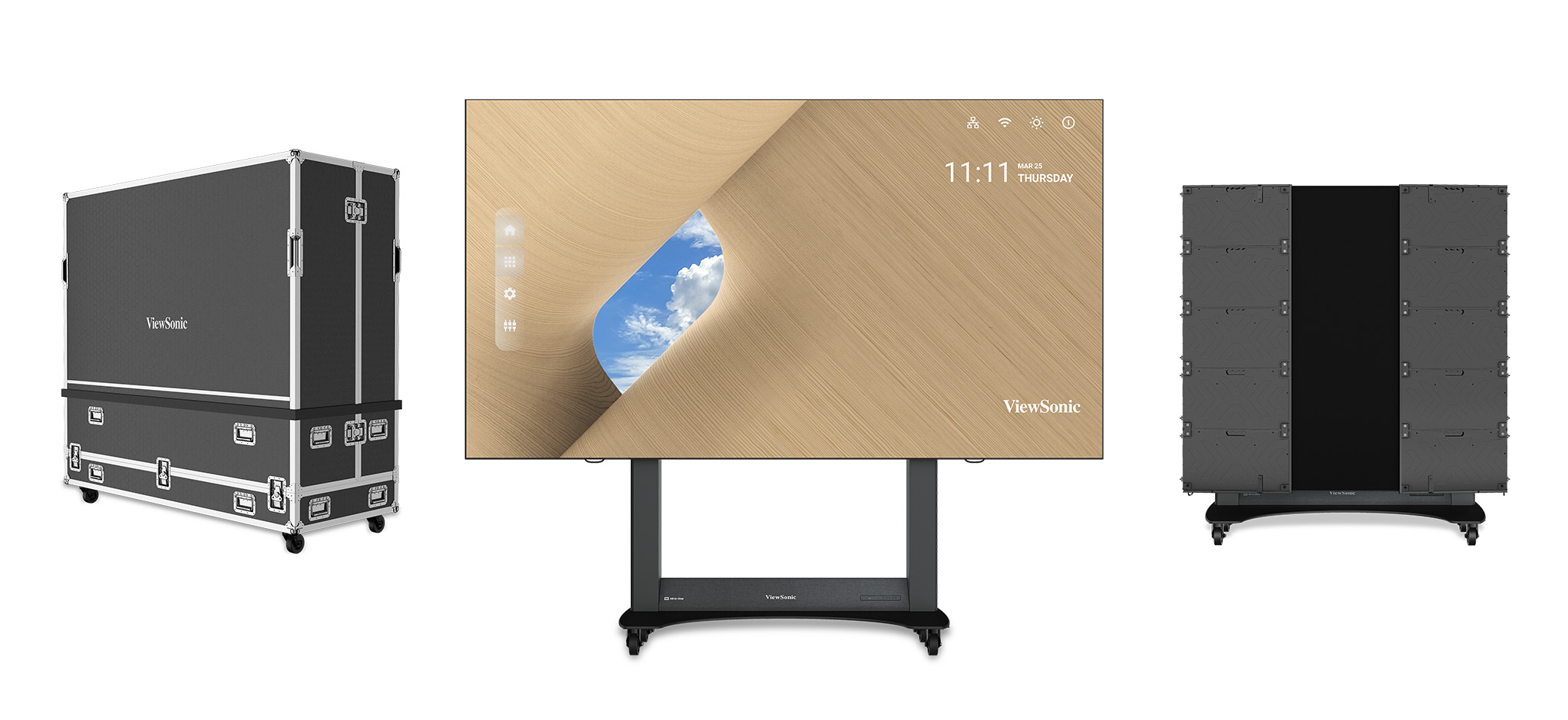
  • 136” All-in-One Direct View LED Video Walls (LDM136-151)
  • 98” Commercial 4K Display (CDE9830)
  • 65” Commercial Displays, rear-wall confidence monitors (CDE6530)
  • 24” Touch Display at the instructor podium (myPodium™ ID2456-4K)

To accomplish these goals, Hinds worked with longtime reseller partner ClarkPowell, which recommended ViewSonic for the display component of the installation.

“I looked into the ViewSonic products they suggested and was happy with those recommendations,” said Hinds. “I particularly liked that the ViewSonic dvLED had the Glue-on-Board surface, which adds durability. The boards in the front of the classroom are low enough that they could easily be bumped by backpacks or elbows, so this durability was very appealing.” Additionally, Hinds mentioned that the specs overall added up to a great product, and that he appreciated that the ability to replace individual panels would streamline maintenance.
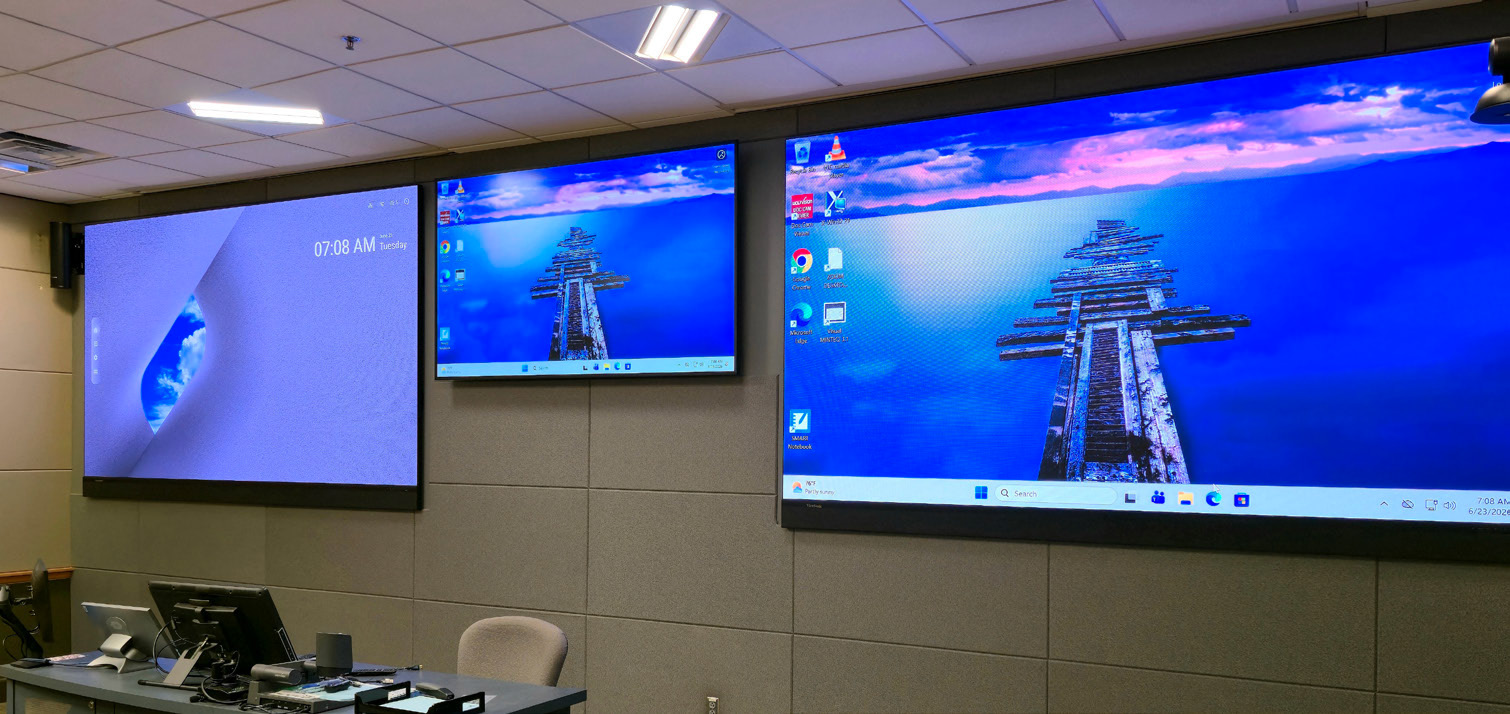
The final front-of-room solution included two 136-inch ViewSonic All-in-One Direct View LED (dvLED) Video Walls (Model LDM136-151), which would present class content, complemented by a ViewSonic 98-inch Commercial Grade 4K Display (Model CDE9830-2) to integrate Zoom participants. Two ViewSonic 65-inch Commercial Displays (Model CDE6530) would be mounted to the back wall for instructor visibility: one to mirror the instructional content; one to display Zoom participants. Finally, the instructor podium would be equipped with a ViewSonic 24-inch Touch Monitor (Model ID2456-4K) that would enable faculty to intuitively deliver content and connect with students using integrated ViewSonic software. To ensure seamless operation, the ClarkPowell team would integrate the ViewSonic displays into the DELTA classroom’s existing Crestron matrix switcher.

RESULTS

Sample Image
  • Removed projector glare from the instructor sightline

  • Unified in-person and Zoom instruction on one front-of-room system
  • Reduced maintenance to individual panel swaps
  • Improved recorded image quality for asynchronous learners
  • Established a repeatable model for future classroom refreshes

The DELTA team was more than satisfied with the service and support from the ClarkPowell team, which was professional and detailed from start to finish. Today, NC State’s Park Shops DELTA classroom is a cutting-edge digital learning environment, with integrated technology that seamlessly blends in-person and remote experiences.

“It’s truly been an amazing transformation and we’re extremely happy with the ViewSonic displays,” said Hinds. “It’s such a big improvement over the projector system. The professors don’t have to worry about lights shining in their eyes and the in-person and Zoom learners are visually well-integrated.”

What’s more, added Hinds, the brightness of the dvLED displays has provided outstanding images for the class recordings – a critical component of serving the needs of distance learners.
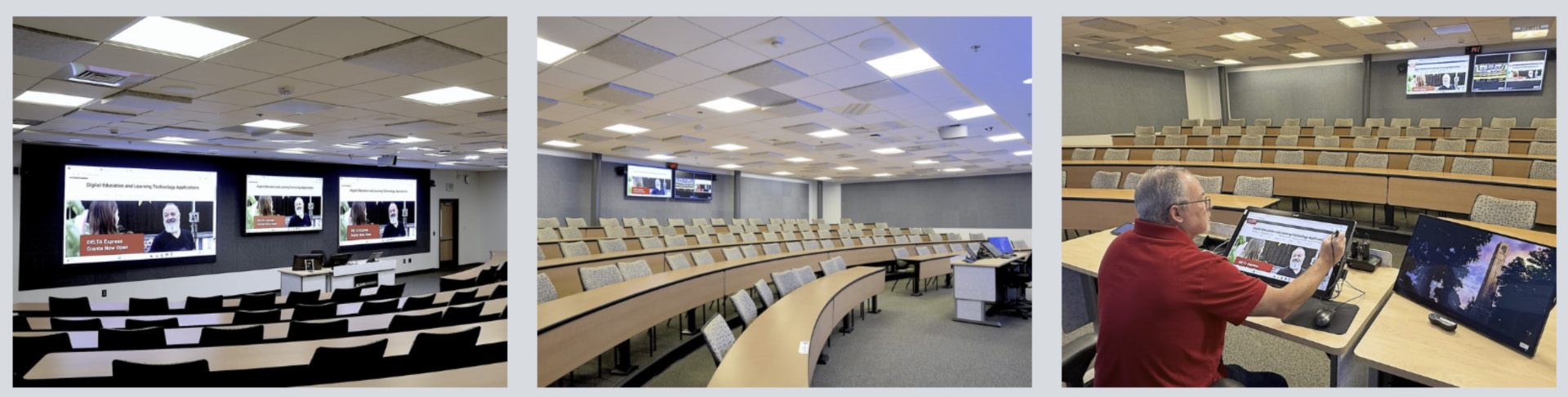
“These video walls deliver bright, clear images, and they’re highly visible in all lighting conditions,” said Hinds. “When we record content for distance education, we can’t dim the lights, or the students wouldn’t be able to see the professor. With the ViewSonic dvLED walls that’s not a problem at all. Not only is it better for students, our team doesn’t have to worry about issues related to lighting and visibility.”

The NC State DELTA team has received positive feedback from a variety of stakeholders, along with visitors from other universities.

“We’ve received many comments about how great the new displays look,” said Hinds. “And we’ve also had IT people from other universities come look at them. Everyone who has seen the setup has loved it and given us positive feedback.”

In fact, Hinds reflected, a visiting IT specialist mentioned that one of their university’s classrooms had a dvLED board that lacked the glue-on LED surface treatment.

“They were unhappy with the product because it created issues and added maintenance, because students do bump into it,” said Hinds. “This was great reinforcement for my initial impression of the ViewSonic dvLED durability.”

Likewise, faculty and other instructors have been overwhelmingly pleased with the upgrade.

“The confidence monitors in the back of the room allow presenters to easily confirm that their content is looking as it should on the front screens and provides an interface with the students joining on Zoom,” said Hinds. “

These displays alert the instructor if there’s a problem with either feed and they offer great reassurance when they can see our team in the central control room quickly resolve issues.”
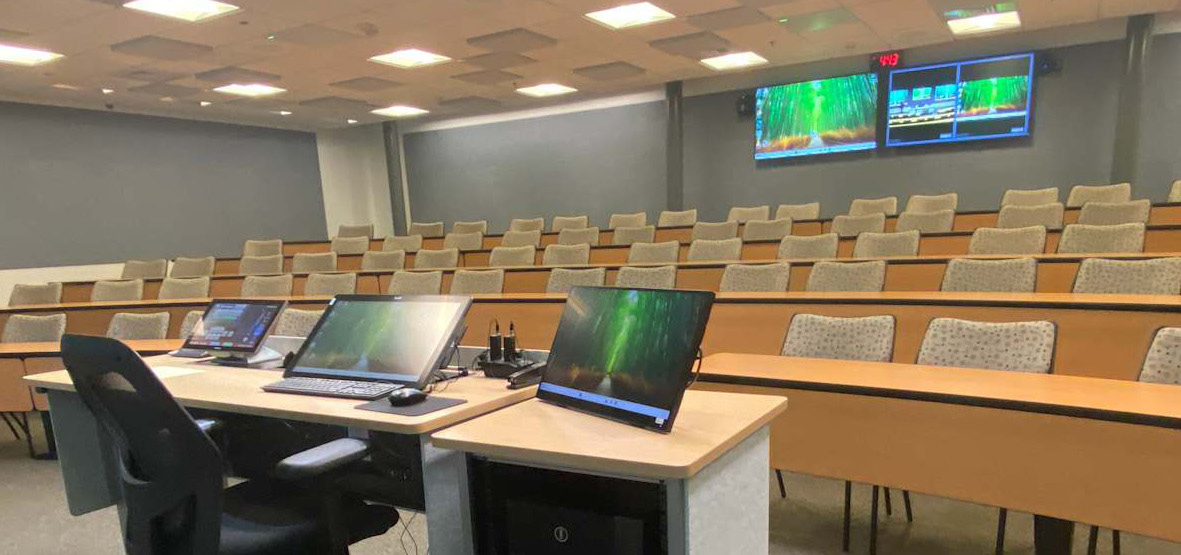
As noted on the university’s DELTA website, the ultimate goal of DELTA classrooms is to empower faculty to deliver modern, high-impact instruction to a range of students, using a variety of modalities, without the burden of technical barriers. In these spaces, the range of edtech allows faculty to focus on teaching, not troubleshooting. The Park Shops classroom upgrade has achieved just that, with bright and durable ViewSonic dvLED walls, Commercial Displays, and Touch Display shining as the foundational visual technology.

“We’re extremely happy with our ViewSonic display set up,” concluded Hinds. “I’m planning to use those same ViewSonic products in another room we are working on.”

Institutional requirements, compatibility, and user experience may vary depending on system configuration and environment. Third-party corporate names, logos, and trademarks stated herein belong to their respective owners and do not imply endorsement or affiliation. 10/26 [26ALL-EDU1603a]


ViewSonic Mobile and Foldable 138-Inch All-in-One dvLED Transforms Graduation and Beyond at Rural School District

CASE STUDY

ViewSonic Mobile and Foldable 138-Inch All-in-One dvLED Transforms Graduation and Beyond at Rural School District

SCHOOL

Frankston Independent School District is a rural public school district in East Texas with 3 schools serving 811 students. The district has a student-teacher ratio of 1:13, an above average attendance rate for the state of Texas, and a 97.7% graduation rate. The district fosters a community of life-long learners by providing an environment that builds self-worth, integrity, and respect for diversity while striving for academic and social excellence.


“We got rave reviews about [the LDS138-151] at graduation. It’s been a game-changer for presenting at our big events and trainings. We love it, and everyone who sees it loves it – including the administrative team and the school board.”

— Chad Griffin, Director of Technology, Frankston ISD


CHALLENGE

Sample Image
  • Graduation ceremonies ran for years on a bulky rear-screen projection system
  • The screen surface was sticky and unpleasant to handle, earning it the nickname “the gummy bear screen”
  • Setup took four people and a great deal of patience
  • Room configuration left the projected image covering only part of the screen
  • The district wanted large-format size, strong image quality, easy mobility, compact storage and enough versatility to use the display year-round

For far too many years, the high school graduation ceremony at the Frankston Independent School District relied on a bulky rear-screen projection system. Its disadvantages went beyond being cumbersome.

“I called it the ‘gummy bear’ screen because everything that touched it would stick,” said Rachel Menjivar, the district’s technology applications PEIMS coordinator. “It was quite disgusting. Plus, it literally took four people with an enormous amount of patience to set it up. And then, because of the room configuration, the image only covered part of the screen.”

As she prepared to attend the state’s annual edtech conference, the Texas Computer Education Association (TCEA), Menjivar was determined to find a replacement. She didn’t know what that solution would be, but she knew she wanted something fabulous.

“We may be a small district, but my motto is that being small is no excuse to be behind on technology,” she said. “For example, we’ve purchased a robot patient for our medical CTE track, we have virtual welders, and we’re always striving to bring cutting edge tech to the district.”

Along with substantial size and superior image quality, her check list included easy mobility, compact storage, and the versatility to use the display for a wide range of applications. Along with Technology Instruction Specialist Courtnie Mewbourn, Menjivar’s first stop at TCEA was the booth of their long-time AV partner Visual Techniques, Inc. (VTI).

“As soon as they told me what they were looking for, I knew what they needed,” said VTI Sales Consultant Michael Chism, who has worked with ViewSonic for over a decade. “ViewSonic is unique among vendors because of the large range of products they offer, not to mention their WiFi casting and display management solutions, which are terrific. With their broad product catalog I know I can always meet my K12 customers’ display needs.”

Chism walked Menjivar and Mewbourn over to the ViewSonic booth. As soon as they saw the 138-inch foldable, mobile dvLED, he said, they knew it was ideal for their needs.

In fact, said Menjivar, her first sighting of the massive display was from behind, and she was already awe-struck.

“We saw the back of it, and it was bent – you can literally live-bend the panels, and it keeps working! We were so impressed,” she said. “Then when we saw the front, and the incredible image quality, we asked for a quote right away.”

SOLUTION

Sample Image
  • ViewSonic LDS138-151 foldable 138-inch All-in-One dvLED display
  • Specified with long-time AV partner Visual Techniques, Inc. after a demo at TCEA
  • Foldable, live-bendable panel design that ships and stores in a single rolling case
  • Two people handle setup: open it, plug it in, press one button to raise the screen
  • Adjustable height, integrated speakers and a hideaway shelf that holds a laptop or clicker
  • Transit case built for forklift pickup, so maintenance staff move it between buildings
  • Funded through a payment plan arranged by VTI and ViewSonic, approved by the school board

Beyond the favorable first impression, the ViewSonic LDS138-151 mobile and foldable 138” All-in-One LED Display met the IT team’s requirements for supporting the graduation ceremony – and so much more. What made the decision even clearer was the team’s familiarity with the quality provided by ViewSonic products.

“We have ViewSonic projectors and monitors in use across the district,” said Director of Technology Chad Griffin. “And we use ViewSonic interactive displays in our classrooms to provide teachers and students with outstanding image quality and touchscreen response.”

With this foundation of trust in the brand, Menjivar and the IT team were ready to invest in the impressive display. VTI rep Chism worked with ViewSonic to arrange a payment plan, while Menjivar appealed to finance director Randi Westbrook, who in turn pitched the solution to the school board.

“I have to credit Randi and our board for making this happen,” said Menjivar. “They are amazing about approving technology investments when they see clear value for students and the community. They recognize that not only are we good stewards of technology, we are also good at bringing in products that expand students’ tech horizons.”

RESULTS

Sample Image
  • Arrived in time for the 2026 graduation ceremony and drew rave reviews from students, families, the administrative team and the school board

  • Two staff members unboxed and set up the display themselves, against an expectation of six helpers
  • Delivered full-screen visual support for the graduation slide show for the first time in the technology director’s tenure
  • Now moves across campus for teacher training sessions and any large-group presentation
  • Integrated speakers cover cafeteria presentations of up to 200 attendees with no audio issues, and connect to the gymnasium sound system when needed
  • Forklift-ready transit case lets maintenance staff relocate the display between buildings without specialized handling
  • Hideaway shelf holds a laptop or clicker, removing the need for a separate accessory table

Arriving just in time for the 2026 graduation, the initial unboxing of the display was both dramatic and uneventful. Menjivar had six strong helpers on hand to assist, just in case.

“We knew it was created to be easy to use, but it seemed so huge and heavy we weren’t sure how we were going to handle it,” she said. “And then it gets here and Courtnie and I were able to do everything. It literally just took two not very strong people.”

The setup, she said, couldn’t have been simpler.

“We were expecting a lot more complexity around setting it up and using it,” Menjivar said. “To be able to just open it up, plug it in and push the button to lift the screen was incredible. Plus, it’s so easy to adjust the height – actually, everything about using it is just so easy.”

On hand to support the unboxing, VTI’s Michael Chism was likewise amazed.

“I’d never seen one set up from scratch, and I was very impressed,” he said. “I was thinking to myself that it felt like a fifth gen product, meaning it felt like they worked out all the kinks before releasing it – from the way the box snaps together to the additional set of wheels for the box itself.”

The massive new screen added energy and excitement for the students and audience alike at the graduation ceremony.

“We got rave reviews about it at graduation,” said Griffin, adding kudos to his team Rachel and Courtnie for bringing it to the district. “It’s been a game-changer for presenting at our big events and trainings. We love it, and everyone who sees it loves it – including the administrative team and the school board.”

For the first time since he’s been with the district, Griffin added, his team had the ability to provide robust visual support for the graduation slide show, with outstanding image quality that filled the entire screen.

Since then, the district has made use of the product’s easy portability, relocating it to various spaces on campus for teacher training sessions and more.

“Any time we have a large group of people that we are presenting to, we use it,” said Griffin. “It impresses every time.”

Even moving the display across the campus is quite manageable, noted Menjivar, considering how much it weighs.

“The case has a place for a forklift to slide right into it, so it’s really easy for our maintenance people to transport,” said Menjivar. “When it arrives at the new building, it’s easy to roll the case to the final location, and so easy to unbox and get it working quickly.”

Griffin and Menjivar are both big fans of the simple but clever hideaway shelf on the back of the display.

“It’s an undersold feature,” said Griffin. “We discovered it while looking for an HDMI port. It flips down and can accommodate a laptop or a clicker. It’s such a small thing but it eliminates the need to have a table available for accessories.”

Along with the outstanding image quality, the team discovered that the integrated speakers deliver equally exceptional sound quality.

“We host a lot of presentations in the cafeteria, with up to 200 attendees, and we’ve had no issues with everyone being able to hear,” said Menjivar. “We haven’t yet come across a situation where the sound suffered.”

When needed, she added, connecting the display’s audio to their gymnasium sound system was a snap.

Plans for the foldable display include using the giant screen to enhance the high school esports and gaming activities, perhaps even hosting tournaments. Griffin jokes that he’s lost count of how many people have asked what it would cost to rent the display for a big game watch party.

“It really gets sports fans excited,” he said. “But in all seriousness, it’s a hefty purchase and not to be taken lightly, and for us it was definitely worth every penny.”


Performance, security, compliance, and sustainability outcomes may vary depending on system configuration, usage environment, and agency requirements. Training outcomes and participant experiences may vary depending on individual needs, district requirements, and implementation. Performance, security, compliance, and sustainability outcomes may vary depending on system configuration, usage environment, and agency requirements. Drywall alone is not a structural mounting surface and must never be used as the sole means of support. Proper wall suitability, reinforcement, and the use of appropriate commercial-grade mounting hardware are the sole responsibility of the customer, installer, or system integrator. ViewSonic does not design, evaluate, inspect, or certify wall structures or installation methods. Corporate names and trademarks stated herein are the property of their respective companies. Copyright © 2026, ViewSonic Corporation. All rights reserved.10/26 [26DVL-EDU1710]

Tech in Cube Creates a Future-Ready Workspace with End-To-End Digital Collaboration Solutions

CASE STUDY

Tech in Cube Creates a Future-Ready Workspace with End-To-End Digital Collaboration Solutions

Summary

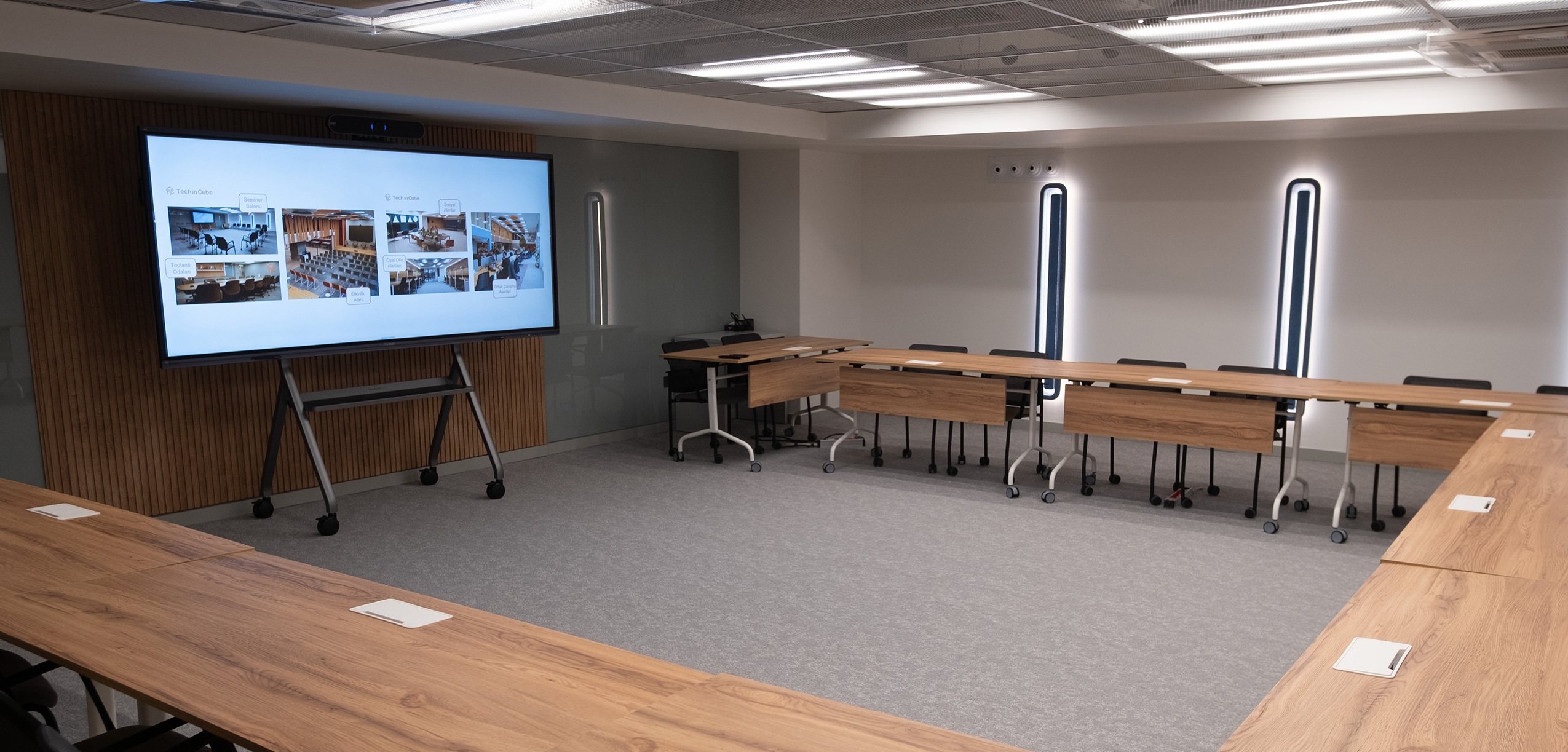
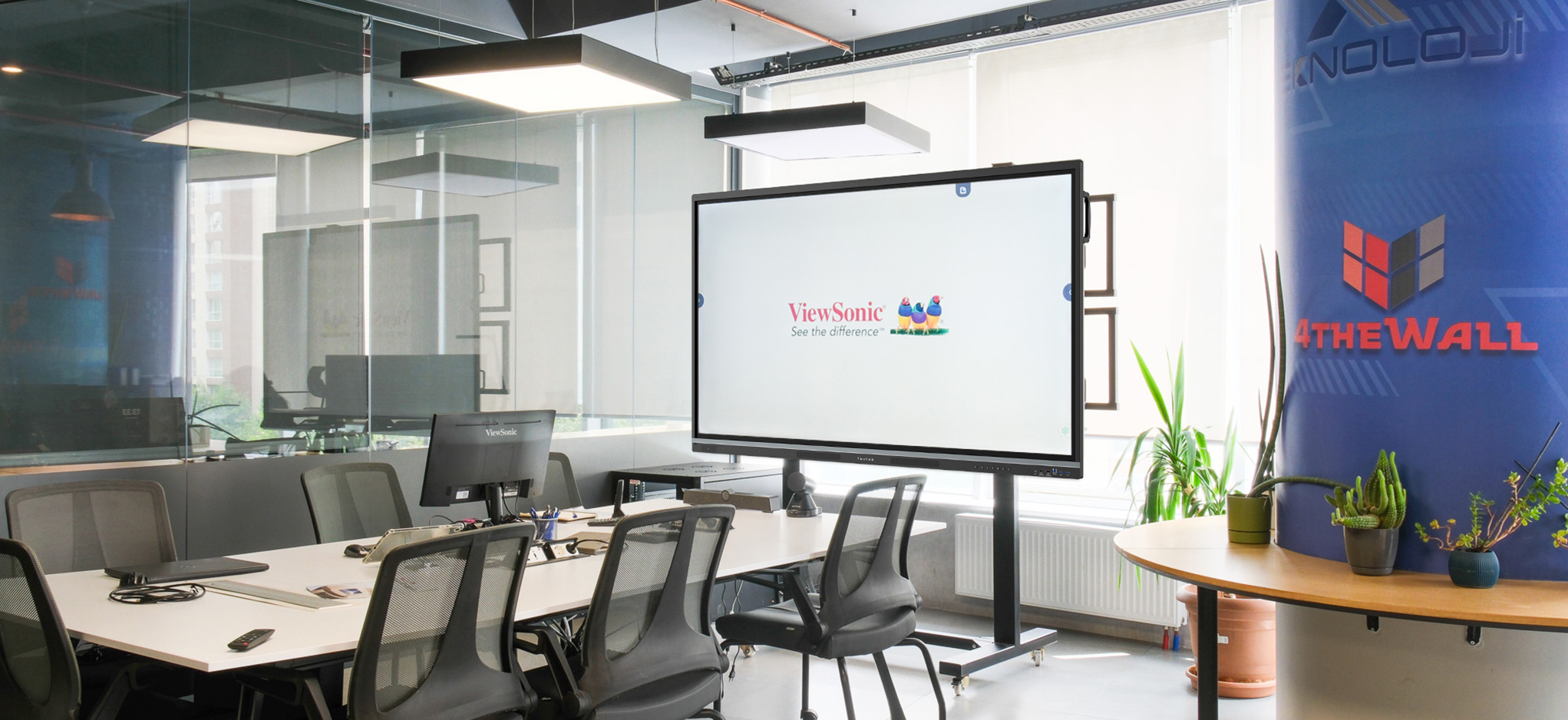
Tech in Cube set out to build a future-ready display and collaboration infrastructure for the 3,500 m² next-generation coworking space within Dijitalpark Technopark Inc. In the project, carried out in partnership with ViewSonic and Etkin Proje, the needs of a total of 12 areas were analyzed, and display, video conferencing, and wireless presentation solutions suited to each usage scenario were brought together in a single integrated technology infrastructure. With the ViewSonic IFP6534, IFP7550, IFP8652-1B, and IFP105UW interactive displays, the LDM163-182 All-in-One LED display, CDE4330 and CDE5530 commercial displays, VB-CAM-201-2 conferencing camera, TRS10 room scheduling panel, UMB202 mount, and WPD-900 wireless presentation system, meeting, training, and collaboration needs across all 12 areas were addressed under a single technology infrastructure.


Challenge

Tech in Cube hosted a range of different usage scenarios, including meetings, training sessions, seminars, coworking sessions, and corporate events. For this reason, rather than a standard setup, display, video conferencing, and collaboration solutions had to be planned individually according to the capacity, purpose, and user profile of each area — the eight meeting rooms first and foremost. The goal was an efficient and seamless user experience for both in-person and remote-participation meetings.

Another priority of the project was to build an easily manageable, standardized, and sustainable technology infrastructure that supports future growth needs. The installed system was intended not only to meet current requirements but also to adapt to new areas and technologies added later. With this in mind, all processes — spanning consulting, installation, and after-sales support — were managed under a single integrated structure.


Solution

The project began with a needs analysis and solution architecture study. The usage purpose, user profile, capacity, and future needs of each area were assessed to create an area-based structure suited to display size, interactive use, video conferencing, and wireless presentation requirements. The customer then experienced different display, camera, and meeting solutions in the ViewSonic showroom through real-world usage scenarios, identifying the most suitable configurations. This process ensured products were evaluated not just by their technical specifications but by real usage needs.

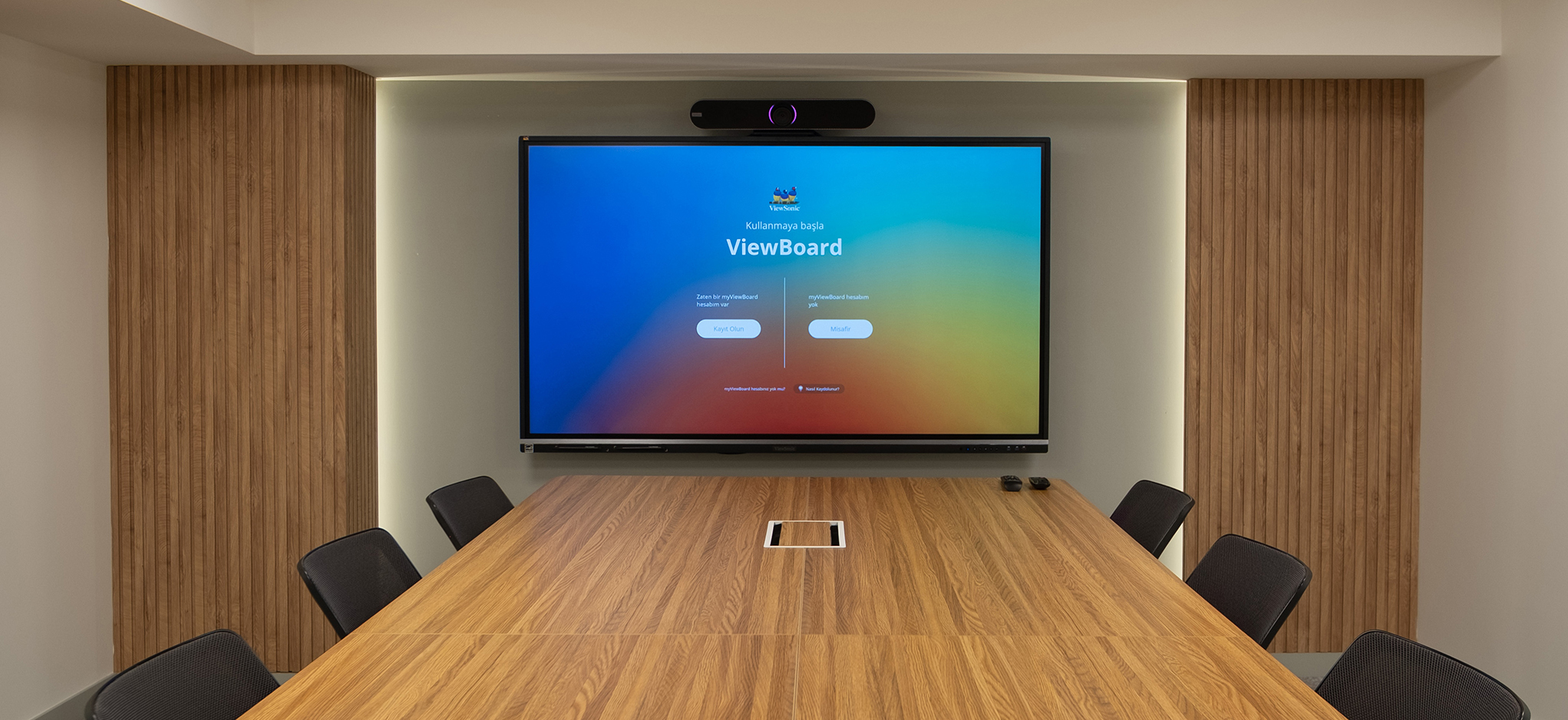
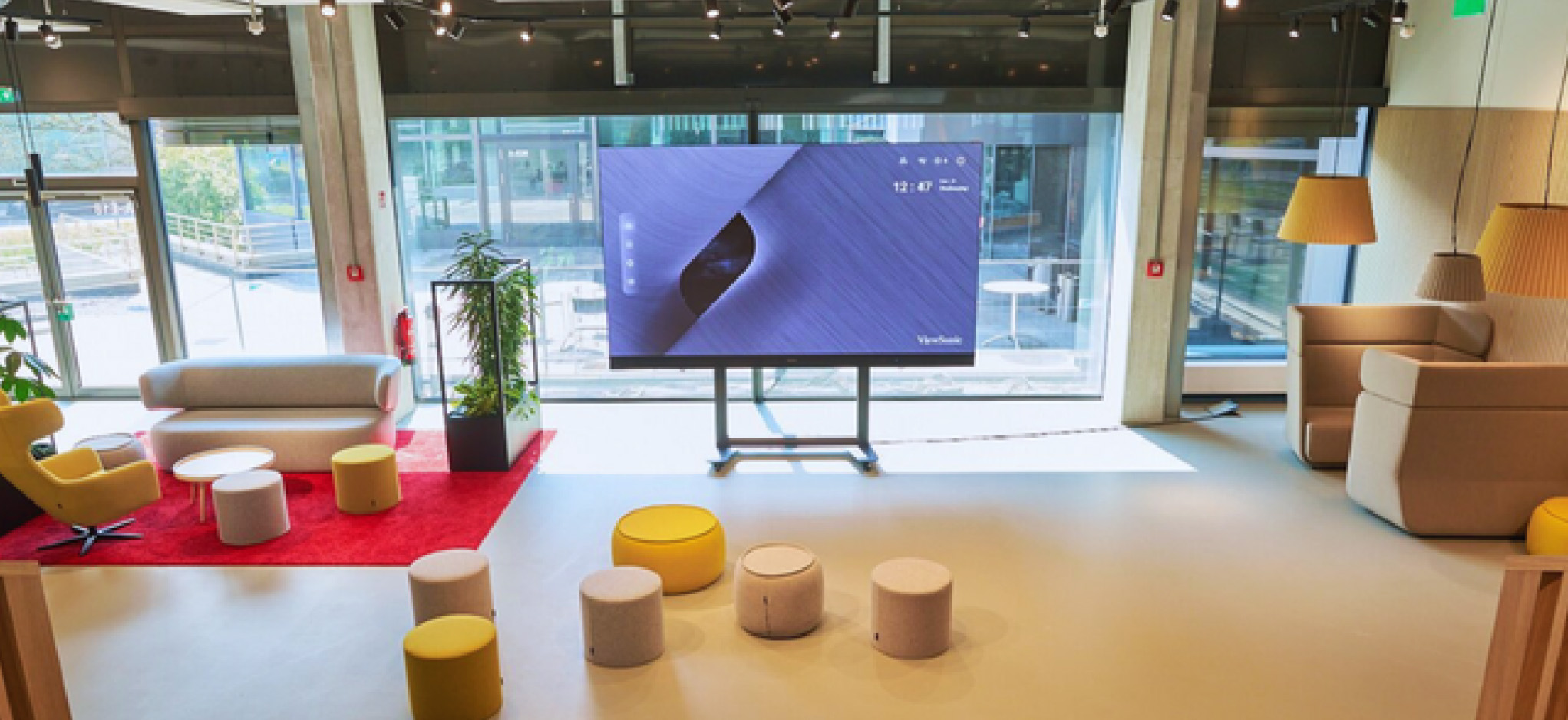
Accordingly, ViewSonic ViewBoard IFP6534, IFP7550, IFP8652, and IFP105UW interactive displays, the LDM163-182 All-in-One LED display, CDE4330 and CDE5530 commercial displays, VB-CAM-201 video conferencing cameras, TRS10 room scheduling panels, UMB202 mounts, and WPD-900 wireless presentation systems were integrated for the meeting rooms, training areas, amphitheater, lounge, and foyer. Hardware and connectivity infrastructure suited to each area's usage scenario was planned to create a consistent user experience. The entire process — covering needs analysis, product selection, system design, installation, and after-sales support — was managed with a single end-to-end project approach, delivering a centrally manageable and scalable technology infrastructure.

Result

As a result of the project, a professional display and meeting infrastructure for Tech in Cube's 3,500 m² next-generation coworking space was delivered with a holistic approach. Solutions developed for the meeting rooms, amphitheater and seminar area, training room, lounge, and foyer were customized to each area's usage purpose and capacity. The scenario-based planning carried out for all 12 areas ensured that solutions were created to suit the needs of different user groups.

The standardized and sustainable technology approach enabled the display, video conferencing, and wireless presentation solutions to work in harmony with one another, simplifying daily use and management processes. While the scalable system design supports future expansion needs, end-to-end project management helped run the entire process from a single center. As a result, Tech in Cube gained a future-ready digital work environment that meets meeting, training, seminar, coworking, and corporate communication needs under one roof, with the user experience at its center.


Products: ViewSonic IFP6534 · ViewSonic IFP7550 · ViewSonic IFP8652 · ViewSonic IFP105UW · ViewSonic LDM163‑182 · ViewSonic CDE4330 · ViewSonic CDE5530 · ViewSonic VB‑CAM-201 · ViewSonic TRS10 · ViewSonic UMB202 · ViewSonic WPD‑900

Actual performance, compatibility, and user experience may vary depending on system configuration, network conditions, usage environment, and other factors. Drywall alone is not a structural mounting surface and must never be used as the sole means of support. Proper wall suitability, reinforcement, and the use of appropriate commercial-grade mounting hardware are the sole responsibility of the customer, installer, or system integrator. ViewSonic does not design, evaluate, inspect, or certify wall structures or installation methods. Founded in California, ViewSonic is a leading global technology provider in visual solutions, operating in more than 100 countries worldwide. With its innovative and visionary approach, ViewSonic offers comprehensive hardware and software solutions spanning monitors, projectors, pen displays, commercial displays, All-in-One LED displays, ViewBoard interactive displays, and the myViewBoard software ecosystem. With 40 years of expertise in visual display technologies, ViewSonic delivers innovative and reliable solutions for the education, corporate, consumer, and professional markets, helping customers experience “See the Difference.” To learn more about ViewSonic, visit our website at www.viewsonic.com. 9/26 [26ALL-MLT1628e]

A Technology Upgrade Preparing Learning Spaces for The Future at Yaşar University

CASE STUDY

A Technology Upgrade Preparing Learning Spaces for The Future at Yaşar University

Summary

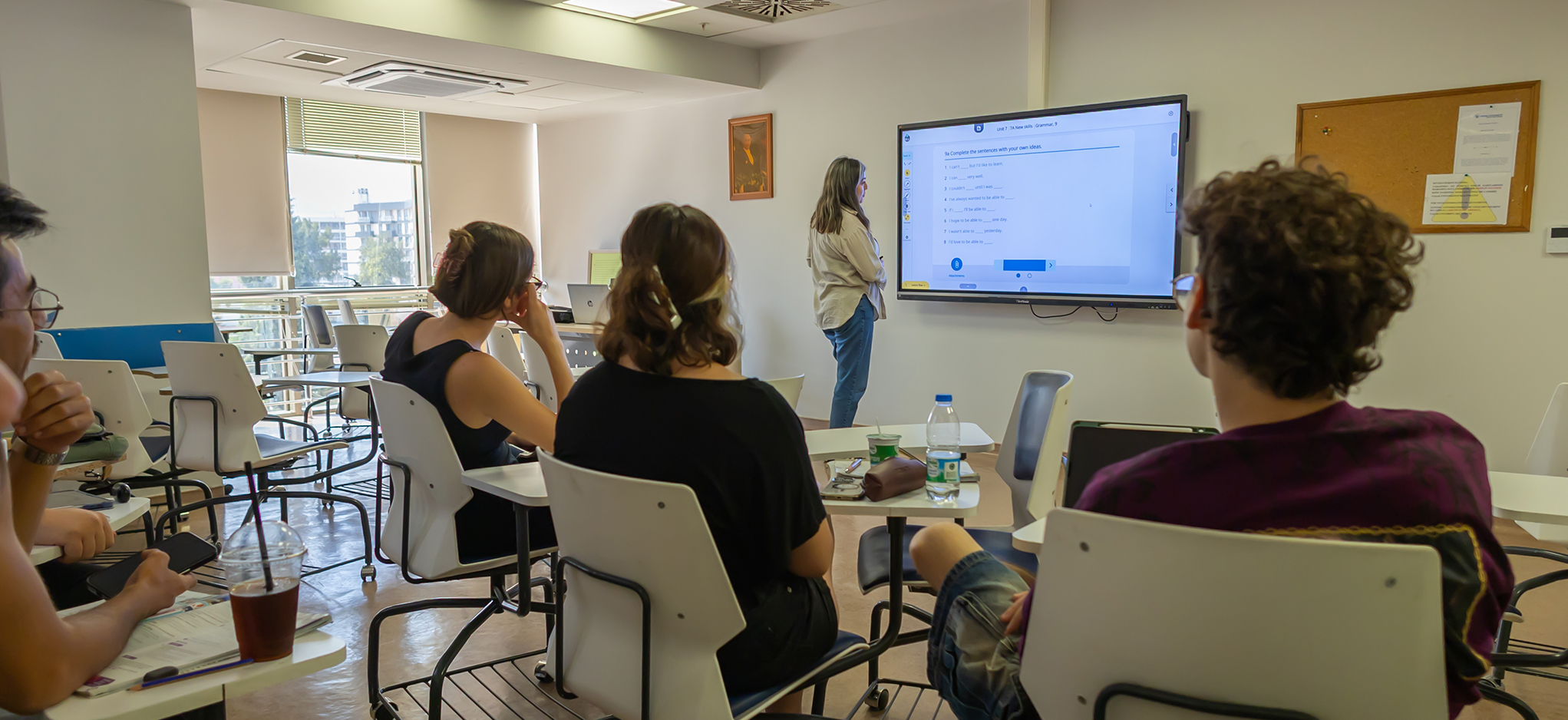
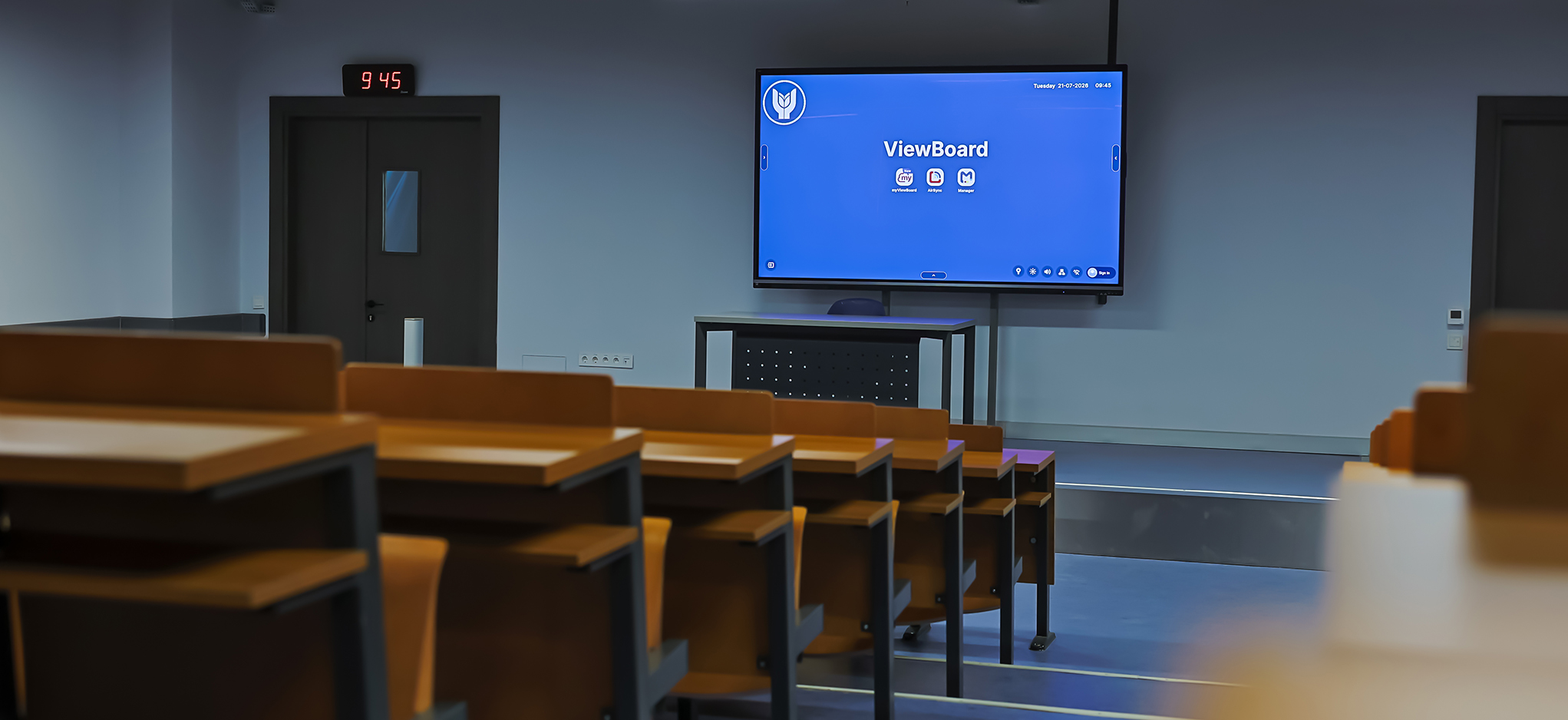
Yaşar University renewed the display infrastructure of its learning and presentation spaces in partnership with ViewSonic and Info Cube, deploying 75-, 86-, and 98-inch ViewSonic ViewBoard® IFP51 Series interactive displays along with myViewBoard and ViewSonic Manager solutions. This technology upgrade enabled academics to use digital content more efficiently while creating a more interactive learning experience for students and a sustainable, centrally manageable education infrastructure for the university.


Challenge

Yaşar University needed a scalable display infrastructure suited to every environment for its learning and presentation spaces, which vary in size and usage scenario. Ensuring that academics have a consistent and easy usage experience across all areas, and can readily integrate digital content into lesson processes, was also among the project's core requirements.

In addition, the goal was to enable the displays at different locations to be managed centrally and remotely, and to reduce the IT team's operational burden. The university aimed to unite hardware, education software, and device management under a single ecosystem, building a sustainable structure that both meets current needs and adapts to future technology investments. The goal was thus to make education and technical management processes more efficient, flexible, and easy to manage.


Solution

A scalable solution made up of 75-, 86-, and 98-inch ViewSonic ViewBoard® IFP51 Series interactive displays, suited to the needs of different learning spaces, was planned for Yaşar University. Display sizes were determined according to the physical structure of the areas, user capacity, and display needs, while the myViewBoard ecosystem created a structure in which academics can more easily produce and present digital content and develop interactive lesson experiences. In this way, each learning space was supported by a display solution suited to its usage scenario, providing a more efficient educational environment.

Supported by ViewSonic Manager, the solution enabled all displays to be managed centrally and remotely, reducing the IT team's operational burden. The different display sizes offered under the same series created a consistent user experience across the university while supporting standardization in management processes. As a result, hardware, education software, and device management were brought together under a single integrated ecosystem, creating an efficient, sustainable, and future-ready education infrastructure across the university.

Result

With the technology upgrade, Yaşar University equipped its various learning and presentation spaces with 75-, 86-, and 98-inch ViewSonic ViewBoard® IFP51 Series interactive displays, gaining a more modern and scalable display infrastructure. The myViewBoard ecosystem supported academics' processes for creating and presenting digital content and running interactive lessons, while providing a more participatory learning experience for students. Different usage scenarios were thus met with a consistent user experience under a single product family.

A structure was created in which all displays can be managed centrally and remotely with ViewSonic Manager, easing the IT team's operational processes. Thanks to the shared software ecosystem, education and technical management processes became executable in a more integrated way. Bringing hardware, education software, and device management together in a single ecosystem, this solution gave the university a more efficient and sustainable education-technology infrastructure while also establishing a flexible foundation for future growth and technology investments.


Founded in California, ViewSonic is a leading global technology provider in visual solutions, operating in more than 100 countries worldwide. With its innovative and visionary approach, ViewSonic offers comprehensive hardware and software solutions spanning monitors, projectors, pen displays, commercial displays, All-in-One LED displays, ViewBoard interactive displays, and the myViewBoard software ecosystem. With 40 years of expertise in visual display technologies, ViewSonic delivers innovative and reliable solutions for the education, corporate, consumer, and professional markets, helping customers experience “See the Difference.” To learn more about ViewSonic, visit our website at www.viewsonic.com.
Actual performance, educational outcomes, security, compliance, and user experience may vary depending on system configuration, network conditions, usage environment, institutional requirements, and other factors. Drywall alone is not a structural mounting surface and must never be used as the sole means of support. Proper wall suitability, reinforcement, and the use of appropriate commercial-grade mounting hardware are the sole responsibility of the customer, installer, or system integrator. ViewSonic does not design, evaluate, inspect, or certify wall structures or installation methods.

Corporate Meeting Room Digital Transformation at Türasaş

CASE STUDY

Corporate Meeting Room Digital Transformation at Türasaş

Summary

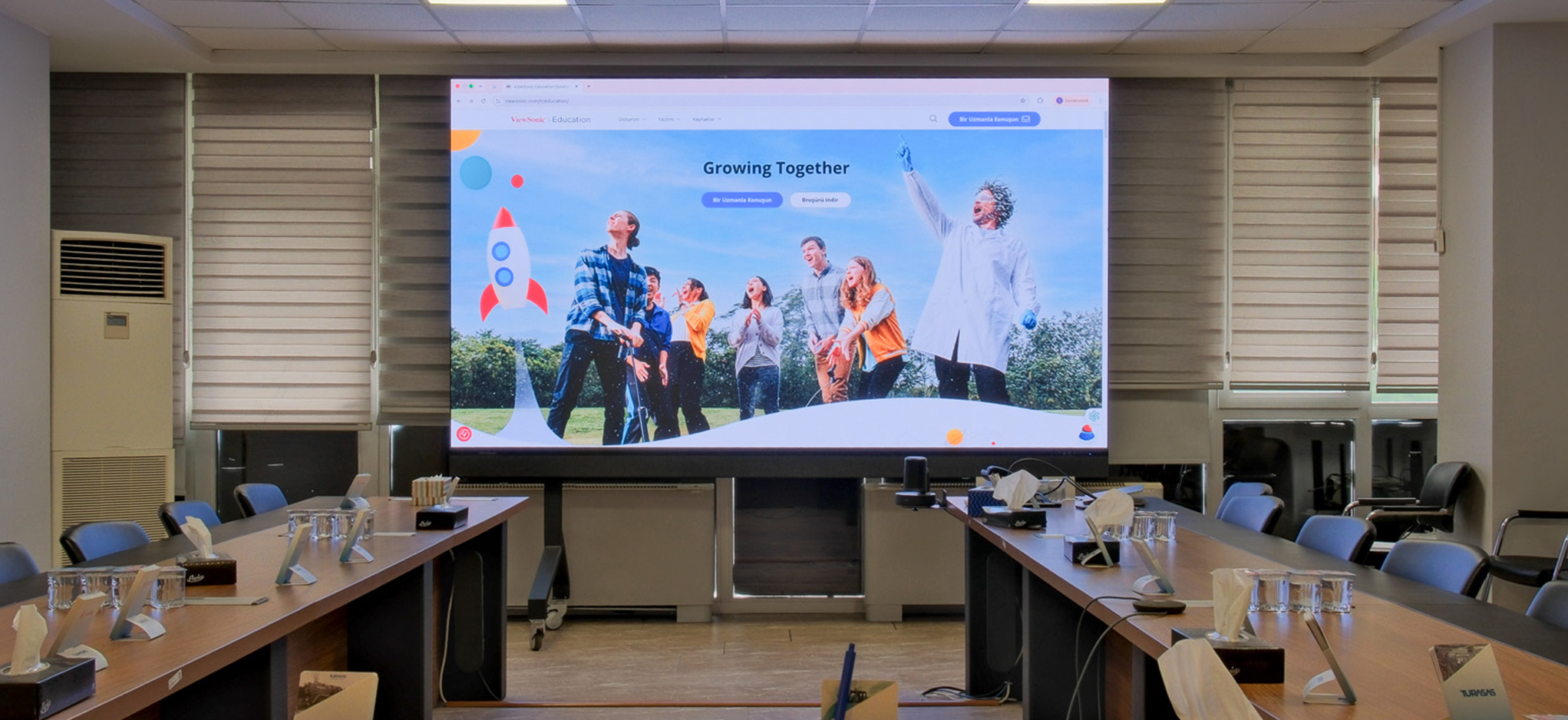
TÜRASAŞ carried out a digital transformation project in partnership with ViewSonic and X Teknoloji to turn its corporate meeting room into a more modern and efficient work environment. In the project, a 136-inch ViewSonic LDM136-151 All-in-One Direct View LED display was used to present technical presentations and corporate content on a single, seamless display area. Integration with ViewSonic Manager enabled the display to be managed centrally and remotely, increasing operational efficiency.


Challenge

TÜRASAŞ's meeting room hosted a range of different usage scenarios, such as corporate meetings, technical evaluations, project presentations, and decision-making processes. In these processes, it was highly important that tables, technical drawings, reports, and visual content could be followed by all participants clearly, seamlessly, and at the same time. The existing display infrastructure, however, could not deliver adequate performance given the size of the meeting room and its usage needs.

For this reason, the project aimed not just at a bigger display but at an integrated display solution that fit the corporate environment. Presenting different content types effectively on a single, seamless surface was prioritized. In addition, the ability to manage the display centrally and remotely stood out as an important requirement that would ease the technical team's maintenance and management processes and help keep the meeting room always ready for use.


Solution

A 136-inch ViewSonic LDM136-151 All-in-One Direct View LED display was positioned as the meeting room's main display solution. Thanks to the seamless LED display structure, presentations, reports, tables, and technical content could be shared on a single large display area while being clearly followed from different points in the room. The large screen surface supported participants working simultaneously on the same content, making meeting, evaluation, and decision-making processes more efficient. The All-in-One design offered a professional and orderly appearance that fit the corporate character of the meeting room.

Supported by ViewSonic Manager, the solution enabled the display to be managed centrally and remotely. The technical team became able to perform basic display management tasks through a single platform without the need for physical intervention. This made it easy to monitor the display's status while carrying out necessary management tasks more quickly and efficiently. The centralized management structure made it easier to keep the display ready for use ahead of meetings, while also contributing to more controlled management of operational processes.

Result

As a result of the project, TÜRASAŞ's corporate meeting room gained a large-format, seamless display infrastructure with the 136-inch ViewSonic LDM136-151. Presentations, technical reports, tables, and other visual content became shareable effectively on a single display, while participants at different points in the room could easily follow the content. Information sharing in meetings thus became smoother and more efficient. This structure delivered a more efficient meeting experience supporting joint evaluation and decision-making processes.

The professional design of the All-in-One LED display strengthened the corporate look of the meeting room, while the remote management provided by ViewSonic Manager simplified the display's technical administration. The technical team became able to carry out basic management tasks more controllably through a central platform. In this way, TÜRASAŞ combined large-format display technology with centralized device management to create a modern, efficient, and future-ready meeting environment.


Products: ViewSonic LDM136-151

Founded in California, ViewSonic is a leading global technology provider in visual solutions, operating in more than 100 countries worldwide. With its innovative and visionary approach, ViewSonic offers comprehensive hardware and software solutions spanning monitors, projectors, pen displays, commercial displays, All-in-One LED displays, ViewBoard interactive displays, and the myViewBoard software ecosystem. With 40 years of expertise in visual display technologies, ViewSonic delivers innovative and reliable solutions for the education, corporate, consumer, and professional markets, helping customers experience “See the Difference.” To learn more about ViewSonic, visit our website at www.viewsonic.com.
Performance, security, compliance, and sustainability outcomes may vary depending on system configuration, usage environment, agency or institutional requirements, and other factors. Drywall alone is not a structural mounting surface and must never be used as the sole means of support. Proper wall suitability, reinforcement, and the use of appropriate commercial-grade mounting hardware are the sole responsibility of the customer, installer, or system integrator. ViewSonic does not design, evaluate, inspect, or certify wall structures or installation methods. 10/26 [26ALL-MLT1628f]

Open-Office Meeting Experience Powered by Technology at X Teknoloji̇

CASE STUDY

Open-Office Meeting Experience Powered by Technology at X Teknoloji̇

Summary

X Teknoloji strengthened its workspace with a corporate technology infrastructure to support its open-office culture with more efficient meeting processes. In the project, thanks to the 86-inch ViewSonic IFP8651 interactive display integrated into the meeting room, teams gained an integrated collaboration environment where — beyond simply presenting — they could work together on content, visualize their ideas, and manage decision processes through the same digital platform.


Challenge

While the open-office layout speeds up communication between teams, there was a need for a more controlled meeting area for focused discussions, content evaluations, and decision processes. X Teknoloji aimed to create a modern meeting experience that preserves the dynamic nature of the open office while enabling teams to work together on the same content and supporting the exchange of ideas.

Accordingly, a solution was prioritized that would let participants review presentations together, interact directly with content, and adapt easily to different work scenarios. At the same time, the goal was for the meeting room to support the technology-focused corporate identity, fit the open-office design with its aesthetic appearance, and deliver a fast, practical experience in daily use.


Solution

Positioned at the center of the meeting room, the 86-inch ViewSonic ViewBoard® IFP8651 interactive display brought presentation and collaboration needs together on a single platform. Thanks to the large screen surface, meeting content could be easily followed by all participants in the room, while the touch capability allowed users to interact directly with documents, presentations, and visual materials. Throughout meetings, teams became able to work together on the same content, evaluate key points in real time, and share their ideas on a common digital surface, running a more efficient collaboration process.

By bringing the presentation display and collaboration area together in a single solution, the IFP8651 significantly reduced the need to switch between different devices and separate work tools. This structure contributed to smoother-flowing meetings while also strengthening content sharing and intra-team communication. The shared visual focal point created by the 86-inch display helped participants at different points around the table follow the same information simultaneously. With its modern design complementing the open office's technology-focused corporate identity, the solution turned the meeting room from a space used only for presentations into a functional and integrated collaboration environment that supports the daily workflow.

Result

With the completion of the project, X Teknoloji's meeting room turned into a modern, interactive collaboration area supporting open-office culture. As the meeting room's central display and collaboration platform, the ViewSonic ViewBoard® IFP8651 interactive display let teams evaluate presentations, documents, and visual content together on the same large screen. The ability to interact directly with content helped turn meetings into more participatory and efficient work processes.

The large screen made it easier for participants to follow the same content simultaneously, creating a shared visual focal point in the meeting room. As a result, information sharing, planning, and decision-making processes gained a more orderly and integrated structure. Designed in harmony with the open office's modern way of working, this solution made technology not just a meeting tool but an important part of a corporate work culture that supports team collaboration.


Products: ViewSonic ViewBoard® IFP8651

Drywall alone is not a structural mounting surface and must never be used as the sole means of support. Proper wall suitability, reinforcement, and the use of appropriate commercial-grade mounting hardware are the sole responsibility of the customer, installer, or system integrator. ViewSonic does not design, evaluate, inspect, or certify wall structures or installation methods. ViewSonic does not design, evaluate, inspect, or certify wall structures or installation methods. Founded in California, ViewSonic is a leading global technology provider in visual solutions, operating in more than 100 countries worldwide. With its innovative and visionary approach, ViewSonic offers comprehensive hardware and software solutions spanning monitors, projectors, pen displays, commercial displays, All-in-One LED displays, ViewBoard interactive displays, and the myViewBoard software ecosystem. With 40 years of expertise in visual display technologies, ViewSonic delivers innovative and reliable solutions for the education, corporate, consumer, and professional markets, helping customers experience “See the Difference.” To learn more about ViewSonic, visit our website at www.viewsonic.com.

Stadtwerke Krefeld’s Plug-and-Play Meeting Rooms

SOLUTION BRIEF

From the Analog Chalk Age to the “No-Remote-Control Strategy” – The Digital Transformation of Stadtwerke Krefeld

Executive Summary

Stadtwerke Krefeld (SWK) faced the challenge of fundamentally modernizing its analog meeting culture and efficiently connecting home-office and office employees. Together with ViewSonic and the IT system house eitech, a company-wide media-technology infrastructure was implemented. Through the use of ViewSonic ViewBoard interactive displays, the CDE series commercial displays, and All-in-One Direct View LED display walls, a seamless collaboration environment was created that impresses above all through its uncompromising simplicity in everyday work.


The Challenge: Complexity Blocks Collaboration

Before the modernization, everyday work at Stadtwerke Krefeld was shaped by analog tools such as classic flip charts and whiteboards. With the shift toward hybrid working models, the pressure on the IT infrastructure grew. Three central hurdles had to be overcome:

  • The hybrid divide: Office workers and colleagues in the home office had to be brought together seamlessly in shared Microsoft Teams sessions.
  • The “cable and tech frustration”: Before meetings, employees lost valuable time searching for the right video, webcam, or power cables.
  • High IT support effort: The manual switching of different signal sources overwhelmed many users. The media-technology team regularly had to be dispatched to fix simple usage errors on site.


The Solution: A Holistic Ecosystem Instead of Isolated Solutions

Since the start of the partnership in 2018, SWK and the system house eitech have pursued a gradual, perfectly coordinated evolution of the spaces:

  • Interactive collaboration: The start was made with interactive ViewSonic touchboards for creative, digital teamwork.
  • Standardized presentation: For classic meeting rooms, the ViewSonic commercial displays series (non-touch displays) was defined as the new standard.
  • Large-format infotainment & event surfaces: In representative areas – such as the grandstand, the entrance area, and the large congress hall – impressive ViewSonic All-in-One dvLED walls were installed to enable large-scale events and hybrid events in grand style.

The Result: Plug-and-Play in Real Everyday Work

The success of the new equipment is measured by its acceptance. Thanks to ViewSonic's All-in-One solutions, technology worries are a thing of the past. Today, Stadtwerke Krefeld benefits from a consistent “no-remote-control strategy”:

  • Real time savings: Employees enter the room, connect their device, and get started immediately – all signals, audio, and webcam connections run automatically via plug and play.
  • Maximum flexibility: Larger meetings can flexibly take place live on site, while remote participants are seamlessly connected via Microsoft Teams on the large dvLED walls.
  • Relief for IT: Thanks to intuitive operation and standardized interfaces, operating errors and support calls have dropped drastically.

Founded in California, ViewSonic is a leading global provider of visual solutions. This document is an English translation of the original German ViewSonic solution brief prepared for Stadtwerke Krefeld.
Performance, security, compliance, and sustainability outcomes may vary depending on system configuration, usage environment, and agency requirements.

How ViewSonic Projection Powers the Cité des Sciences

CASE STUDY

IMMERSIVE TECHNOLOGIES When the Museum Becomes an Experience

Immersive projection, virtual reality, video mapping, interactive screens, intelligent lighting, cybersecurity: technology is reinventing museum spaces and cultural mediation tools. Between audiovisual innovation, immersive experience, and heritage promotion, the museum is becoming an interactive environment serving new uses and new audiences.


Introduction — The Museum in the Age of Immersion

Long associated with conservation and contemplation, the museum is now evolving toward more immersive and interactive forms of mediation. Video projection, dynamic screens, spatialized sound, motion capture, virtual reality, and scenographic lighting now hold a growing place in cultural experiences. These technologies do not replace the works or the scientific content, but enrich the modes of narration and transform the visit experience. This evolution accompanies the public's new expectations. Accustomed to digital uses and sophisticated audiovisual environments, visitors seek sensory, collective, and engaging experiences. Cultural institutions must therefore reconcile scientific rigor, accessibility, and appeal. Contemporary museography thus becomes a meeting ground between scenography, audiovisual, IT, and networks.

Immersion as a Mediation Tool

Immersive technologies open new possibilities for transmission. At the Cité des Sciences et de l'Industrie, video projectors, motion sensors, and interactive devices transform the visitor's body into a tool for expression and interaction. In the collective VR experiences developed by Excurio, participants explore historical or scientific environments reconstructed with a high level of accuracy. The projected image, screens integrated into the scenography, video mapping, and sound spatialization thus become genuine tools of cultural mediation. The quality of lighting is also an essential concern. New-generation LED solutions seek to reconcile faithful color rendering, visual comfort, and the preservation of works sensitive to light. Behind these experiences lies an increasingly essential technical infrastructure: IP networks, media servers, real-time processing, storage, and cybersecurity. Because cultural heritage is now also digital. Images, videos, scenographic content, and archives must be protected against the risks of loss or cyberattack.

Through this dossier, Smart Intégrations Mag offers a panorama of this rapidly evolving technological museography, where audiovisual, screens, IT, and immersion combine to transform cultural venues into interactive and connected spaces.


Cité des Sciences et de l'Industrie

Projection as a Mediation Tool

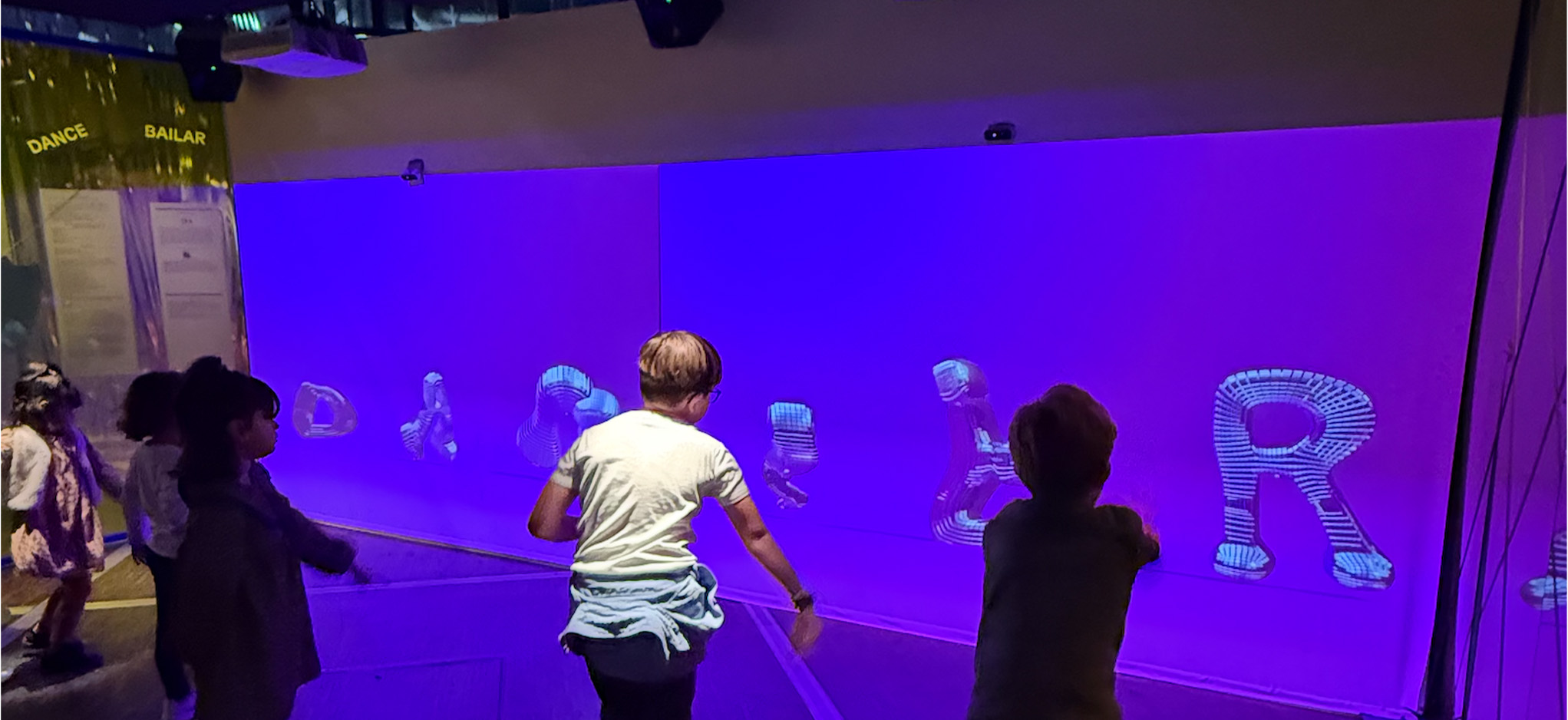
La Villette, a major player in scientific and technical mediation in Europe, has the mission of making all knowledge accessible to every audience, particularly the youngest. The immersive scenography of the “Danser” (Dance) exhibition puts this “powerful vector of communication and expression” into action by drawing on interactive video.

The deployment of video projectors across the various animation points rests on close collaboration between the internal multimedia design teams and the audiovisual provider Videlio, responsible for installation and maintenance. An in-house technical control room additionally ensures operational continuity in the event of an incident. The hardware choices respond to multiple constraints: diversity of spaces, high ambient brightness due to large glazed surfaces, and configurations that are sometimes atypical in terms of projection distance. In this context, ViewSonic projectors are used across a wide variety of models and configurations: front projection, rear projection, short and ultra-short throw. This flexibility makes it possible to place the image as close as possible to the interactive devices, while optimizing the footprint and discretion of the equipment. The out-of-nominal-range constraints — notably the unconventional distances between projector and projection surface — amount to a genuine stress test for the equipment, highlighting its robustness and adaptability.

Dance draws children and adults alike into a collective, joyful, creative, and spontaneous experience. A powerful vector of communication and expression, dance helps people discover their bodies, create social bonds, and explore space.

Motion Capture

The “Danser” exhibition perfectly illustrates a use case based on the integration of immersive technologies, combining projection and real-time interaction. The “Matière à danser” installation lets visitors manipulate animated letters on screen through the movement of their bodies. This system relies on the Azure Kinect motion sensor developed by Microsoft, now marketed by Orbbec. Initially aimed at the video game market, this technology has found a second wind thanks to the significant improvement in its tracking capabilities. Real-time processing of movements runs on Unity and Max MSP software (developed by Xavier Vielemans and Jean-Michel Couturier), executed on an i7 Z790 PC (16 GB DDR5, RTX 4070 Ti V2 graphics card) prepared by Inovio. The system translates visitors' movements into dynamic visual interactions, rendered as images by ultra-short-throw projectors such as the ViewSonic LS831WU, allowing display at very short distance with no cast shadow. With a brightness of 4,500 lumens and WUXGA resolution, this model guarantees optimal legibility. Its successor, the LS832WU, pushes performance to 5,000 lumens and a light-source lifespan reaching 30,000 hours. This projector is also deployed in other spaces of the Cité des Sciences. The sound environment is provided by Mackie MR824 monitoring speakers, ensuring faithful and immersive reproduction, essential to reinforcing the overall sensory experience.


Jean-François Lemercier — Multimedia and Audiovisual Engineering, Universcience

“At Universcience, I have three distinct missions on exhibitions: audiovisual and multimedia engineering, IT development, and technical coordination. For each exhibition whose technical design I handle, I work within several constraints: budget, quality, maintainability, robustness, routing, and accessibility. For “Danser,” I wanted to guarantee high audio quality by prioritizing the bandwidth and neutrality of the playback system, on a reasonable budget. A real challenge, given the venue's shortcomings in sound and acoustic isolation. On “Bal,” in addition to precise speaker positioning, sound engineer Thierry Bertomeu (Novapista) carried out an on-site mix to guarantee the best possible fidelity of the soundtrack composed by Florian Seraul.”


Cercles de danse

“In “Cercles de danse,” I compensated for the lack of acoustic treatment using The Tracks DSP 4x4 Mini Amp 4-way amplifiers, tuned with REW software and a Dayton Audio EMM-6 measurement microphone. The exhibition's visual and immersive dimension rests mainly on ViewSonic video projectors, when the focal lengths and brightness matched the needs. It's a brand I appreciate a great deal, because for tight budgets it offers many references with very decent projection quality. The ultra-short-throw LS832WU, for example, delivers a fine projection surface in confined spaces, with 5,000 lumens — sufficient in a controlled lighting environment — on a quality ShowTex projection screen (supplied and installed by the Edmond Petit company after comparative testing).”


Le Bal

“The cylindrical projection surfaces of “Bal” and “Cylindres de danse” are handled by Vioso 6 software, which — thanks to a GigE camera with a 185° wide-angle lens — automatically calibrates the mapping, overlaps, colorimetry, and uniformity of the blacks. Video playback in HAP format runs on Vioso's Exaplay 2, driven via OSC by the in-house-developed Patchway software. To direct visitors toward “Bal” every 30 minutes, this element is synchronized with “Grand Saut” and “Cercles de danse” via an IP network over UDP (User Datagram Protocol).”


Mapping and Spatialization

Another application of ViewSonic projectors in the “Danser” exhibition concerns video mapping. In the circular “Bal” space, nine LS711HD projectors are deployed to create a continuous visual environment through edge-blending and warping (image deformation) techniques. This configuration makes it possible to turn the perimeter of the space receiving visitors into an immersive projection surface. The mapping is driven via MadMapper software, recognized for its flexibility in creative environments, while rendering is managed by a media server developed by Vioso, Anystation 12-output, guaranteeing precise synchronization and alignment of the images. A Shuttle PC synchronizes the audiovisual streams under Visio 6 with a calibration kit and Exaplay 2 player. Audio playback uses 9 Mackie MR824 units with Presonus Temblor T10 subwoofers emulated via a Behringer UMC 1820 sound card on a NUC Core i3 PC. Show control is orchestrated by Patchbay software (SIP Conseil), developed for the exhibition by Jean-François Lemercier. Lighting is driven by a Phidget 1012 controller and a Sunlite-EC digital multiplexer. All of this equipment is integrated into discreet concealed racks that remain accessible for maintenance. This approach illustrates the importance of audiovisual engineering in the success of immersive systems: beyond simple projection, the goal is to design a coherent, robust, and engaging experience.

Thus, the integration of ViewSonic solutions at the Cité des Sciences et de l'Industrie demonstrates how projection technologies can become full-fledged narrative tools, serving scientific mediation and interactivity.


Some Equipment Deployed at the Cité des Sciences et de l'Industrie

ViewSonic

The LS711HD model is a short-throw installation video projector using a 3rd-generation laser and displaying 1080p resolution for a brightness of 4,200 ANSI lumens and high contrast, achieved thanks to a 0.65-inch DLP (TI) imager from Texas Instruments. The 0.49 short throw allows perfect blending of the edges of two images, with horizontal and vertical keystone correction, enabling 360° projection and portrait-mode display.

The LS832WU video projector is an ultra-short-throw installation model displaying WUXGA format, thanks to a 2nd-generation laser phosphor light source, ensuring 30,000 hours of operation and producing 5,000 lumens. The image can cover an ultra-wide screen up to 170 inches, with horizontal and vertical keystone adjustment offering, here too, greater installation flexibility. The device connects to the local network to ensure synchronized management between units.


Digital Projection

The E-Vision 5100 is a compact and powerful mono-DLP laser projector whose MultiAxis installation capability allows orientation in nearly any position. The unit features a fixed ultra-short-throw optic and a multitude of connectivity options.


Vioso

The Anystation Media is a high-performance server running on Exaplay or other third-party solutions, designed for demanding applications, offering unmatched output power and flexibility to suit complex configurations. The unit can drive an immersive installation totaling up to 16 synchronized WUXGA outputs, for real-time applications and even 8K dome projections. The Anystation HD version offers up to 8 4K outputs for video walls and immersive installations.


MadMapper

Born from a collaboration between the French installation studio 1024 Architecture and the Swiss developers GarageCube, MadMapper is software that handles high-resolution video up to 16K, drawn from multiple outputs displaying distinct parts of the composition. MadMapper includes advanced features such as 3D calibration, spatial scanning, LED scanning, live shader editing, and more.


Azure Kinect DK

Microsoft + Orbbec Azure Kinect DK is a development kit and an AI-sensor peripheral for computer vision and voice models. It includes a 12-megapixel RGB camera, another sensor for depth at 1 megapixel, an array of seven microphones at 360 degrees, and an orientation sensor.


Mackie

The MR824 model is an active nearfield speaker featuring an 8-inch woofer and a 1-inch tweeter, both amplified in Class A/B and developing a total power of 85 watts. Its frequency response ranges from 35 Hz to 20 kHz. Filters for low and high frequencies are adjustable.


IK Multimedia

The t.racks DSP 4x4 Mini Amp is used to amplify, mix, and play back signals from audio devices, musical instruments, and microphones. It has 4 inputs and 4 outputs, and its digital signal processor (DSP) performs equalizer, filtering, delay, limiter, and gain-management functions.


Daheng Imaging

The compact industrial digital camera in the Mercury 2 Pro series is equipped with a Sony IMX304 CMOS imager for monochrome or color vision.

Written by Antoine Pélaprat for Smart Integration Magazine

Performance, security, compliance, and sustainability outcomes may vary depending on system configuration, usage environment, and agency requirements.

Alfried Krupp Hospital’s Treatment Room Gets a Custom 325" ViewSonic dvLED

CASE STUDY

High-Tech Radiosurgery Meets a Feel-Good Atmosphere – The Visual Transformation at the ZAP-X® Center Essen

Executive Summary

As part of the introduction of the novel ZAP-X® radiosurgery, the Alfried Krupp Hospital in Essen faced the task of combining top-tier medical technology with an immersive, patient-centered spatial concept. Together with ViewSonic and the system integrator, a custom All-in-One Direct View LED (dvLED) display was implemented. Through the use of a 136” LED wall in the reception area and a monumental 325” 8K LED wall in the treatment room, a calm, anxiety-reducing environment was created that supports patients during relaxation therapy and impresses with first-class image quality.


The Challenge: High-Tech Radiosurgery Meets Emotional Space Design

With the introduction of the novel ZAP-X® radiosurgery, the Alfried Krupp Hospital Essen now offers a highly precise, non-invasive treatment for brain tumors. In setting up the ZAP-X center, the hospital faced the task of combining top-tier medical technology with a patient-centered design of space and information:

  • Relaxation therapy in the treatment room: The sterile atmosphere of classic medical-technology rooms often causes tension in patients. The aim was to create an immersive ambience that reduces anxiety and supports relaxation processes.
  • Information & orientation: The reception area needed a modern large-format display for targeted patient guidance.
  • Autonomy & content playback: A sophisticated 8K visualization was required that could be operated independently by the in-house media technology team (MACOM).


The Solution: Custom LED Wall Installations

In close coordination with the system integrator Pestinger GmbH (Rhein-Main Medientechnik), ViewSonic integrated two custom Direct View LED large-area solutions from the LDC series for two central areas of the hospital:

  • 136” LED wall in the reception area: As a representative reception and information display.
  • 325” 8K LED wall in the ZAP-X room: As a gigantic panoramic surface for immersive content.
  • Reliable technology: External controllers and power boxes keep the treatment rooms free of noise and heat and simplify maintenance.
  • Optimal patient guidance: The 136” display in the reception area provides clear orientation and underscores the hospital's high-tech standard.

The Result: A Perfect Symbiosis of Medical Technology & Feel-Good Atmosphere

The successful implementation fully meets the hospital's high requirements, ensures complete customer satisfaction and creates measurable added value in everyday treatment:

  • Targeted stress reduction: The 325” wall transforms the treatment room into a calming environment and noticeably supports patients during relaxation therapy.
  • Optimal patient guidance: The 136” display in the reception area provides clear orientation and underscores the hospital's high-tech standard.
  • Easy operation: The in-house MACOM team controls all content flexibly and autonomously.

Founded in California, ViewSonic is a leading global provider of visual solutions. This document is an English translation of the original German ViewSonic solution brief prepared for Alfried Krupp Hospital Essen.
ViewSonic products are not considered medical devices and are not intended for use in the diagnosis of disease or other conditions, or in the cure, mitigation, treatment, or prevention of disease.

dvLED Displays Modernizing Sports Facilities

SOLUTION BRIEF

dvLED Displays
Modernizing Sports Facilities

Challenge

Digitalizing municipal gyms and sports complexes is essential to raising the profile of local clubs, improving communication for local authorities, and energizing the spectator experience.

However, integrators and municipalities face heavy technical and structural constraints:

  • High risk of impact: Traditional displays and LCD panels cannot withstand the impact of heavy balls (handball, basketball, futsal), leading to shattered glass or repeated pixel failures.
  • Light pollution and glare: The large glazed surfaces of gyms create significant variations in natural light, making conventional displays unreadable due to reflections.
  • Installation and maintenance complexity: Mounting a heavy display at height often requires reinforcing the building structure, and the smallest fault can put the equipment out of service if rear access is impossible.


Solution

The ViewSonic dvLED (Direct View LED) solution combines durable technology with custom-built structures designed to adapt perfectly to the demands of sports environments. It delivers a turnkey solution that removes integration complexity:

  • Built-in sports-grade durability The LED modules feature a reinforced surface treatment (GOB technology or equivalent) that absorbs the energy of ball impacts with no damage to the components.
  • Adjustable full-daylight visibility With brightness above 600 cd/m² and a native anti-glare treatment, the image stays sharp and high-contrast even when light hits the screen directly.
  • 100% front-access maintenance The LED panels are magnetically mounted on an ultra-light aluminum chassis. For maintenance, a technician can replace a module from the front in under 2 minutes using a magnetic extraction tool, without dismantling the display.

Discover our full range of all-in-one dvLED displays

LDS Series — Mobile
LDE Series — Pre-configured
LDP Series — Pre-configured Premium
LDC Series — Customizable


This General Wall Mounting Guideline is provided for convenience of reference only. Please consult local codes for further guidance. ViewSonic assumes no liability for any errors or omissions in the information displayed. ViewSonic shall not be liable for any equipment damage, property damage, or personal injury—including death—caused as a result of incorrect installation, operation, human factors, acts of God, or failure to comply with local codes and these instructions. Drywall alone is not a structural mounting surface and must never be used as the sole means of support. Proper wall suitability, reinforcement, and the use of appropriate commercial-grade mounting hardware are the sole responsibility of the customer, installer, or system integrator. ViewSonic does not design, evaluate, inspect, or certify wall structures or installation methods. If there is any uncertainty regarding wall construction, load-bearing capacity, or installation methods, you must consult a licensed contractor, structural engineer, or qualified professional prior to installation.

Next-generation Hybrid Learning at Bakirçay University

CASE STUDY

Next-generation Hybrid Learning at Bakirçay University

Summary

İzmir Bakırçay University transformed its projection-based classroom infrastructure into a modern setup that supports hybrid education. In partnership with ViewSonic and Atlas Kurumsal, 30 classrooms were equipped with 98-inch ViewSonic IFP9850-4 interactive displays, VB-CAM-201 camera systems, VB-MIC-201 microphones, and VB-STND-005 mobile stands. myViewBoard and ViewSonic Manager solutions enabled an interactive class experience and centralized remote device management.


Challenge

The university's projection-based classroom infrastructure was falling short in the face of environmental conditions affecting image quality and the demands of hybrid education. There was a need for an integrated display, camera, and microphone setup that offered clearer viewing and allowed remote students to follow the instructor and classroom environment. At the same time, the goal was a modern class experience where instructors could use digital content more effectively.

Mobile display use that could adapt to different classroom layouts, along with the ability to centrally and remotely manage devices spread across 30 classrooms, were also among the project's core requirements. All components were intended to work together within a single class scenario, planning an efficient and sustainable hybrid education infrastructure. The aim was to create a seamless and interactive learning environment for both in-person and online participants.

Solution

30 units of 98-inch ViewSonic IFP9850-4 interactive displays were used as the project's main display solution. Thanks to the large screen surface and touch capability, class content was displayed more clearly while instructors could interact directly with presentations and digital materials. Replacing projection systems, this setup offered a cleaner, more efficient class experience. The ViewSonic VB-CAM-201 camera system supported video communication in hybrid classes, while the VB-MIC-201 microphone system delivered clear, two-way audio pickup across the classroom, enabling remotely participating students to be actively involved in the class process.

ViewSonic VB-STND-005 mobile stands allowed displays to be positioned flexibly according to different classroom layouts, while myViewBoard provided instructors with interactive teaching tools. The centralized management infrastructure set up with ViewSonic Manager enabled remote monitoring and management of displays across 30 classrooms, reducing the IT team's workload. As a result, classroom technology infrastructure became more efficient and sustainable to manage.


Result

As a result of the project, 30 units gained a modern hybrid education infrastructure with 98-inch ViewSonic IFP9850-4 interactive displays. Thanks to the large displays and the VB-CAM-201 camera system, both in-person and remote students enjoyed a more interactive class experience, while the VB-MIC-201 microphone system delivered clear, reliable audio between classroom and remote participants, and instructors could use digital content directly on the screen. Class content became easier to follow from every point in the classroom. Communication continuity in hybrid classes was strengthened. Physical and online education were thus brought together in a single class flow.

VB-STND-005 mobile stands helped displays adapt to different classroom layouts, while myViewBoard supported interactive teaching processes. With ViewSonic Manager, displays across 30 classrooms became centrally and remotely manageable, increasing the IT team's operational efficiency. Ultimately, the university brought display, hybrid communication, and device management together within a single integrated education technology infrastructure.


Products: ViewSonic IFP9850‑4 · ViewSonic VB‑CAM‑201 · ViewSonic VB‑MIC‑201 · ViewSonic VB‑STND‑005

Performance, security, compliance, and sustainability outcomes may vary depending on system configuration, usage environment, and institutional requirements. Drywall alone is not a structural mounting surface and must never be used as the sole means of support. Proper wall suitability, reinforcement, and the use of appropriate commercial-grade mounting hardware are the sole responsibility of the customer, installer, or system integrator. ViewSonic does not design, evaluate, inspect, or certify wall structures or installation methods.
Founded in California, ViewSonic is a leading global technology provider in visual solutions, operating in more than 100 countries worldwide. With its innovative and visionary approach, ViewSonic offers comprehensive hardware and software solutions spanning monitors, projectors, pen displays, commercial displays, All-in-One LED displays, ViewBoard interactive displays, and the myViewBoard software ecosystem. With 40 years of expertise in visual display technologies, ViewSonic delivers innovative and reliable solutions for the education, corporate, consumer, and professional markets, helping customers experience “See the Difference.” To learn more about ViewSonic, visit our website at www.viewsonic.com.

Beyond Digital Transformation At FMV Işık Schools Ispartakule Campus: The Learning Experience of the Future

CASE STUDY

Beyond Digital Transformation At FMV Işık Schools Ispartakule Campus: The Learning Experience of the Future

Summary

As part of the ViewSonic Future School project carried out at FMV Işık Schools' Ispartakule Campus in partnership with ViewSonic and ADK Bilgisayar, the school created a comprehensive digital learning ecosystem. By bringing together ViewBoard interactive displays, the myViewBoard ecosystem, myViewBoard Quiz Tools powered by ClassSwift, and teacher development programs, it built a technology-supported, sustainable, innovative, and future-ready ecosystem that strengthens teacher and student interaction.


Challenge

Installing digital displays in classrooms does not by itself bring about real transformation in educational institutions. For technology to add value to educational processes, teachers must be able to use digital tools effectively and in alignment with pedagogical goals. FMV Işık Schools needed a structured and sustainable professional development model that integrates the technology investment with the teaching approach and continuously develops teachers' digital competencies.

At the same time, the school aimed to create a holistic learning ecosystem supporting the needs of the future, such as artificial intelligence, digital content creation, interactive lesson design, hybrid learning, and student-centered education. The goal was to build a sustainable digital learning culture that could strengthen existing lesson processes while also adapting to changing educational requirements.

Solution

A customized transformation model bringing together technology installation and teacher development was developed for FMV Işık Schools. ViewBoard interactive displays, the myViewBoard ecosystem, and the ViewSonic Professional Development Program — supported by Graduate, Educator, and Expert certification levels — created a sustainable development process extending from teachers' basic usage skills to advanced digital pedagogical practices. This provided a strong educational infrastructure so teachers could use digital tools in alignment with lesson objectives, effectively and confidently. At the same time, a structured and long-term development model was put in place through which teachers can continuously improve their digital competencies.

With the inclusion of myViewBoard Quiz Tools powered by ClassSwift in the educational ecosystem, digital content creation, lesson planning, in-class interaction, and student-centered learning were brought together under a single integrated structure. Supported by workshops, webinars, and hands-on classroom scenarios, the Future School model carried technology beyond hardware, creating a digital learning ecosystem strengthened by educational consulting, professional development, and continuous support.


Result

As a result of the project, a holistic model bringing together technology investment, continuous teacher development, and pedagogical transformation was created at FMV Işık Schools. The professional development approach, supported by the Graduate, Educator, and Expert certification programs, strengthened teachers' digital pedagogical competencies while enabling technology to be used more effectively, measurably, and sustainably in classrooms. This approach helped teachers integrate digital tools into daily educational processes more consciously and efficiently. It also supported the adoption of a shared digital teaching approach across the school.

Through the combined use of ViewBoard, myViewBoard, and myViewBoard Quiz Tools powered by ClassSwift more interactive and student-centered lesson experiences were supported, while digital content creation and hands-on work were integrated into educational processes. Thanks to the Future School approach, a standardized and sustainable digital transformation model was established across the school, while the collaboration between the school, the technology provider, and educational stakeholders was turned into a strong learning ecosystem supporting long-term development.


Training outcomes and participant experiences may vary depending on individual needs, district requirements, and implementation. Drywall alone is not a structural mounting surface and must never be used as the sole means of support. Proper wall suitability, reinforcement, and the use of appropriate commercial-grade mounting hardware are the sole responsibility of the customer, installer, or system integrator. ViewSonic does not design, evaluate, inspect, or certify wall structures or installation methods.
Founded in California, ViewSonic is a leading global technology provider in visual solutions, operating in more than 100 countries worldwide. With its innovative and visionary approach, ViewSonic offers comprehensive hardware and software solutions spanning monitors, projectors, pen displays, commercial displays, All-in-One LED displays, ViewBoard interactive displays, and the myViewBoard software ecosystem. With 40 years of expertise in visual display technologies, ViewSonic delivers innovative and reliable solutions for the education, corporate, consumer, and professional markets, helping customers experience “See the Difference.” To learn more about ViewSonic, visit our website at www.viewsonic.com.

Technology Transformation At Koç School

CASE STUDY

Technology Transformation At Koç School

Summary

Koç School carried out a comprehensive transformation in partnership with ViewSonic and Dora Teknoloji to renew its existing projection-based interactive whiteboard systems. As part of the project, 25 units of 86-inch ViewSonic IFP51 Series interactive displays were installed, enabling a transition to a more modern, interactive, and sustainable learning infrastructure.


Challenge

In the projection-based interactive whiteboard systems used at Koç School, environmental factors such as light, shadow, and alignment could affect image quality and visibility, making it particularly difficult to clearly follow content from different seating positions. The setup and maintenance processes of the existing systems also created additional operational demands, while managing the various components highlighted the need for an easier and more sustainable technology infrastructure.

With this in mind, the goal was a more up-to-date learning experience that would let teachers use digital content more quickly and efficiently, support students' active participation in lessons, and increase in-class interaction. The new solution was intended to contribute to the learning process by making things easier for teachers to use while also offering students a clearer, smoother, and interaction-focused educational environment.

Solution

As part of the project carried out in partnership between ViewSonic and Dora Teknoloji, 25 units of 86-inch ViewSonic IFP51 Series interactive displays were installed across Koç School's classrooms and learning spaces. Thanks to the large screen and 4K image quality, digital content could be followed more clearly and visibly from different points in the classroom.

The multi-touch capability allowed teachers and students to interact directly with on-screen content. Digital content sharing and on-screen interaction helped make the flow of lessons more efficient, participatory, and user-friendly.

With the shift from projection-based systems to an interactive display infrastructure, a more standardized and sustainable technology setup was established in the classrooms. Thanks to the advantages of easy setup and management, the aim was to simplify the daily use of learning spaces and make operational processes more efficient.


Result

As a result of the project, 25 ViewSonic IFP51 Series interactive displays were brought into service to replace the traditional IWB projection systems used at Koç School. This transformation created a display infrastructure in classrooms and learning spaces that is more up-to-date, directly usable, and supportive of interaction.

The 86-inch large screen and clear image quality made it easier to follow content from different points in the classroom. While teachers were supported in using digital content quickly and easily, students were offered a stronger, more participatory, and more interactive learning experience.

Compared to projection-based systems, ease of use was increased while a more efficient structure was achieved in maintenance and operations. The transformation applied in shared areas and classrooms helped make Koç School's learning environments more modern, sustainable, and user-friendly.


Products: ViewSonic IFP51 Series

Drywall alone is not a structural mounting surface and must never be used as the sole means of support. Proper wall suitability, reinforcement, and the use of appropriate commercial-grade mounting hardware are the sole responsibility of the customer, installer, or system integrator. ViewSonic does not design, evaluate, inspect, or certify wall structures or installation methods.
Founded in California, ViewSonic is a leading global technology provider in visual solutions, operating in more than 100 countries worldwide. With its innovative and visionary approach, ViewSonic offers comprehensive hardware and software solutions spanning monitors, projectors, pen displays, commercial displays, All-in-One LED displays, ViewBoard interactive displays, and the myViewBoard software ecosystem. With 40 years of expertise in visual display technologies, ViewSonic delivers innovative and reliable solutions for the education, corporate, consumer, and professional markets, helping customers experience “See the Difference.” To learn more about ViewSonic, visit our website at www.viewsonic.com.

Birollar Otomotiv Transforms the Premium Showroom Experience with Digital Technology

CASE STUDY

Birollar Otomotiv Transforms the Premium Showroom Experience with Digital Technology

Summary

Birollar Otomotiv carried out a comprehensive digital transformation project to reshape its showroom experience in line with global premium brand standards. Complemented by an on-site café, the showroom offers visitors an experience that extends beyond vehicle sales. As part of the project, conducted in partnership with ViewSonic and Design Sign, an integrated display infrastructure made up of LED, interactive, and commercial displays was established. With the ViewSonic LDM136-151, IFP7550, CDE5530, and IFP6550 solutions, brand communication, vehicle presentation, and an interactive sales experience were brought together under a single digital structure.


Challenge

The showroom experience of a global, premium automotive brand needed to be supported by a modern digital infrastructure that reflects the brand's understanding of quality, innovation, and design. The goal was for the showroom to create a strong impression from the visitor's first moment of contact and to reinforce the premium brand identity.

The aim was to present vehicles' colors, material details, and technological features in a compelling way, and to offer an interactive sales experience where customers could easily compare different models and equipment options.

In addition, more efficient use of showroom spaces, easier content management, and fast access to needed information for the sales teams were among the project's core requirements.

Solution

An integrated display infrastructure made up of ViewSonic LED, interactive, and commercial display solutions was set up for the showroom's different usage areas. The 136-inch ViewSonic LDM136-151 All-in-One Direct View LED display was positioned as the showroom's main digital showcase, presenting premium content with high image quality. Thanks to its seamless screen and powerful visual performance, an eye-catching focal point was created at the showroom entrance, reinforcing the premium brand perception.

The ViewSonic IFP7550 and IFP6550 interactive displays offered an interactive sales experience where customers could examine vehicle models in detail, evaluate features, and easily compare equipment options. The ViewSonic CDE5530 commercial display supported the effective sharing of corporate information, campaign communication, and brand content across different showroom areas. With centralized content management and high image quality, daily operations became easier while brand communication, vehicle presentation, and customer interaction were brought together under a single integrated digital structure.


Result

As a result of the project, the Birollar Otomotiv showroom gained a more modern, visually striking, and digitally integrated customer experience. The 136-inch ViewSonic LED display became the showroom's main digital showcase, creating strong visual impact and reinforcing the premium brand perception. The solution structure of LED, interactive, and commercial displays brought brand communication, vehicle presentations, and customer interaction together in a single digital infrastructure.

The scalable display infrastructure delivered tailored solutions for different showroom areas and usage scenarios, enabling customers to explore vehicle models and equipment options in a more interactive way.


Products: ViewSonic LDM136-151 · ViewSonic IFP7550 · ViewSonic CDE5530 · ViewSonic IFP6550

Drywall alone is not a structural mounting surface and must never be used as the sole means of support. Proper wall suitability, reinforcement, and the use of appropriate commercial-grade mounting hardware are the sole responsibility of the customer, installer, or system integrator. ViewSonic does not design, evaluate, inspect, or certify wall structures or installation methods."
Founded in California, ViewSonic is a leading global technology provider in visual solutions, operating in more than 100 countries worldwide. With its innovative and visionary approach, ViewSonic offers comprehensive hardware and software solutions spanning monitors, projectors, pen displays, commercial displays, All-in-One LED displays, ViewBoard interactive displays, and the myViewBoard software ecosystem. With 40 years of expertise in visual display technologies, ViewSonic delivers innovative and reliable solutions for the education, corporate, consumer, and professional markets, helping customers experience “See the Difference.” To learn more about ViewSonic, visit our website at www.viewsonic.com.

How Chesterfield County Public Schools Is Standardizing 4,000+ Classrooms on ViewSonic ViewBoard Displays with CDW

SOLUTION BRIEF

How Chesterfield County Public Schools Is Standardizing 4,000+ Classrooms on ViewSonic ViewBoard Displays with CDW

What Challenge Was Chesterfield County Public Schools Trying to Solve?

Chesterfield County Public Schools needed to replace its aging Promethean interactive displays with a secure, reliable and cost-effective district-wide solution. The district set out to refresh thousands of classroom displays while standardizing on a single platform for future growth. Its Board of Education, working closely with the Chesterfield IT team, evaluated several solutions to replace the existing Promethean deployment. Key evaluation criteria included:

  • Lower total cost
  • Improved panel reliability
  • Stronger security
  • Better manufacturer support
  • Long-term service partnership
  • Consistent classroom experience across the district 

In Their Words

“We didn't know this was possible!”

- Technology Coordinator, Midwest K-12 school district 

What ViewSonic Solution Is the District Deploying?

Working alongside CDW, the district selected ViewSonic as its new classroom display standard. The deployment will occur over a five-year period and includes more than 4,000 displays across the district:

  • ViewSonic® ViewBoard® 65” IFP6551 4K EDLA-certified interactive display
  • ViewSonic ViewBoard 75” IFP7551 4K EDLA-certified interactive display
  • ViewSonic ViewBoard 86” IFP8651 4K EDLA-certified interactive display
  • ViewSonic CDE series of non-touch commercial displays (CDE5531, CDE6531, CDE8631) for spaces that need display without touch
  • The three ViewBoard sizes let the district match screen size to room size while keeping one platform, one software ecosystem and one support relationship. Every ViewBoard includes myViewBoard® software.

    The CDE series carries the same 3-year limited warranty and RS-232 control support as the interactive panels. This consistency helps IT admins more effectively manage the entire fleet. 

Why Did the District Choose ViewSonic Over Promethean?

    ViewSonic was selected over the incumbent Promethean solution based on:

  • Competitive pricing
  • Strong customer service
  • Responsive technical support
  • Reliable hardware platform
  • Improved security
  • The ViewSonic ViewBoard IFP51 series of displays are Android EDLA-certified with EPEAT Gold and ENERGY STAR 8.0 ratings and a 3-year limited on-site warranty covering parts, labor and backlight.

What Results Does the District Expect?

  • A standardized classroom display platform across the district
  • 4,000+ interactive displays deployed over five years
  • A complete transition from Promethean to ViewSonic
  • Simplified long-term lifecycle management
  • A consistent classroom technology experience district-wide
  • Once deployment is complete, Chesterfield County Public Schools will have one of the largest standardized ViewSonic interactive display environments in K-12 education. This new display gives teachers a consistent classroom experience while giving IT a reliable, secure and cost-effective solution to support the district for years to come.

Frequently Asked Questions

Why Do School Districts Replace Promethean Interactive Displays With ViewSonic?

When Chesterfield County Public Schools evaluated replacements for its Promethean deployment, it selected ViewSonic based on several factors. This included competitive pricing, US-based customer service and support, training options and a secure hardware platform. Districts weighing the same move typically compare total cost, panel reliability and manufacturer support.

What ViewBoard Sizes Work for K-12 Classrooms?

The ViewBoard IFP51 series of displays come in sizes including 55” (IFP5551), 65” (IFP6551), 75” (IFP7551), 86” (IFP8651) and 98” (IFP9851). They are all 4K and Android EDLA certified. Chesterfield County Public Schools uses three of these sizes to match display size to room size on a single platform.

How Does a District Manage Thousands of ViewSonic Displays?

myViewBoard Manager provides cloud-based device management, letting IT administrators remotely monitor displays, manage apps and push broadcasts from a single control panel. Both ViewBoard interactive displays and CDE commercial displays also support RS-232 control for AV system integration.

Are ViewSonic ViewBoard Displays Secure for School Networks?

The ViewBoard IFP51 series of displays are Android EDLA-certified, which brings Google's enterprise device licensing requirements for security and updates to the classroom. Improved security was one of the criteria Chesterfield County Public Schools cited in selecting ViewSonic over its incumbent platform.

Ready to Standardize Your District's Classrooms?

Talk to a ViewSonic representative or an authorized partner like CDW about planning a district-wide ViewBoard deployment and transition strategy.

Related Products

Comparative claims are based on specific features and publicly available manufacturer specifications as of the date of publication, and are not intended to represent a comprehensive evaluation of all product attributes. Delivery schedules, network performance, training outcomes, and user results may vary depending on individual needs, district or agency requirements, implementation, environmental conditions, and other factors. Any references to third-party products, competitors, software platforms, hardware architectures, certification seals, control systems, or corporate trademarks are for identification, compatibility, and comparative reference purposes only and do not imply endorsement, affiliation, or sponsorship by their respective owners. Corporate names and trademarks stated herein are the property of their respective companies. Environmental protection ratings (including GOB, IP54, and IK06 ratings) are based on standard operating conditions; proper wall mounting, structural reinforcement, mobile assembly, freight handling, and professional installation are the sole responsibility of the customer or installer. ViewSonic assumes no liability for property damage or personal injury resulting from improper installation.

How a Southeast School District Standardized ViewBoard® Interactive Displays for a Three-Year Classroom Rollout

SOLUTION BRIEF

How a Southeast School District Standardized ViewBoard® Interactive Displays for a Three-Year Classroom Rollout

What Challenge Was This District Trying to Solve?

The school district was struggling with aging classroom projectors and screens that were hard to see and expensive to maintain. They wanted to replace them with modern interactive screens. To keep a consistent layout in every classroom, the new hardware had to match the footprint of their old 98-inch projector setups.

Why Did ViewSonic Interactive Displays Fit This Project?

ViewSonic and its partner, STS Education, had the inventory ready to ship and the pricing security the district needed for its three-year budget.

The district chose ViewSonic because it solved their hardware and software worries at the same time. ViewSonic’s hardware was a great fit for their space and budget, while myViewBoard software gave teachers a simple platform to build and present interactive lessons. For the IT team, Viewsonic Manager software offered a single dashboard to manage every classroom screen remotely. 

In Their Words

“We didn't know this was possible!”

- Technology Coordinator, Midwest K-12 school district 

What ViewSonic Solution Did They Deploy?

The district purchased multiple 98” ViewBoard interactive displays, pairing them with a 5-year Viewsonic Manager® Advanced license to manage every display.

Shipping thousands of massive screens could have been a huge logistical challenge, but the ViewSonic warehouse team worked closely with STS Education to coordinate the delivery, bringing 53-foot trailers of equipment directly to school sites on a strict schedule. District staff then installed the screens with hands-on labor support from STS. 

What Results Has the District Seen?

  • Successfully coordinated deliveries at scale, including 53' trailers arriving at schools districtwide.
  • The ViewSonic professional development team has supported strong myViewBoard adoption among teachers throughout the rollout.
  • Secured pricing that fit the district's three-year rollout budget.
  • Teachers and IT staff are pleased with the ViewSonic experience, from the hardware to the myViewBoard software. 

Frequently Asked Questions

What Is myViewBoard?

myViewBoard is ViewSonic's award-winning whiteboarding software, giving teachers a simple platform to build lessons, present content and get real-time input from students.

What Is Viewsonic Manager, and Why Do IT Teams Use It?

Viewsonic Manager is a cloud-based device management platform that lets IT staff monitor, update and troubleshoot ViewSonic interactive displays across an entire district from one dashboard, instead of managing each classroom's panel individually.

With Viewsonic Manager, IT admins can troubleshoot display issues over the computer or phone rather than being there in person.

Can a Mobile dvLED Display Move Between Different Spaces on Campus?

Yes. Because All-in-One dvLED displays are built on a wheeled, foldable stand, they can be rolled out of a boardroom and repositioned in another space, such as a gym, cafeteria or event space for other display needs.

How Does a District Plan a Large-Scale IFP Rollout Across Multiple Schools?

A large-scale rollout works best with a reseller experienced in coordinating deliveries and installation at scale. Equipment often arrives on freight trailers serving multiple schools at once, so planning logistics alongside the reseller and ViewSonic's own team helps keep a multi-year, districtwide rollout on schedule.

What Is the ViewSonic IFP9850 Used for?

The IFP9850 is a 98" interactive display built for classrooms that need a large-format solution sized to match existing projector screen footprints, giving districts a like-for-like upgrade path from projectors to interactive touch displays.

For the most recent version of this high-performance classroom solution, check out the IFP41 series of ViewBoard interactive displays.

Does ViewSonic Support Installation for Large Classroom Rollouts?

Yes. For large rollouts, ViewSonic's warehouse and logistics team works alongside the reseller to plan deliveries. Installation can be completed by district staff, reseller labor or a combination of both, depending on the district's needs.

Ready to Modernize Your District's Classrooms?

Talk to a ViewSonic representative or an authorized partner like STS Education about planning a district-wide IFP rollout, from procurement to installation.

Related Products

Comparative claims are based on specific features and publicly available manufacturer specifications as of the date of publication, and are not intended to represent a comprehensive evaluation of all product attributes. Delivery schedules, network performance, training outcomes, and user results may vary depending on individual needs, district or agency requirements, implementation, environmental conditions, and other factors. Any references to third-party products, competitors, software platforms, hardware architectures, certification seals, control systems, or corporate trademarks are for identification, compatibility, and comparative reference purposes only and do not imply endorsement, affiliation, or sponsorship by their respective owners. Corporate names and trademarks stated herein are the property of their respective companies. Environmental protection ratings (including GOB, IP54, and IK06 ratings) are based on standard operating conditions; proper wall mounting, structural reinforcement, mobile assembly, freight handling, and professional installation are the sole responsibility of the customer or installer. ViewSonic assumes no liability for property damage or personal injury resulting from improper installation.

How a Northeast Secondary School Upgraded Boardroom Video Conferencing with ViewSonic Direct View LED Displays

SOLUTION BRIEF

How a Northeast Secondary School Upgraded Boardroom Video Conferencing with ViewSonic Direct View LED Displays

What Challenge Was This University Trying to Solve?

A secondary school in the Northeast needed a better setup for videoconferencing in its boardroom. The room featured two old 65” monitors that were simply too small.

Attendees further from the screen struggled to see shared slides, charts and video feeds.

To match the school's professional standards, they needed a larger screen that made boardroom meetings easy for everyone to follow. 

Why Did a Mobile dvLED Display Fit This Project?

Beyond solving the immediate size and quality problem, a mobile All-in-One dvLED display gave the school added flexibility. When the boardroom isn't in use, the display can fold up and move to other spots on campus, extending its use well beyond a single room.

In Their Words

“We didn't know this was possible!”

- Technology Coordinator, Midwest K-12 school district 

What ViewSonic Solution Did They Deploy?

Working with an integration partner, the school decided on a ViewSonic® LDS138-151 138" All-in-One Mobile Direct View LED display.

Because the school had already seen the LDS138-151 in action at trade shows, it didn't need a separate on-site demo, which helped move the decision along quickly.

A Core 8 Flex feeds content directly to the display, and Superior Communications Services LLC installed cameras and additional conferencing equipment alongside it. 

What Results Has the School Seen?

  • Moved forward with the LDS138-151 to replace an outdated dual-monitor boardroom setup.
  • Gained a larger, higher-quality video conferencing display sized for the space.
  • Added flexibility to relocate the display around campus when the boardroom isn't in use. 

Frequently Asked Questions

What Is a Mobile All-in-One dvLED Display, and Why Do Schools Use Them for Boardrooms and Conferencing Spaces?

A mobile All-in-One dvLED display, like ViewSonic's LDS138-151, integrates cabinets, power, processing and mounting into a single foldable unit that rolls into place and sets up in minutes. Schools use them for boardrooms and conferencing spaces because a single unit can serve a dedicated room and then move to support other spaces on campus, instead of requiring separate fixed displays for each use case.

Why Replace Two Monitors With a Single Large dvLED Display for Video Conferencing?

A multi-monitor setup comes with visible bezels and seams that break up shared content across screens. A single large-format dvLED display removes that problem, giving everyone in the room one consistent, high-quality view of video calls, shared content and presentations.

With Viewsonic Manager, IT admins can troubleshoot display issues over the computer or phone rather than being there in person.

Can a Mobile dvLED Display Move Between Different Spaces on Campus?

Yes. Because All-in-One dvLED displays are built on a wheeled, foldable stand, they can be rolled out of a boardroom and repositioned in another space, such as a gym, cafeteria or event space for other display needs.

What Is the ViewSonic LDS138-151 Used for?

The LDS138-151 is used for both temporary, high-visibility events, like a campus watch party, and everyday use across campus, including lectures, gatherings and community events. Its mobile design lets it move easily between spaces as needed.

Ready to Upgrade Your Boardroom?

Talk to a ViewSonic representative or an authorized partner like Superior Communications Services about mobile dvLED displays for boardrooms and multi-use campus spaces.

Related Products

Comparative claims are based on specific features and publicly available manufacturer specifications as of the date of publication, and are not intended to represent a comprehensive evaluation of all product attributes. Delivery schedules, network performance, training outcomes, and user results may vary depending on individual needs, district or agency requirements, implementation, environmental conditions, and other factors. Any references to third-party products, competitors, software platforms, hardware architectures, certification seals, control systems, or corporate trademarks are for identification, compatibility, and comparative reference purposes only and do not imply endorsement, affiliation, or sponsorship by their respective owners. Corporate names and trademarks stated herein are the property of their respective companies. Environmental protection ratings (including GOB, IP54, and IK06 ratings) are based on standard operating conditions; proper wall mounting, structural reinforcement, mobile assembly, freight handling, and professional installation are the sole responsibility of the customer or installer. ViewSonic assumes no liability for property damage or personal injury resulting from improper installation.

How a Canadian University Rallied Students to Watch Global Soccer Matches with ViewSonic dvLED Displays

SOLUTION BRIEF

How a Canadian University Rallied Students to Watch Global Soccer Matches with ViewSonic dvLED Displays

What Challenge Was This University Trying to Solve?

The university wanted to give students a no-cost way to watch soccer matches together, in a space built to seat 200 or more people. The existing setup relied on projectors, which washed out badly under the space's high ambient light and made viewing difficult for a crowd that size.

The replacement also needed to hold up to near-continuous use. The space was expected to run almost all hours of the day from June 11 through the tournament's conclusion on July 19. Because the space was open and high-traffic, the university needed a display built to withstand that kind of exposure without constant worry about damage. 

Why Did an All-in-One, Mobile dvLED Fit This Project?

The university needed a display that could go up fast, run for weeks without issue, and hold up in an open, high-traffic space, without a full installation process. A mobile All-in-One dvLED display met each of those requirements.

In Their Words

“We didn't know this was possible!”

- Technology Coordinator, Midwest K-12 school district 

What ViewSonic Solution Did They Deploy?

The university deployed two ViewSonic® LDS138-151 138" Foldable All-in-One Direct View LED displays.

  • The displays arrived within five days of order and required no on-site installation. The pre-assembled, foldable design sets up in minutes without wall mounting.
  • Glue-on-Board (GOB) surface treatment, IP54-rated LED modules and an IK06 impact protection rating gave the university confidence the units could stand up to impact, dust and moisture in a high-traffic area.
  • The mobile, wheeled stand and flight-case design also let staff move and store the displays securely during off-hours.

Full specs and product details: ViewSonic ViewBoard LDS138-151. 

What Results Has the University Seen?

The deployment was turnkey: the displays arrived within five days of order and required zero on-site installation. Over the course of the tournament, the setup enabled hundreds of students to gather and watch the world’s largest soccer game together at no cost.

Because the LDS138-151 displays are mobile rather than fixed installations, they didn't sit idle once the tournament wrapped. The university can now move the displays to support other events across campus, including lectures, student gatherings, or future community watch parties, without the compromises of the old projector setup.

Frequently Asked Questions

What Is a Mobile All-in-One dvLED Display, and Why Do Universities Use Them for Campus Events?

A mobile All-in-One dvLED display, like ViewSonic's LDS138-151, integrates cabinets, power, processing and mounting into a single foldable unit that rolls into place and sets up in minutes. Universities use them for campus events because a single unit can go up quickly for a temporary event and then move to support other spaces, instead of requiring a fixed, dedicated display for each use case.

How Durable Is a dvLED Display in an Open, High-Traffic Campus Space?

Displays like the LDS138-151 feature Glue-on-Board (GOB) surface treatment, IP54-rated LED modules and an IK06 impact protection rating, which protect against impact, dust and moisture. That makes them suited to open, high-traffic spaces where a crowd interacts with the display closely over long stretches of time.

With Viewsonic Manager, IT admins can troubleshoot display issues over the computer or phone rather than being there in person.

Can a Mobile dvLED Display Run for Extended Periods Without Issue?

Yes. All-in-One dvLED displays are built for near-continuous operation, which makes them a fit for events that run for weeks at a time, such as a multi-week tournament viewing schedule.

What Is the ViewSonic LDS138-151 Used for?

The LDS138-151 is used for both temporary, high-visibility events, like a campus watch party, and everyday use across campus, including lectures, gatherings and community events. Its mobile design lets it move easily between spaces as needed.

How Does IT Manage Interactive Flat Panels Across an Entire School District?

Because ViewSonic's ViewBoard line runs on an embedded Android OS, IT can centrally manage panels across every classroom from one place using myViewBoard Manager. IT admins can remotely monitor and troubleshoot devices from a computer or phone.

Ready to Explore a Similar Solution?

Talk to a ViewSonic Field Solutions Engineer about how a mobile All-in-One dvLED display could support a campus viewing event, lecture space, or other high-visibility university environment.

Comparative claims are based on specific features and publicly available manufacturer specifications as of the date of publication, and are not intended to represent a comprehensive evaluation of all product attributes. Delivery schedules, network performance, training outcomes, and user results may vary depending on individual needs, district or agency requirements, implementation, environmental conditions, and other factors. Any references to third-party products, competitors, software platforms, hardware architectures, certification seals, control systems, or corporate trademarks are for identification, compatibility, and comparative reference purposes only and do not imply endorsement, affiliation, or sponsorship by their respective owners. Corporate names and trademarks stated herein are the property of their respective companies. Environmental protection ratings (including GOB, IP54, and IK06 ratings) are based on standard operating conditions; proper wall mounting, structural reinforcement, mobile assembly, freight handling, and professional installation are the sole responsibility of the customer or installer. ViewSonic assumes no liability for property damage or personal injury resulting from improper installation.