 Teacher's Community
  Support


Foldable dvLED Displays: What to Know Before You Buy
- Oct 12, 2026
Foldable dvLED Displays: What to Know Before You Buy
A foldable dvLED display unfolds and powers on without an install crew. Here is how mobile dvLED works, how it compares and what to check first.
Foldable dvLED Displays:
What Buyers Should Know
A foldable dvLED display should roll into a room, unfold and power on without a truck, a lift or an integration team. That's the whole premise of mobile dvLED. It's also what separates this tier from the fixed-install LED walls most people picture.
Say you need a large-format display for a boardroom, lobby or event space. Start with two questions: how many rooms do you need to cover, and does the room's job change? If one space needs a permanent centerpiece, a fixed-install dvLED is the best choice. If you want to host an all-hands in one room this month and a customer briefing in another next month, mobile dvLED covers both with one display. And if the room rules out a permanent install altogether, historic walls you cannot touch or glass with nothing to mount to, mobile is the only display that works there.
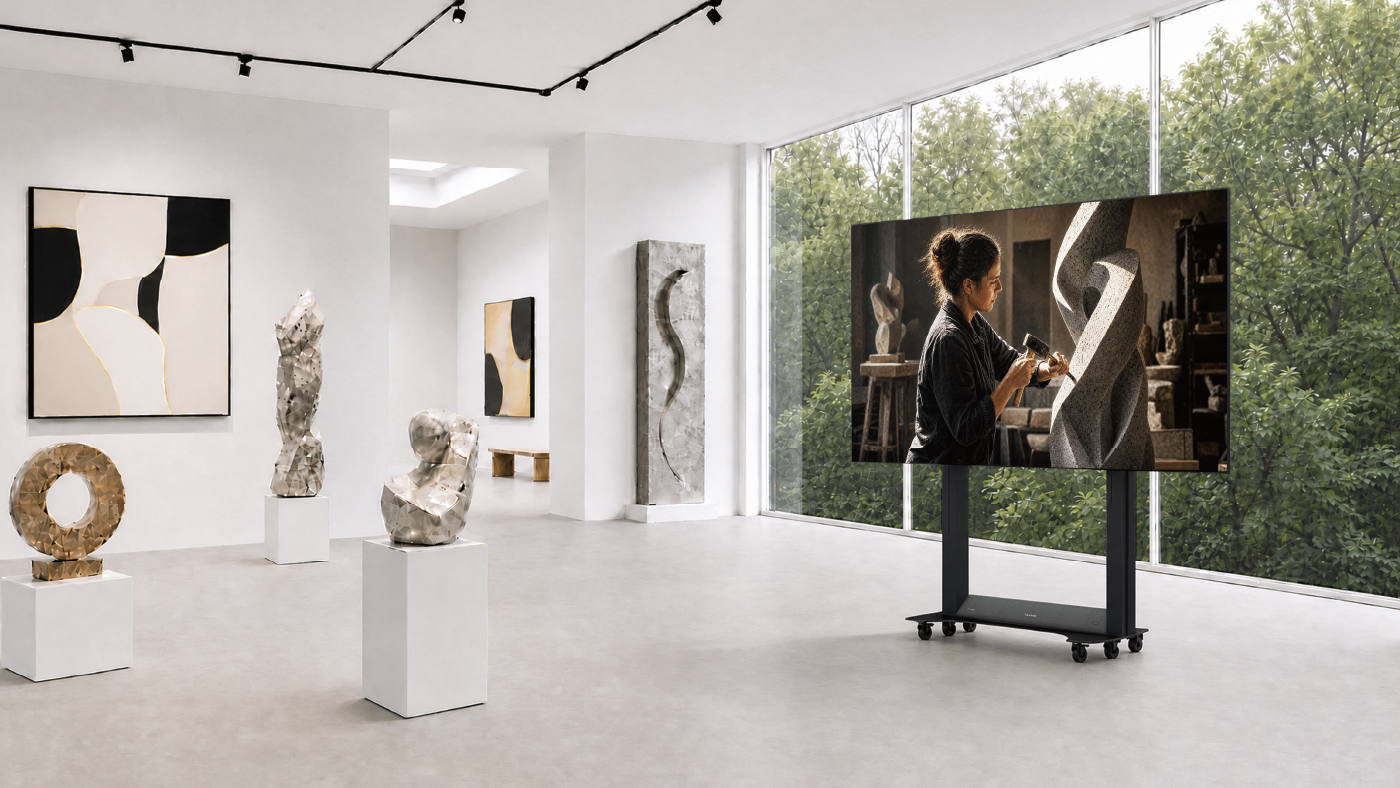
What is a foldable, all-in-one dvLED display?
A foldable dvLED display is a Direct View LED (dvLED) video wall built to travel. Cabinets, power, processing and mounting are integrated into one folding unit, so there's nothing to source or configure. Think of it like a giant monitor: unfold it, connect power and an input source, and you're presenting.
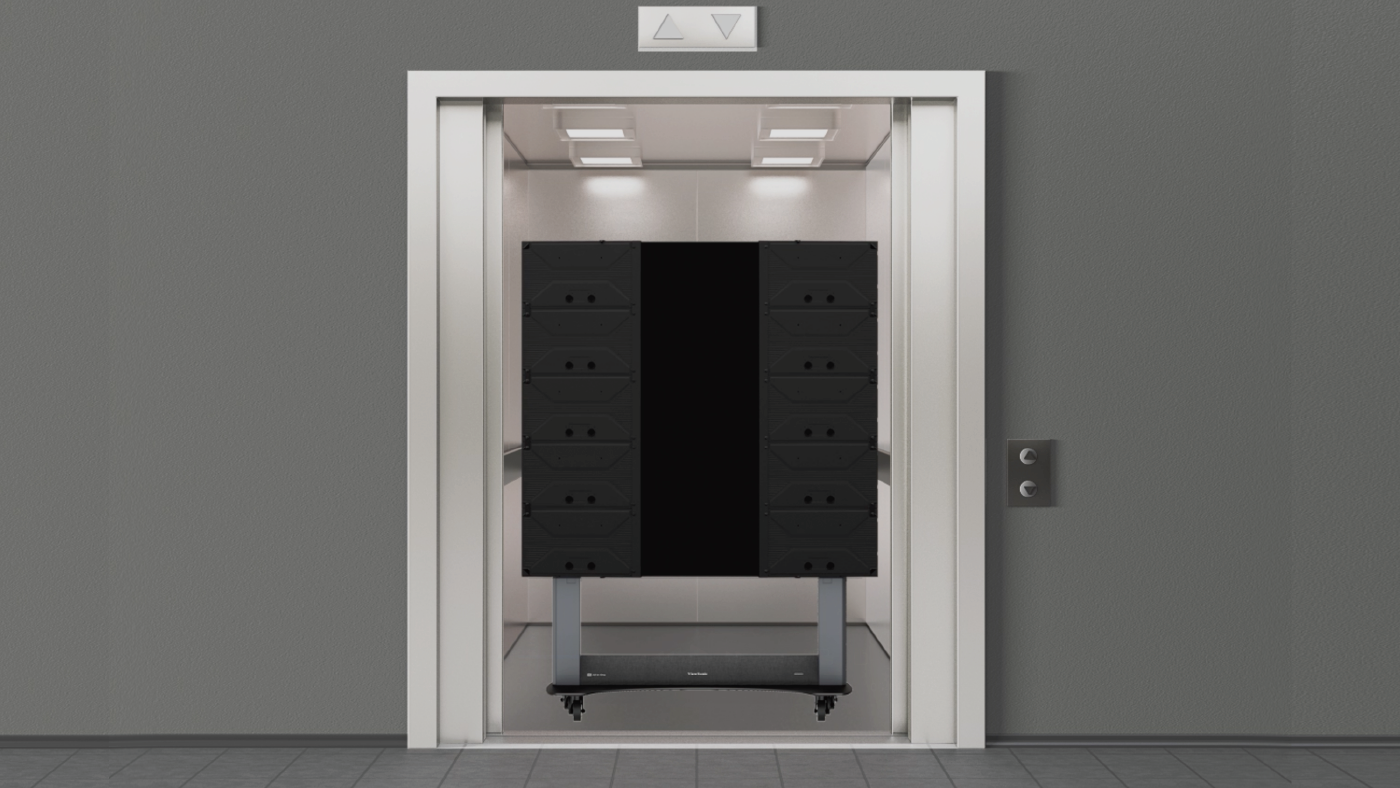
The ViewSonic LDS136-152 is a 136-inch foldable dvLED display with a 1.52 mm pixel pitch. It folds for transport and ships ready to present. There's no system design phase and no control unit to wire in. It rolls on silent wheels, fits a passenger elevator and plugs into a 20-amp outlet.
LDS136-152 specifications at a glance
| Spec | LDS136-152 |
| Screen size | 136" |
| Resolution | 1920 x 1080 |
| Pixel pitch | 1.52 mm |
| Brightness | 600 nits |
| Lift travel range | 2.95 ft |
| Max height, top of screen | 9.34 ft |
| HDMI inputs | 4 (HDMI 2.0, HDCP 2.2) |
| Protective design | GOB, IP65, IK06 |
| LED lifespan | 100,000 hours |
| Power | 20-amp outlet |
| Control integration | Q-SYS Library Verified, Crestron, Extron, AMX |
| Warranty | 3-year limited, parts and labor, on-site service |
How do foldable dvLED displays compare?
Foldable dvLED exists for two reasons: easy assembly and easy transportation. Plenty of vendors now ship an all-in-one dvLED. Fewer belong in the foldable category, and far fewer deliver on both halves of that premise.
The differences show up on install day. Some foldable displays still need an assembly step before they're ready to present. Some ship pre-installed in a transport case that limits how you position the screen. Others leave you mounting and wiring a control box separately, which defeats the point of buying an all-in-one.
Then there is the fold itself, where direction matters more than it sounds. The LDS136-152 folds inward, so the LED surface faces in and stays protected every time the display moves. Some competitors fold outward, leaving the LEDs exposed in transit, which is exactly when a doorframe or a wall corner is most likely to find them. On a display you plan to move often, that difference adds up.
Lift height is the spec buyers most often skip. A 136-inch screen sitting low in the room still blocks sightlines for anyone past the third row. The LDS136-152 lift raises the top of the screen to 9.34 feet across a 2.95-foot travel range, higher than any display in its class. Four HDMI inputs mean you're not choosing which source gets a port.
Is mobile dvLED the same as Samsung The Wall or LG dvLED?
No. Mobile foldable dvLED and premium fixed-install dvLED solve different problems. Samsung's The Wall and LG's large-venue dvLED lines are built to be installed for good. They're usually custom-configured for one space by an integration team. ViewSonic builds fixed-install dvLED too, in preconfigured and custom-sized ranges.
The LDS136-152 is built for the opposite job. Think temporary setups, multi-room deployments, events and any space where a permanent build-out isn't the goal. Comparing the two on specs alone misses the point. The better question is which one matches how and where you deploy.
Why does a fourth-generation product matter?
Most foldable dvLED options on the market today are first-generation products from brands new to the category. That means the setup friction, stability issues and deployment gaps are yours to find. On site. For the first time.
ViewSonic has the longest track record in mobile All-in-One dvLED: four generations of refinement for an innovative, foldable all-in-one design. The upgrades in this fourth generation came from asking corporate IT and AV teams what they actually needed.
- Increased height range: The motorized lift now raises the top of the screen to 9.34 feet, meaning no more blocked sightlines for the back row.
- Easy connectivity, built to expand: The I/O moved to the rear, so connecting devices is fast, with no flipping open panels or fumbling with the control bar. An integrated OPS slot lets you add computing power later without swapping out the display.
- The right size for corporate spaces: At 136 inches with 600 nits of brightness, this dvLED holds up in bright rooms like lobbies, atriums and large conference rooms.
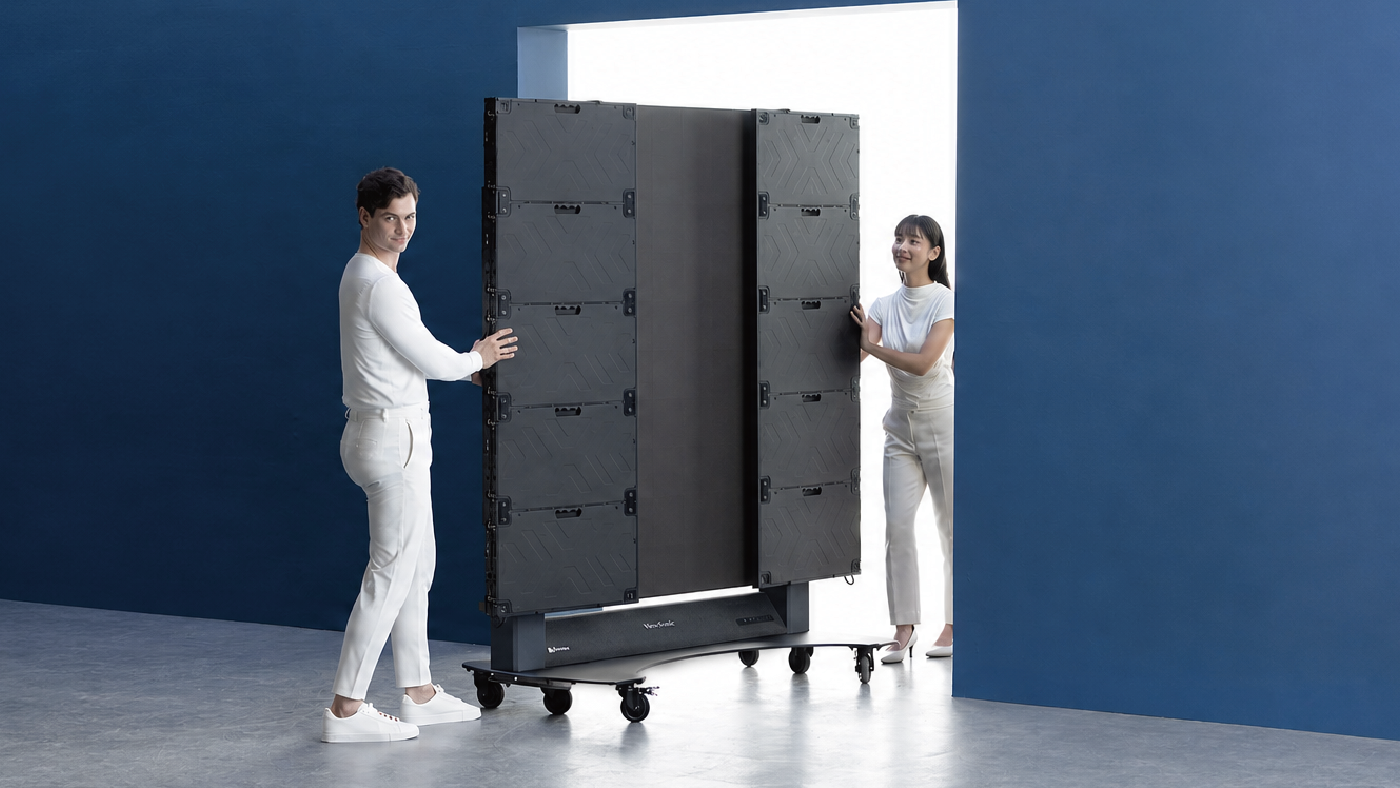
Those preferable upgrades sit on top of what earlier generations already got right. It rolls on silent wheels, folds to fit a passenger elevator and sets up in minutes.
The LDS136-152 is the current version of a product that has already been through three generations of real deployments. It won Best All-in-One LED Display at the rAVe Best of InfoComm 2026 awards.
What should you check before choosing a foldable dvLED display?
A few questions cut through most of the noise.
- Does it fold and power on without assembly, or does something still need mounting and wiring on site?
- How high does the lift actually reach, measured at the top of the screen?
- How many HDMI inputs do you get, and does it work with your control system?
- Who do you call when you need help, and do they know this specific display?
- Is this a first-generation product, or has the design been refined across several rounds of real deployments?
Frequently Asked Questions
What is a foldable dvLED display used for?
Foldable all-in-one dvLED displays are built for temporary and multi-room use. Think events, boardrooms, conference rooms and any space where a big display needs to go up fast and move later. They also solve for rooms where a permanent install is not an option: historic buildings where you cannot touch the walls, glass and curtain wall surfaces with nothing to mount to, and leased space where structural changes are off the table. They fold for transport and unfold ready to present, with no separate install phase.
Is mobile dvLED as reliable as a permanent installation?
Mobile dvLED is a different product built for a different job, not a lesser version of a permanent install. The GOB protective design and IP65 and IK06 ratings on the LDS136-152 are built for repeated setup, transport and use. A fixed install is never asked to handle that. Modules are hot-swappable and five calibrated spares ship in the box.
How does the LDS136-152 compare to other 136-inch foldable dvLED displays?
Its lift reaches 9.34 feet at the top of the screen, higher than any display in its class. It also folds and powers on without an assembly step, and it ships with four HDMI inputs plus Q-SYS, Crestron, Extron and AMX control integration.
What installation is required for the LDS136-152?
None. That is the point. The LDS136-152 ships ready to present. Unfold it, roll it into place and plug it into a standard 20-amp outlet. No crew, no lift, no system design phase and no install date on the calendar. Our U.S.-based Field Solutions Engineers are there for customers building a fixed-install dvLED, where design support and installation guidance actually earn their keep.
Why does it matter that this is ViewSonic's fourth generation of mobile dvLED?
Because the design shows it. First-generation foldable dvLED still asks something of you on site: an assembly step, a screen that stands inside the case it shipped in, LEDs facing outward during transport. Four generations of customer feedback is how those get engineered out. The LDS136-152 unfolds, lifts and presents on its own.


Login and Registration Form