Education
Business
Consumer

News

How OPS Technology is Going to Change the Digital Signage Ecosystem


The face of digital signage is rapidly changing, and its advancements in technology are pushing progression right along. Have you heard the term Open Pluggable Specification (OPS)? OPS architecture ties the digital signage ecosystem together with standardized interoperable hardware interface to drive effective component design, development and simplified integration complexity for lower implementation, deployment and management costs. An initiative from Intel®, OPS is a new technology concept that emerged about a year ago.


The OPS architecture modularizes the development of digital signage display panels and media players, thereby minimizing the implementation time for installation and eliminating other system complexities. While this clean solution ultimately benefits the integrator and end users, so far, only a few companies have adopted OPS technology. This is likely because people are accustomed to using an external media player (or PC) to run their media content on the signage display. Until the integrators and end users become more and more familiar with the benefits of OPS and industry demand increases, we believe it will still take some time before manufacturers and display OEMs adopt this new standard. However, with a company like Intel serving as the driving force behind this technology, things look very hopeful. Intel has launched multiple scalable intelligent software applications to enhance OPS display capabilities, such as Active Management Technology (AMT), Audience Impression Metrics Suite (AIM), Anonymous Video Analytics (AVA) and Near-Field Communication (NFC).


Will OPS architecture adaptation become successful? Only time will tell, but we believe in the benefits it provides. To learn more about ViewSonic’s OPS-enabled touch digital signage solutions in 42”, 46” and 65” sizes, click here. Have questions about what digital signage solutions are easiest for your business to maintain and upgrade? Ask us here on our blog.

How Interactive Are Your Presentations?

Are you a professional presenter or educator who reinforces onstage presentations with a laser pen? Do you find satisfaction from instantaneous interaction with your audience during your presentation? If so, you will be captivated by some of the unique features that current presentation apps on the market provide to help you engage with your audience while driving collaboration. Two noteworthy apps that we recommend for audience interaction are DisplayNote and Doceri.


DisplayNote is a software app that enables multi-user collaboration across any platform including smartphones, tablets and laptops; with support for more than 30 devices connected simultaneously. This app allows the presenter to share their screen while enabling instantaneous communication with other connected devices. In presenter mode, presenters or teachers can use their device to control the main screen, pass control to any other connected device, assign collaborative groups, send/receive private messages and view the individual screen of any connected device. In collaboration mode, the annotations and images on the connected devices can be displayed back to the main screen or viewed by other users. Furthermore, those viewing in collaboration mode can add their own private notes, underline or highlight what’s important, capture preferred slides, and save or email the presentation for later review. DisplayNote complements existing interactive projectors, whiteboards, and touch-screen devices, including tablets and smartphones running either Apple® iOS or Android™.


The Doceri® software app allows tablet owners to remotely control a PC or Mac that is connected to a display (e.g. projectors and monitors). A duplicate screen is displayed on the tablet to give the user total control and access to their computer desktop from their mobile tablet device. Doceri features interactive functions similar to DisplayNote, allowing the user to draw, write and annotate on the projected content with save and replay functions. Doceri currently doesn’t have the multi-user collaboration mode on their existing version; however this feature will be included in the next release. The existing version currently only works with Apple iOS, but an Android version is coming soon. 


Both DisplayNote and Doceri give users the freedom to instantaneously articulate their ideas during a presentation. Whether your need is for education or business, these powerful tools promote collaboration and audience engagement.


To learn more about interactive presentation solutions, read here. Have questions about what features you need for your specific presentation needs? Ask us here on the blog.


Corporate names and trademarks stated herein are the property of their respective companies. Copyright© 2012 ViewSonic Corporation. All rights reserved.


Is a Short Throw Projector Right for You?


Short throw projectors are designed with tight spaces in mind whether at home, work or school. 


A short throw projector produces clear images within limited space due to the physical shape of the projector lens, which alters the magnitude of the image projected. In a short throw projector, a convex lens is used to spread an image wider than a regular throw lens. As a result, a short throw lens can have 0.5:1 throw ratio, capable of projecting a 60-inch diagonal image from just 2 feet away, while a standard throw lens has a 1.6:1 throw ratio, capable of projecting the same image size from 6.5 feet away. Check out our interactive distance calculator here to determine if a short throw is the best fit for your space.


Why else should you consider a short throw projector? Many short throw projectors offer minimum ambience and heat exhaustion for maximum audience engagement in the constricted room. There are no hotspots when projecting onto a whiteboard due to the close distance proximity – the mount position of the projector is either raised above or dropped below the white board to project the image at a very steep angle, which eliminates glare that could bounce back from the whiteboard.


Have questions about what features you need for your specific projection needs? Ask us here on the blog.


Corporate names and trademarks stated herein are the property of their respective companies. Copyright© 2012 ViewSonic Corporation. All rights reserved.


Multimedia Technology Makes a Difference at CHOC

The Children’s Hospital of Orange County (CHOC) is ranked among the top regional pediatric hospitals in the nation, helping over 250,000 children annually. The ViewSonic® finches made a special appearance yesterday, visiting children on various floors of the hospital. “It was a very heartfelt time spent with these brave children and we are so glad that ViewSonic was able to bring a smile to their faces,” said Jeff Volpe, president.


To help lift children’s spirits, ViewSonic donated six (6) ViewPad® 10e Android tablets, two (2) high brightness 1080p Pro8400 projectors and two (2) 100-inch diagonal (16:9) Elite screens to CHOC. The projectors and screens will be installed in a new tower as  part of the media centers for children and teens; the tablets will help keep children entertained with games, the reading of electronic books and surfing the web in between their procedures and treatments.


ViewSonic is committed to improving its community and bettering the lives of its members. ViewSonic employee-partners generously give to community programs including Make-A-Wish, Toys for Tots, and Walk Now for Autism, in addition to our annual holiday Adopt-a-Family initiative. Stay tuned to our blog for opportunities on how  you can get involved in these causes as well.


Corporate names and trademarks stated herein are the property of their respective companies. Copyright© 2012 ViewSonic Corporation. All rights reserved.


InfoComm 2012, The Final Wrap!

InfoComm 2012 has come to a close on Friday, June 15. Three days seemed hardly enough time for anyone to cover the entire show floor, with such a wide array of new products being showcased. For those AV professionals and enthusiasts who didn’t get a chance to visit InfoComm, we’ve highlighted some of the noteworthy technology trends below.


When it comes to projection, Laser/LED hybrid illumination technology was the hottest topic around the Pro AV industry. This new technology breakthrough enables the projector to manipulate light and images without using the lamp or a color wheel. This results in more saturated color at a reduced cost all while being environmentally friendly.


From a display perspective, touch capabilities are on a fast growth curve. It seems like anyone with a display in their booth had a touch-enabled offering. ViewSonic was no stranger to this trend, showcasing several touch-enabled devices including the eBeam Edge® technology, which turns any display into a touch device.


Interactivity is made possible with the latest plug and play solutions that will change the way retailers develop and manage content. As delivering engaging content becomes even quicker and easier, retailers will be able to engage customers like never before.


Want to learn more about ViewSonic’s technology advancements from the show? Click here to visit our tradeshow landing page. What innovative solutions did you notice at the show? Share your thoughts with us.


Corporate names and trademarks stated herein are the property of their respective companies. Copyright© 2012 ViewSonic Corporation. All rights reserved.


Dispelling Digital Signage Myths: Eliminating The Top 3 Barriers To Market Entry


Digital signage can bring many benefits to your business. But for small- to mid-sized business that know little about putting an effective digital signage strategy in place, this can seem like a complicated and expensive solution. To dispel some of the myths about signage solution implementation, we’ve put together this guide to assist businesses in making the move to a more digital environment:


  • Myth 1: The System Will Be Complex: Installing a dynamic digital signage system doesn’t have to be complex. Content files can either be manually loaded or connected via a LAN (network) connection utilizing a media player for a multiple display environment. Or you can upload files you’d like to display using a mobile storage device, such as a USB thumb drive plugged into the media player. Many commercial displays also feature built-in USB ports, making it easy to transfer content or play photo slideshows directly from a USB drive.


  • Myth 2: I Can’t Build The Content: Fear of the unknown may be holding you back. If you can create a PowerPoint slide or build a playlist of your favorite audio files, you have the necessary skills for operating a digital signage system. With today’s easy-to-use software programs like our Signage Manager Express, delivering digital media content can be simple. Look for a program that offers Windows compatibility so it will easily run on your PC or laptop. Also look for software that comes with pre-made templates with multiple screen zones. Templates make it easy to build your content, and different screen zones allow you to display different types of content at the same time – for example, to upsell offerings by advertising companion products.


  • Myth 3: It’s Too Expensive: The cost of installing a dynamic digital signage solution is surprisingly low. The return on your investment can be easily justified, especially if you have been printing backlit signs. Depending on the environment, you can utilize cost effective monitors, commercial TVs or full commercial displays. Screen sizes can range from 10” to 65” or larger. A high performance, network capable, full HD display with video media player can be attained for under $500. In some cases, media players come bundled with the necessary software offering users a complete turn-key solution.


Still concerned about going digital or have we eliminated your fears? Has your business already taken the first steps to implementing digital signboards? Share your story with us about the benefits you’ve seen.


Want to learn more about the various factors that must be considered prior to deploying a digital signage installation? Take a read over our new “Getting Started with Digital Signage” white paper.


Corporate names and trademarks stated herein are the property of their respective companies. Copyright© 2012 ViewSonic Corporation. All rights reserved.


Laser LED Hybrid Projection Technology Explained

What’s all the buzz about Laser LED hybrid projection? This new technology delivers better picture quality through higher contrast ratios, is lamp free and consumes less power for a significantly lower total cost of ownership. Designed for a range of uses including home entertainment, professional audio-video, corporate or education use. Let’s take a look at some of the benefits of laser LED hybrid projectors to see if they make sense for your projection needs.


The Laser LED Hybrid illumination technology is a breakthrough in the way a projector manipulates light and images, resulting in superb picture quality with an ultra high contrast ratio of at least 10,000:1 for greater details, especially in dark scenes. The lasers and LEDs combine as a light source to create vibrant rich color, by generating a color spectrum far greater than that of normal mercury light projector which rely on a color wheel and may show ghost images and rainbow effects.


This eco-friendly technology is lamp free which saves anywhere from $199-$299 in replacement costs. No lamp means no mercury thereby eliminating toxic waste and no lamp also means virtually no maintenance to swap out bulbs. Laser LED Hybrid illumination technology delivers a longer light source life of up to 20,000 hours and is much more energy efficient utilizing intelligent power control, generating nearly twice as many lumens per watt as a lamp based projector. Furthermore, these projectors do not get hot to the touch, and are faster and quieter to switch on and off, as well as offering a more stable design.


Without compromising brightness, contrast or image quality, laser LED projectors lower TCO, are earth friendly and deliver rich, saturated color. You’ll save time and money, while enjoying a vivid and vibrant picture, year after year.


Have questions about what features you need for your specific projection needs? Ask us here on the blog.


*Light source life and energy savings may vary based on actual usage and other factors. Corporate names and trademarks stated herein are the property of their respective companies. Copyright© 2012 ViewSonic Corporation. All rights reserved.

Why Windows 7 When it Comes to Business and Tablet Security

Windows or Android? That’s one of the most common questions a potential buyer will consider when thinking about buying a tablet. Android-based tablets help users keep connected with family and friends and offer plethora of available entertainment apps. However, for those considering a tablet for business use, a Windows device can make all the difference when it comes to device security.


With Windows 7, businesses benefit from enhancements that help protect sensitive company information, including multiple active firewall policies to prevent malware and unauthorized access, and page file encryption for the safety of critical documents. There is also a Backup and Restore feature that makes it easy to backup and restore data and settings in the event of a system crash. Some of the most noteworthy additional Windows 7 security features as they relate to protecting tablet users include:


  • Action Center: This feature alerts users to security threats such as an inactive firewall or outdated antivirus software.

  • BitLocker Drive Encryption: To keep documents safe in the event that a tablet is misplaced or stolen, BitLocker automatically encrypts any data saved on a hard drive.

  • AppLocker: This included tool gives IT professionals more options for managing applications and enforcing application standardization, while delivering sophisticated protection against Trojan malware.

  • Microsoft Security Essentials: This software is available with a simple download and provides reliable, free anti-virus protection.

  • User Account Control: Ensures that only an authorized administrator users can make changes to system configurations, while alleviating IT administrators’ stressors with User Account Control.

  • DirectAccess: For those planning to use their tablet as a flexible work solution, Windows 7 tablets deliver remote users smooth and secure access to enterprise resources without the need to connect to a VPN.


For those considering a Windows 8 tablet, stay tuned. We will share an updated posting on Windows 8 and tablet security information once the OS is officially launched.


Corporate names and trademarks stated herein are the property of their respective companies. Copyright©2012 ViewSonic Corporation. All rights reserved.


The Top 3 Takeaways for Ensuring Your Tablets Are Cloud Compatible

Virtualization has become critical for companies looking to maximize efficiency when it comes to sharing or collaborating on important documents, and protecting and backing up data. The beauty of cloud computing is that it’s device-agnostic, enabling vital company data to be stored elsewhere on a server in the cloud. While cloud-based services can be accessed from a computer or smartphone, a tablet delivers the best of both worlds, offering touch, mobility and a screen size that’s larger than a smartphone. Perhaps the accessibility of virtualized environments on mobile devices is a big contributor to Gartner’s 4 percent forecast for the growth of traditional PC sales this year.


When it comes to the cloud, tablets enable workers to benefit from the productivity boost that comes from being able to work remotely yet securely from anywhere, anytime. Connecting via the cloud also lets businesses ensure that should a mobile device become lost or damaged, its data is safely stored. Rachel Dines at Forrester Research echoes this sentiment by stating that the proliferation of mobile devices in the workforce offers the benefit of more flexibility for workforce recovery options.


While any Wi-Fi connected tablet can serve as a portal into a virtualized environment, there are several product features that companies should be aware of when considering purchasing tablets for use with cloud applications. These three features let IT departments check that the devices they let into their organizations are ready for mobile cloud computing:


  • Certifications: Know what software certifications the tablet has and how that software will benefit your organization. For instance, a Citrix Ready certification gives the buyer confidence that a tablet will work seamlessly in a Citrix virtualized environment. Additionally, customers of VMware will want to ensure that their device is compatible with VMware virtualization technology.


  • Operating system: Android or Windows? A Windows tablet is ideal for full-featured desktop computing functionality in a mobile device. However, if you need the tablet to run an assortment of apps, Android might be the better fit. If you’re worried about not having access to critical Windows applications, software such as Citrix Receiver can enable Android tablet users to work with virtualized Windows desktops and applications.


  • Device enhancements: Take a look at the feature-set while thinking of what will maximize convenience and benefits for the user. For instance, an SD card slot can enable a device’s storage capacity to be expanded, lessening the need for frequent hardware trade-ins. Consider the environments in which a tablet will be used. Does the tablet have a USB port? If so, employees can plug in a full keyboard and mouse to create a mobile desktop experience.


How is your organization accessing the cloud? Let us know what devices your company uses to access virtualized environments now, and which devices do you hope to implement over the next six months?


ViewSonic Professional HD Display Series Delivers Extensive TV and Monitor Business Features at Consumer Prices

Do you know the difference between a consumer and a professional TV? They’re both just big displays right? Wrong. When it comes to business displays, there’s actually quite a difference to the extensive control features offered. For instance, these new models feature USB cloning making it easy to manage internal programming and content duplication. It’s these features that make professional monitor with HDTV compatibility products ideal for public areas requiring automated controls such as restaurants, sports bars, business lobbies and hospitality environments.


Giving our customers a set of commercial solutions at competitive consumer price points, we are pleased to announce our brand new Professional HD Display Series of business TVs. Ranging in size from 19”- 65”, our new commercial TVs pair the latest in “edge white” LED panel technology with advanced control functionalities, including user programmability, automated control, duplication and custom calibration.


These VESA mount compatible professional HDTVs deliver brilliant image clarity and high contrast with saturated colors, in addition to versatile connectivity options to help you run your business (including DVI compatible HDMI input, PC, traditional RCA composite and YPbPr component video connectors). Across our larger 27”-65” models, we also have integrated further automated control programmability features like RS232 and IR inputs, as well as front panel lockout, volume limitation, active inputs on power up and programmable channel range.


To learn more about these new professional HDTVs, check out today’s Press Release here. Have questions about what features you need for your specific business display needs? Ask us here on the blog.


ViewSonic Launches New Ultra-Slim 24” VX2460h-LED Monitor with Super Thin Profile

ViewSonic’s new VX2460h-LED bundles extreme performance and styleWith 25 years of display expertise, ViewSonic continually raises the bar to the next level of excellence in display technology. Our brand new 24” LED monitor takes innovation to the next level, with one of the world’s thinnest profile designs available for its size and class category.


At just one-quarter inch thick, the VX2460h-LED is a sleek and stylish widescreen display that pairs an ultra-slim design with advanced imaging technologies to reduce computer eyestrain after extended viewing. Partnered with a Full HD 1080p resolution, 2ms fast video response time, a high 40,000,000:1 dynamic contrast ratio and touch-sensitive buttons, this truly is a state-of-the-art machine for consumers, gamers and discerning buyers alike who demand both world class performance and style. The dual HDMI® inputs also guarantee the highest quality high-definition audio and video. And with our ECO-mode feature, a 3-year standard limited warranty and the industry’s best pixel performance policy, you can feel good about making a long-term investment in this Energy Star® 5.1 certified display.


The ViewSonic VX2460h-LED display is now available for an ESP of $199. For additional information on the VX2460h-LED, click here. Not sure if this is the right display for you? Just ask, we’re happy to answer any questions you may have.


Corporate names and trademarks stated herein are the property of their respective companies. Copyright©2012 ViewSonic Corporation. All rights reserved.


How to Future-Proof Your Classroom Projector Purchase

When it comes to purchasing new technology, making the wrong decision can be a costly move – especially for financially strapped schools. For example, a district’s upfront cost when purchasing a device can be just a fraction of what they’ll pay if they buy the wrong device, which impacts both budget and resources.


ViewSonic has advice for educators on how to future-proof their classroom projector purchases, while making the best initial selection for their budget. Purchasers should first answer this simple list of questions to significantly lower total cost of ownership (TCO) to guide them in their decision-making:


1. Does the projector have a lamp? If so, what’s the expected lamp life?


Replacement lamps are not cheap; on average they can run $200-$300 per lamp. Look for the projector with longer lamp hours and a lower replacement lamp cost. Similar to the printer market, also be careful of projectors with a “too good to be true” price point. Often times, they will come with high replacement supply costs.


2. What sort of time requirements does the projector require of my staff?


Know whether your projector selection will require filter cleanings and replacement. This is usually the case with 3LCD projectors. These maintenance costs can add up over time, so to avoid filter costs completely, shop for a DLP projector.Look for top-loading projectors as well to avoid needing someone from the union to come out to change the bulb.


3. What sort of hidden costs might there be?


Installation and servicing can be expensive. Before you buy, talk with a servicer/installer who will answer your questions. Find one who will offer your school the best services for a good price. This can make a huge difference. The electricity costs of operating projectors can be more than you might think, so look for projectors with energy-saving features such as ECO mode (dims brightness by 20 percent) and DynamicEco™ (dims brightness by 70 percent). As an added bonus, these features will extend your lamp life too!


4. Warranty information can be confusing. What do I need to know? What is considered a good warranty?


Some projector companies offer seemingly longer warranties that exclude the more vulnerable moving parts and labor costs. Be weary of projectors that only ensure the chipset. This part of the projector hardly ever goes bad. To protect your investment, look for projectors with longer labor warranties (2+ years) to guard against costly repairs. A 1-year lamp warranty is also ideal in case the expected hourly lamp life isn’t meeting expectations. As most schools require 5-year warranties on the projector hardware, be sure to research which projector brand has the best price on extended warranty options.


To share hard numbers with your district heads on the savings your school can expect to achieve, check out our DLP projector TCO calculator. Still have questions about your next projector purchase? Ask us here!


ViewSonic Reveals Restaurant Technology Revelations Seen At NRA 2012

The National Restaurant Association (NRA) tradeshow has come and gone once more. Over the course of four days, more than 1,800 exhibitors and tens of thousands of attendees met to mold what the future will look like for the restaurant, foodservice and hospitality industries. Following this week’s show, we wanted to share what, in our opinion, were the most notable technological advancements and trends that will change the customer experience within these industries.


The standout technology at this show was digital menu boards. Restaurants are increasingly showing nutritional information and digital boards can help them make updates quickly and without additional costs. Whether wanting to easily switch from morning to evening menus, or advertise the new special of the day, it’s clear that eateries now have significant opportunities to promote their menus in a brand new way.


A trend popular at NRA this year was the use of tablets within restaurants to make the customer experience more seamless. Tablet implementation examples include the wait-staff using the devices to take orders, turning the tablet into a POS system to manage the front of house, or even placing tablets on tables to enable patrons to place their order themselves. It’s great to see that due to their mobility factor, the possibilities for tablets within dining establishments are nearly endless.


What technological advancements do you see impacting the foodservice industry? Have you experienced any of these above examples in your own dining experience? Did you like or dislike it? Share your thoughts with us!


Flipping Teaching On Its Head: Our Opinion On The Flipped Classroom

Have you heard of the flipped classroom teaching model? It is a teaching technique that is gaining steam across the country. The idea is that students do their homework during classroom time, and lectures are done outside of the classroom via the Internet. This allows for classroom activity to remain centered around student and teacher collaboration.


The argument is that with traditional teaching models, students can be overrun by homework assignments. When students don’t fully understand the lesson plan, completing homework at home can be difficult. For students who lack structure and guidance in the home, or a quiet place to study, completing assignments outside of school can become a nightmare.


In a recent article, Tech Decisions shared an interesting case study about Clintondale High School near Detroit. Clintondale spends most of class time giving students help rather than classroom lectures. Additionally, multimedia presentations and video conferencing with other classrooms around the world have become part of the school day for a more interactive environment.


For this school and many others like it, the individualized attention is working. Chronic failure rates have dropped dramatically, while college readiness scores have more than doubled to nearly 29 percent. The best part is that this new approach requires a very minimal investment in technology upgrades, and no alterations to existing network infrastructure. It’s a great approach for schools experiencing a decrease in financial resources. In Clintondale’s case, they needed to purchase five PCs with powerful CPU capacity to support the increase in PowerPoint presentation creation, a few USB microphones so teachers could record themselves for lessons, and two tablets for greater mobility options.


Students vary in how they learn best. That calls for leaders in education to be open to evaluating new strategies for helping students grow, both personally and developmentally. It’s great to see students achieving impressive levels of success because teachers are taking better notice of their needs.


We’d like to hear from educators whose students have seen academic gains with this method or another alternative educational model. Share your results with us, or tweet your tips to @ViewSonic.


How To Recognize If Your Business Needs A Projector Upgrade

When should I upgrade my projector? This is a great question posed by CNET in a recent article on how to know when it’s time to upgrade, from a home cinema perspective. This got us thinking about the similarities and differences between consumer and business-focused projection offerings, so we’ve put together this guide to help businesses know when they are ready for a projector refresh. See how your company’s hardware stacks up:


1. Resolution within Reach – To avoid image distortion, make sure your projector has a matching aspect ratio to that of your content and/or source device so images stay in their native format. Most online content today is in wide format, as are many IT devices such as laptops, tablets and smartphones, etc. Companies will benefit from a widescreen WXGA projector with 1280x800 or 1920x1080 (1080p) resolution. Note however that for 4:3 format support, you’ll want a matching aspect ratio like an XGA with a 1024x768 resolution for ideal image projection.


2. Bigger Brightness – For corporate environments like meeting rooms and boardrooms, it’s important to use a projector with at least 2700 ASNI lumens brightness to compensate for space size without having to turn out the lights. Does the room you’re projecting in have windows and a high amount of ambient light? Then you’ll want to make sure your projector has a minimum brightness of 3000 ANSI lumens to compensate. And for an even larger space like a lecture hall, make sure you have at least 4000 ANSI lumens for optimal image quality.


3. Compare Connectivity – There’s a lot to consider when it comes to making sure a projector has the right connectivity options for your needs. Know the number of devices that will need to connect to the projector before you start shopping to make sure it has enough inputs. For instance, two computers will need two VGA/RGB inputs on the projector. If you need a digital connection, then you’ll want a DVI and/or HDMI input. As for use with a DVD or VCR, you’ll need S-Video and/or composite video connection, and it’s all about HDMI when it comes to Blu-ray/DVR players. And with these multimedia needs, multiple audio inputs are a must. Does your office have a LAN network? Would your company benefit from being able to control, manage and monitor the projector from a PC? Then a model with an RJ-45 port with a built-in web-based setting configuration menu may also be of interest.


4. Rev up ROI – If you evaluate the above points prior to purchase, you can expect to use a projector for at least 2-3 years prior to considering a replacement. And while the cost of projectors themselves have gone down considerably, there are other factors you’ll want to take into account to maximize ROI, such as product warranty, lamp cost and hours, as well as maintenance costs like filter replacement. To protect your investment, look for projectors with longer labor warranties (2+ years) to guard against costly repairs. Replacement lamps can also be an unforeseen expense at a street price of $200-$300 a pop, so make sure you’re informed about the lamp warranty (1-year is ideal), and the expected hourly lamp life. With this information in hand, a more expensive projector unit may end up saving you in the long run.


Did your company recently upgrade its projector setup? What’s your favorite new projection advancement?


When is it time to upgrade your projector?


ViewSonic Launches “ViewPoint” Corporate Blog


ViewSonic supports B2B and channel customers with industry resource, offering educational content and driving wider technology discussion and engagement


WALNUT, Calif. – April 24, 2012 – ViewSonic Corp., a leading global provider of computing, consumer electronics and communications solutions, announced the roll out of ViewPoint, a blog that will address the numerous technology industry trends facing B2B and reseller communities in the consumer and commercial electronics market today.

“We aim to offer a content-rich, informational source to assist our many audiences with both purchasing and business decisions,” said Jeff Volpe, president of ViewSonic Americas. “The new blog will serve as a destination for valued current and prospective channel partners, product owners and technophiles on the key issues impacting the industry, and what it means to them. We’ll share what we’ve learned in our 25 years of experience in a useful manner, hoping to drive larger discussions and engagement to contribute to the electronic industry as a whole.”

ViewSonic will cover industry trends, best practices, revenue generating ideas and the company’s view on other industry issues relevant to educators, retailers, VARs and the enterprise on real world applications for tablets, projectors, monitors, commercial displays and the PC market. Posts will be authored by ViewSonic’s executive and product leadership staff, in addition to influential guest contributors.

ViewSonic’s blog can be found at http://viewsonic.com/blog/, and at the “Company Blog” icon on ViewSonic’s main webpage. ViewSonic will announce a convenient and informative tie to the company’s channel program, Finch Club™, in the coming months. For further information, visit ViewSonic.com or follow ViewSonic on the Company blog, Facebook, YouTube and Twitter.
 

About ViewSonic

ViewSonic® Corporation, headquartered in Walnut, California, is a leading global provider of computing, consumer electronics, and communications solutions. Founded in 1987, ViewSonic’s mission is to be the preferred global brand of visual solutions as we continue to focus on display-centric product offerings including LED monitors, tablets, projectors, digital signage displays, and cloud computing solutions. ViewSonic continues to pioneer in visual technology innovation to build a connected and ever-reaching digital future. For further information, please visit ViewSonic.com.

ViewSonic’s Finch Club offers resellers an opportunity to benefit from specialized product training and discounts. To sign up, please visit FinchClub.com.

Trademark footnote: All corporate names and trademarks are the property of their respective companies

The Role Tablets Play in the Digitizing of Medical Records

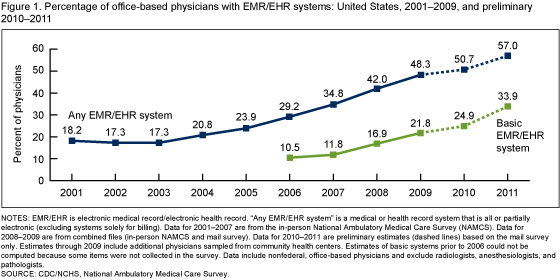
Have you noticed a reduction of paper used in your own doctor's office? According to the CDC, 57 percent of office-based physicians have been using electronic medical record / electronic health record (EMR/EHR) systems as of 2011, up from just 18 percent in 2001. To this trend, research firm, MarketsandMarkets forecasts that Electronic Medical Record and Electronic Health Record industries are expected to reach $6 billion by 2012 in the US alone.


There is no denying that digitizing medical records has the potential to keep patient documents safer and improve overall quality of patient coordination and care. However, this is only true if healthcare professionals have the right tools to help them effectively access these records. For the health industry, the implementation of tablet devices can offer the benefit of true mobility when it comes to showing patient information and making changes in real-time, while cutting costs for paper and the associated hassles of hard-copy records.


When determining the right tablet solution for medical industry professionals, it is crucial that resellers consider the following points:


Security: Clearly, security is a huge concern for professionals and patients alike. Windows-based tablets are an answer, as they include features such as built-in firewalls and data recovery settings. Third-party software and services can also further enhance device security and it is important to note that the Windows platform supports more of these features than the typical mobile operating system.


Image quality: Ultrasound imaging solutions manufacturer Interson Corporation is using our ViewPad 10 as part of its latest ultrasound solution to display images and data from its propriety ultrasound probe. As your customer will also likely be using the tablet for the review of critical client X-rays and other medical scans, excellent display quality is critical for an accurate diagnosis.


Processing power: For medical imaging needs, a higher quality processor may be required to handle a hospital's various software programs. Also consider that since FDA approval of the first mobile medical app in 2009, the use of medical apps will continue to grow and become more widely accepted, meaning tablets will need not only a great processor but also extensive storage options to support these applications.


What trends are you seeing in the medical field when it comes to the digitalization of client records? How do you feel the introduction of tablets into the medical profession will change the way patients receive treatments? Share your thoughts with us here on the blog.


Adoption of EMR/EHR systems by office-based physicians has increased.


Adoption of EMR/EHR systems by office-based physicians has increased.


ViewSonic Expands Cost-Effective MultiClient Virtual Cloud Solution with New Hardware And Software Bundles

Thin client computing offers significant benefits over traditional PC deployments. In fact, IDC found that thin client users (when compared to full PC users) experience a decline in hardware and software costs of 40 percent and a reduction in IT operations costs by 29 percent. In addition, IDC concluded that a thin client computing setup increases IT worker productivity by 56 percent due to a reduction of troubleshooting and repair needs, when compared to traditional PCs.


For organizations wishing to save acquisition and operating costs, enhance security and manageability, and promote green IT and sustainability, ViewSonic’s MultiClient solution puts thin client computing in reach for cost-conscious districts and SMBs.


Following its unveiling at ISTE 2011, ViewSonic is announcing new product bundles and software support today for the company’s MultiClient computing offering. This cost-effective, scalable solution lets educators and businesses easily create and manage their own private cloud computing environment. Enabling up to 20 independent user stations (with monitors, mice and keyboards) to be powered by just one host server, MultiClient significantly lowers the cost per seat, reduces energy costs and virtually eliminates compatibility issues and IT management needs.


Now two additional energy-efficient zero client VMA Series adapters are available, each with four USB ports, so users can connect their preference of peripherals. We enable users to select their preference of software licensing between Userful MultiSeat Linux 2011™ and Microsoft® MultiPoint® WMS2011 for true customization.


To get started with a MultiClient setup, educators and businesses just need to connect the MultiClient Adapter box to a monitor with keyboard and mouse, and then plug into the host server. For more MutliClient information, click here.


Are you a thin client believer? What sort of benefits have you seen? We’d love to take your questions about thin client deployments within your organization. Share your experiences with us here!


ViewSonic MultiClient Solution Benefits