 Teacher's Community
  Support
dvLED Install Gotcha #2: Can Your Wall Actually Support the Weight?
- Jul 30, 2026
BUYER'S GUIDE
dvLED Install Gotcha #2: Can Your Wall Actually Support the Weight?
A Direct View LED (dvLED) display isn’t just a screen. It’s a system.
Panels, mounting structure, cabling and power components all go on your wall, and all of it adds up.
The question isn’t whether your wall can hold the display during the install. It’s whether it’s built to carry the full load, day after day, for years. This is the gotcha that doesn’t just slow an install down. It stops it completely.
What does a dvLED system actually weigh?
That depends on the size and configuration, but the weight adds up faster than most people expect. A large Direct View LED wall, once you count panels, mounting structure and cabling, can reach several hundred pounds spread across the surface. Standard drywall anchored into wood studs was never rated for that kind of distributed load, especially with years of vibration and thermal cycling working against it.
Before anything goes up, confirm four things: the total system weight (panels plus mounting plus cabling), the stud spacing, the mounting surface type and whether structural backing is required to carry the load safely.
What do you do when the wall isn’t ready?
For most commercial installs, the answer is adding structural backing before the mount goes up. Common solutions include Unistrut channel systems, steel stud framing and plywood backing across the mounting area. The right choice depends on the wall construction, the total load and the mounting system you’re using.
For larger or custom walls, bring in a structural engineer early. A quick review at the planning stage costs far less than finding a load problem mid-install, or worse, after the display is already live and a client is watching.
What’s the one rule that prevents most structural problems?
Add a structural verification step to every pre-install checklist. Confirm the mounting surface. Confirm the load rating. Get written sign-off before your crew arrives. If a structural review is needed, schedule it weeks out, not as a last-minute check the morning of.
The fastest way to slow an install to a stop is to find a structural problem on day one. The fix is almost always cheaper and faster when you catch it on paper.
Frequently Asked Questions
How much does a dvLED video wall weigh?
It varies by size and configuration, but a large dvLED wall including panels, mounting and cabling can reach several hundred pounds distributed across the surface. Always confirm the total system weight before choosing a mounting method or approving the wall.
Can you mount a dvLED wall on drywall?
You can, but only if the drywall surface is flat within tolerance and the structure behind it can carry the load. Install on the studs behind the drywall and use plywood backing if you need a continuous mounting surface. Many walls need shims or a substructure to hit the flatness spec. Always verify with a laser level before install day.
When should you involve a structural engineer?
Bring in a structural engineer early for large or custom dvLED walls, or any time the load or wall construction is uncertain. A short planning-stage review costs far less than discovering a load problem during or after installation.
Build structural planning into every job
Ready to streamline your site prep and deliver seamless installations from day one?
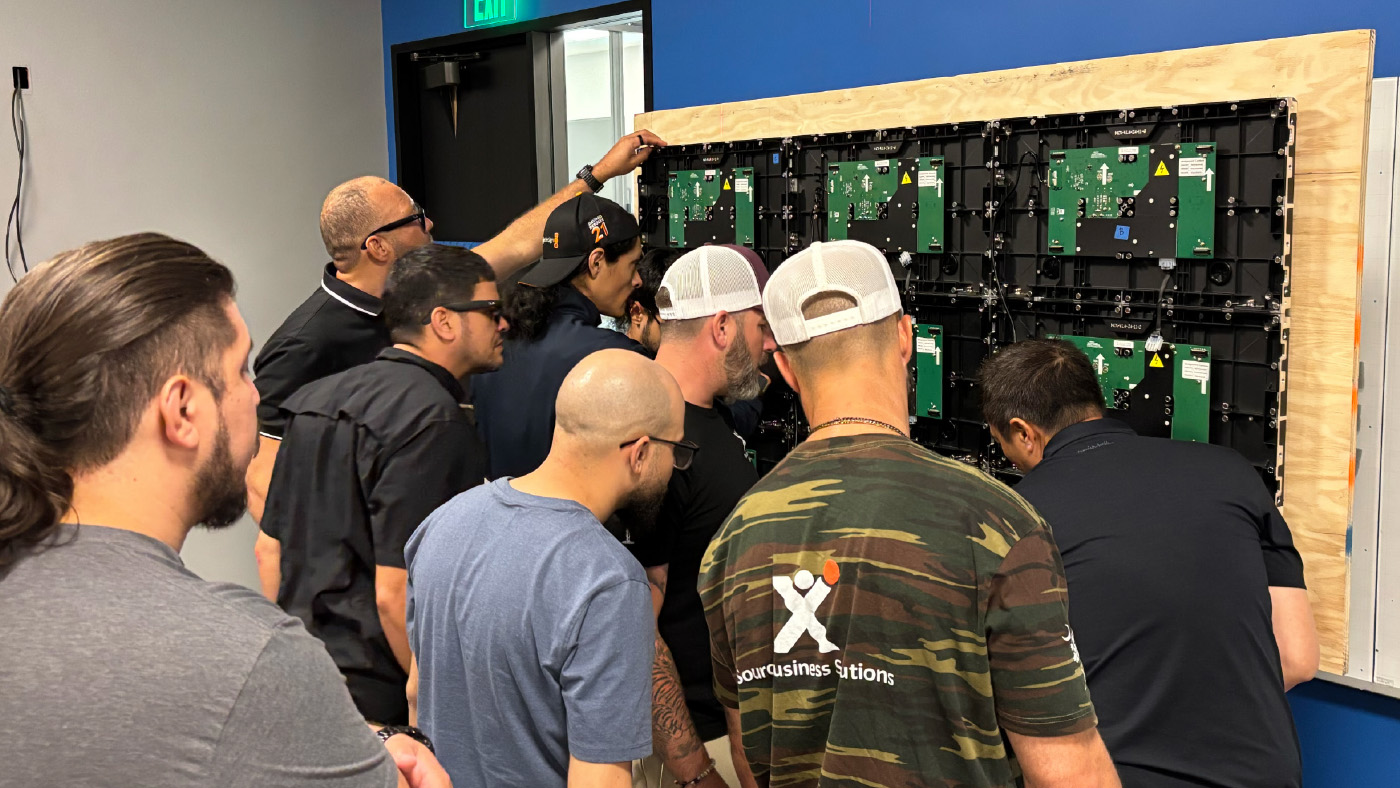
The ViewSonic® dvLED Certification Program is a hands-on, two-day course led by ViewSonic Solutions engineers. Graduates earn CTS and CTS-I renewal units. It covers pre-install checklists, structural planning and real-world field techniques. Reserve your spot today.


Login and Registration Form