
Projectors vs dvLED: Which Display Technology Is Right for Your Campus?
- Feb 25, 2026
Projectors vs dvLED: Which Display Technology Is Right for Your Campus?
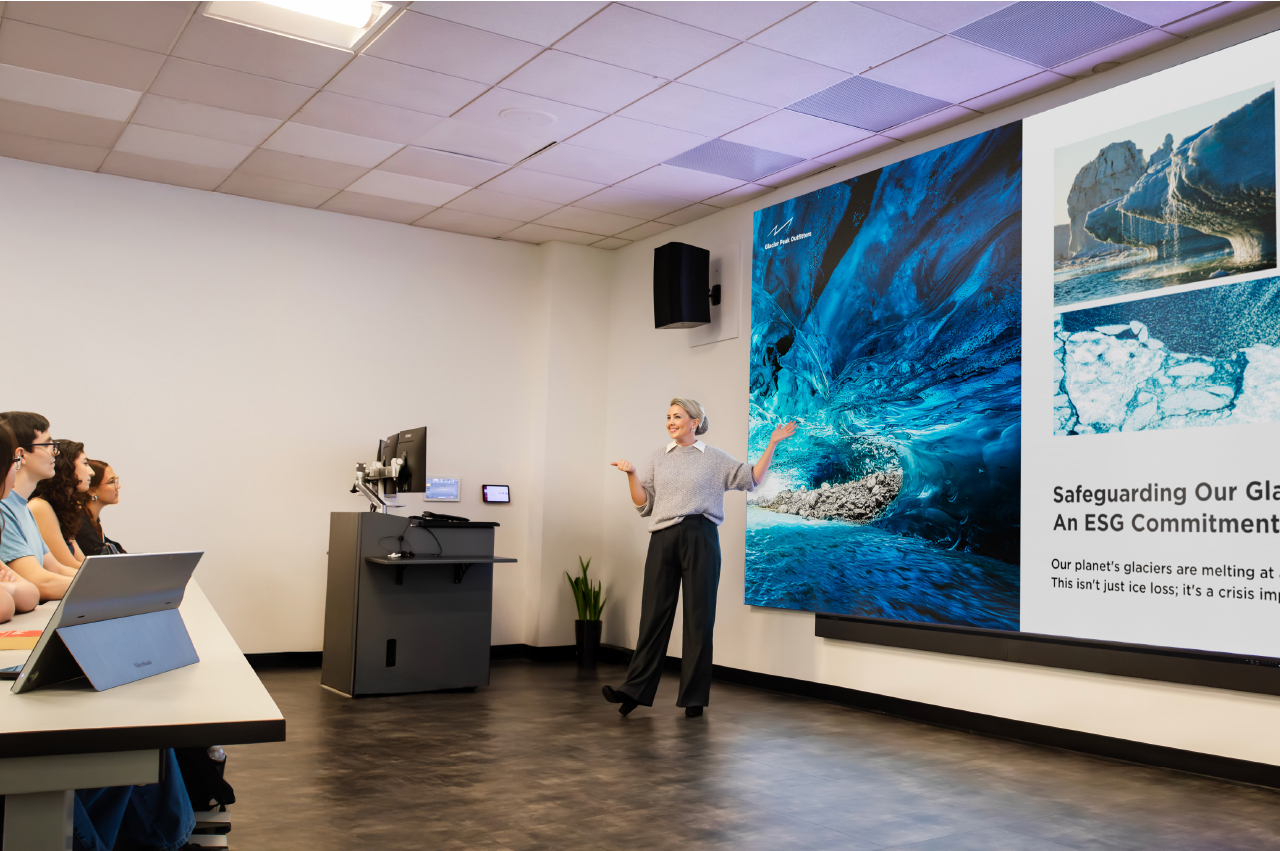
Projectors vs dvLED. It’s a big decision for any modern campus. The type of display you pick affects how teachers teach, how students learn, and how your budget looks a few years down the road.
You might be wondering if you should stick with the traditional projector or make the leap to something newer. Let’s break down the differences so you can make the best choice for your school.
Understanding the Tech
Projectors use a light source to throw an image onto a separate screen or wall. They have been the standard in classrooms and lecture halls for decades.
dvLED (Direct View LED) displays are made of LED panels that show images directly on the screen, so there is no projection involved. They are super bright and seamless. You can get them as simple, pre-configured All-in-One video walls that come in standard sizes, or as configurable solutions that you can build to fit a specific shape or wall.
Key Considerations for Schools
When you are weighing projectors vs dvLED, here are the main things you need to think about.
Image Quality and Brightness
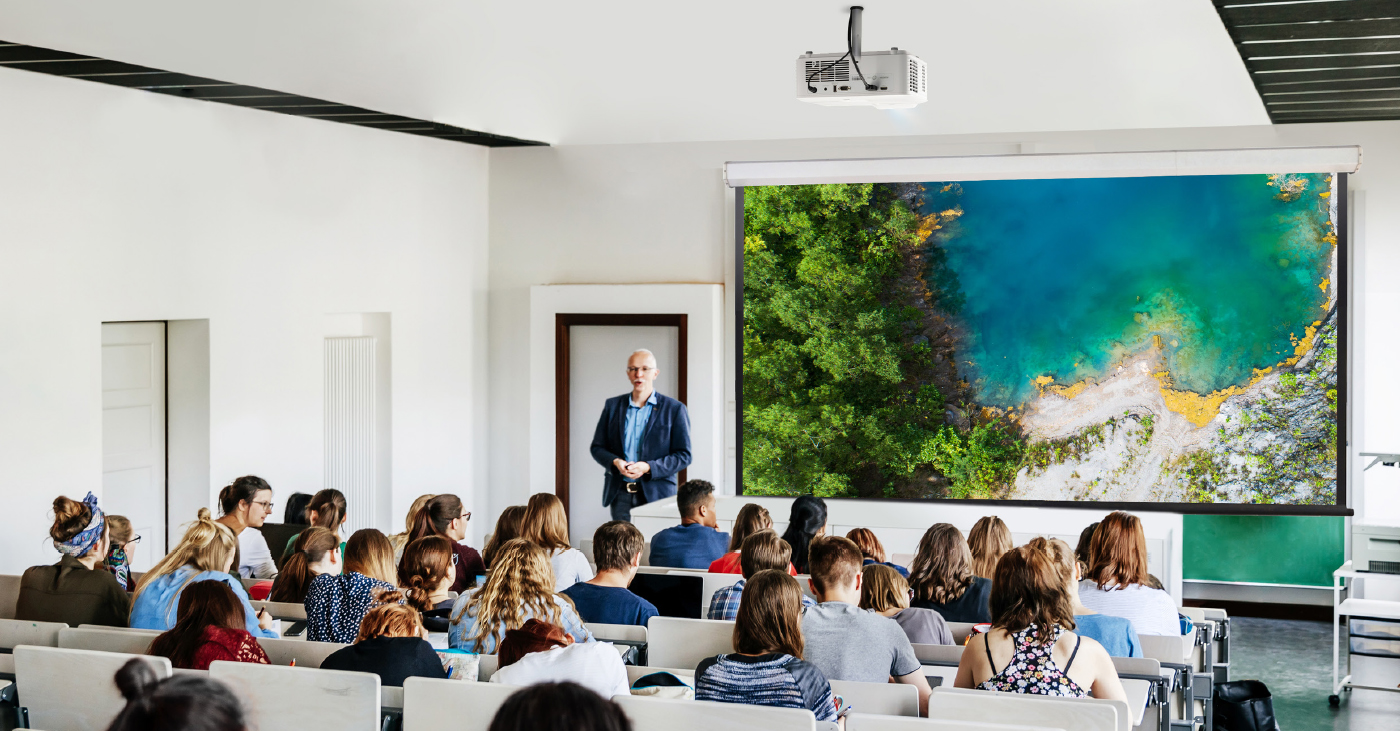
Projectors can produce big images, but they often struggle in bright rooms. If you have big windows, you usually have to dim the lights to see the screen clearly.
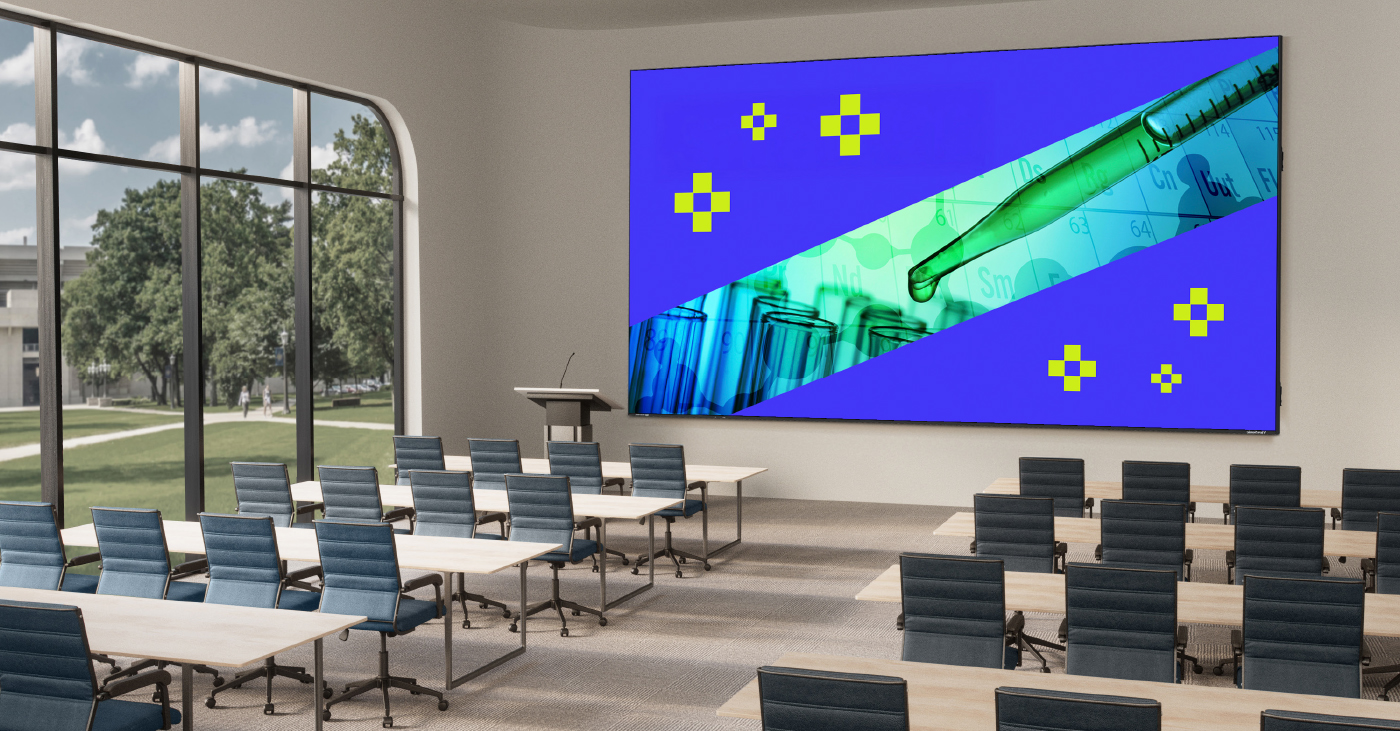
dvLED offers ultra-bright, vivid images that look great even in sunny rooms. The colors stay sharp, and you do not have to worry about shadows or glare.
Size and Scalability
Projectors are easy to scale up by using bigger screens. However, the image quality can drop as the size increases.
dvLED can be built to fit massive spaces. ViewSonic offers standard All-in-One sizes ranging from 136" all the way up to 231". Need something even bigger? Our configurable options allow you to build a custom video wall larger than 231" to fit huge auditoriums or gymnasiums.
Installation and Space
Projectors require a specific setup to work best. You usually need to install both a mount for the projector and a separate screen on the wall. You also need to account for the space between the lens and the screen, which can lead to shadows if someone walks in front of the light.
dvLED displays mount directly to the wall, which saves space and creates a streamlined look. However, they have their own requirements. The wall needs to be perfectly flat and structurally ready to support the panels. While dvLED eliminates the shadow problem, ensuring your wall is prepped correctly is a key part of the installation.
Maintenance and Cost
Let's talk numbers. Projectors usually look cheaper upfront. But have you really crunched the numbers on maintenance? When you add up the cost of replacement bulbs, filters, and the labor to swap them out over a few years, the price tag jumps up fast.
On the flip side, dvLED displays like the ViewSonic LDE Series are built for the long haul. They offer 24/7 reliability and easy-to-swap panels. Here is the kicker: the cost of an LDE video wall often rivals what you would spend on a high-end projector and a professional tab-tension screen. You get a superior picture for a similar price, without the ongoing maintenance headaches.
The Breakdown: Pros and Cons
Here is a quick look at how the two stack up.
|
Feature |
dvLED Display |
Projector |
|
Visual Impact |
Ultra-bright, seamless |
Can be large, less vivid |
|
Portability |
Fixed, wall-mounted, or mobile |
Portable, flexible |
|
Maintenance |
Easy panel swap |
Bulb/part replacement |
|
Installation |
Slim, modern |
Needs space, mounts |
|
Longevity |
Long lifespan |
Shorter, fades over time |
|
Versatile Usage |
Multi-use, high impact |
Multi-use, cost-friendly |
When to Stick with Projectors
Projectors still have a place on campus. They are often the right choice for:
- Tight Budgets: If you need a simple solution for a standard classroom.
- Controlled Lighting: Spaces where you can easily dim the lights.
- Small Meeting Rooms: Where you do not need a massive video wall. You can also look into ViewBoard interactive displays for these settings.
When to Upgrade to dvLED
If you want to make an impact, dvLED is the way to go. ViewSonic has a specific series for every need.
- For the Auditorium: If you need a screen that moves, the LDS Series is a foldable 138" display on wheels. You can roll it out for assemblies and set it up in minutes.
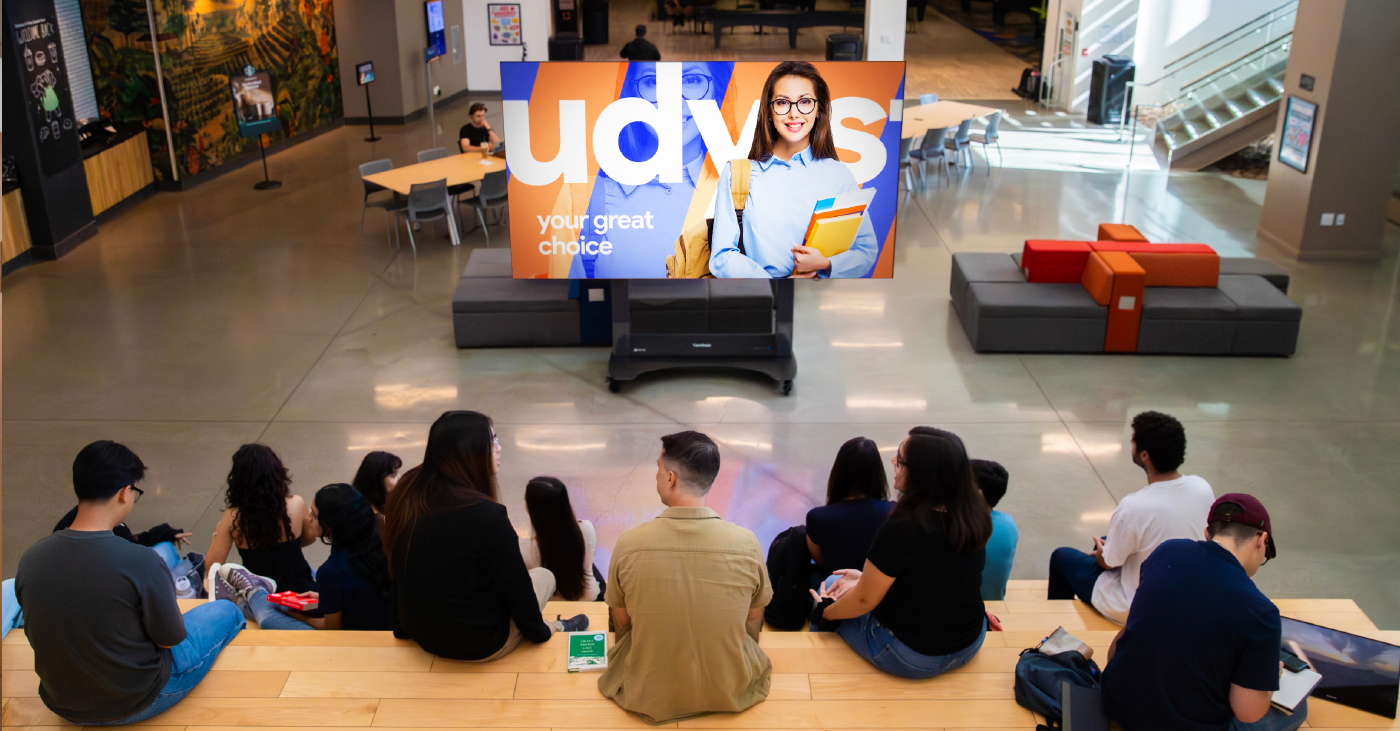
- For Lobbies and Student Centers: The LDM Series is perfect here. It has Glue-on-Board (GOB) technology, so it is durable enough to handle high-traffic areas.
- For Premium Learning: The LDP Series offers stunning 4K visuals. It uses Chip-on-Board (COB) technology for extra protection against impact and dust.
- For Creative Spaces: If you want a unique shape or size, the LDC Series is configurable. It lets you build a screen that fits your specific design.
- For General Use: The LDE Series is your cost-effective workhorse. It gives you that seamless video wall experience with integrated power and processing.
Questions to Ask Before You Buy
Still on the fence? Ask yourself these four questions.
- What is the use case? Are you teaching, hosting events, or showing digital signage?
- What is the lighting like? Is the room full of windows or tucked away in a basement?
- What is the real budget? Don't just look at the price tag. Think about installation and maintenance costs over five years.
- How will it integrate? ViewSonic displays work with systems you likely already use, like Crestron, Extron, and AMX.
Why ViewSonic Has You Covered
When you are deciding between projectors vs dvLED, ViewSonic can help. We offer high-quality projectors for traditional setups and a complete lineup of dvLED video walls for modern spaces.
We can help you create vibrant, engaging environments for your students and staff.
Find Your Perfect Display
Ready to see the difference for yourself? Explore our full range of display solutions today.
-

-
![]()
-
![Female using ViewBoards to instruct a group of employees in a large room]()
-
![Man quickly walking past a Direct View LED]()


Login and Registration Form